
-
 Dave Vinke
- Leestijd: 5 min
- Laatst geüpdatet: 26/03/2026

Solving a speedcube in under a minute is an important milestone for any cubing enthusiast. This achievement, also called “sub-60,” marks the transition from beginner to intermediate speedcuber and opens the door to competitive cubing.
For many people, it seems impossible to solve such a complex puzzle in less than 60 seconds, but with the right approach, practice, and a good speedcube, this goal is certainly achievable. The path to sub-60 times requires patience, consistency, and a strategic approach to the learning process.
What does it mean to solve a speedcube ‘under a minute’?
Solving a speedcube in under a minute means consistently achieving solve times of less than 60 seconds. This is referred to as “sub-60” in the speedcubing community and is considered the first major performance milestone for speedcubers.
Sub-60 times don’t mean you randomly get under a minute once, but that your average solve time is consistently under 60 seconds. In competitive speedcubing, this is measured with an “average of 5” (Ao5), where the fastest and slowest times are dropped and the average of the remaining three times is calculated.
This milestone marks the transition from casual puzzling to serious speedcubing. At this level, you master the basic method fluently and begin working on algorithm optimization and finger dexterity. Sub-60 cubers can usually participate in local competitions and feel part of the broader speedcubing community.
How long does it take on average to reach sub-60 times?
Most people reach sub-60 times within 3 to 6 months of consistent practice, spending 30 to 60 minutes daily solving their speedcube. This timeframe varies greatly depending on practice frequency, learning method, and natural aptitude.
Factors that influence learning time include the chosen solving method, the quality of instruction or tutorials, and practice frequency. People who practice daily usually achieve results faster than those who puzzle sporadically. The quality of the speedcube also plays a role in development.
Some exceptionally talented beginners reach sub-60 times within just a few weeks, while others take 6 to 12 months. The key lies in consistent practice and focused work on specific aspects, such as algorithm memorization and finger dexterity. More important than speed is developing a solid foundation in basic techniques.
Which speedcube methods are fastest for getting under a minute?
The CFOP method (Cross, F2L, OLL, PLL) is by far the most popular and effective method for achieving sub-60 times. This layer-by-layer approach offers a good balance between learnability and speed potential, allowing beginners to make rapid progress.
CFOP starts with making a cross on the bottom layer, followed by simultaneously solving the first two layers (F2L). Then you orient the last layer (OLL) and permute it (PLL). For sub-60 times, you don’t need to know all 78 OLL and PLL algorithms yet; a limited set of 10 to 15 algorithms is sufficient.
Alternative methods like Roux or ZZ can also be effective but have a steeper learning curve. The Beginner’s Method, while simpler to learn, has a lower speed ceiling and makes the transition to sub-60 times more difficult. For most people, CFOP offers the best route to consistent sub-60 performance.
How much should you practice to solve a speedcube under a minute?
For sub-60 times, daily focused practice of 30 to 45 minutes is optimal. This means approximately 50 to 100 solves per day, focusing on algorithm memorization, cross efficiency, and smooth execution of move sequences.
Effective practice means more than just solving the cube. Spend time memorizing essential algorithms, practice specific steps like cross planning, and work on eliminating pauses between algorithms. Use a timer to track your progress and identify which steps are slowing you down.
The quality of your practice is more important than quantity. Thirty minutes of focused practice with specific goals is more effective than two hours of mechanically solving the cube. Alternate between speed solves and slow solves, focusing on efficiency and algorithm perfection. Consistency in your practice routine significantly accelerates your development toward sub-60 times.
What are the biggest obstacles in reaching sub-60 times?
The biggest obstacles to sub-60 times are incomplete algorithm knowledge, inefficient cross planning, and lack of finger dexterity. Many cubers get stuck because they pause too much between steps or haven’t mastered the basic algorithms fluently yet.
Cross inefficiency is a common problem where beginners use too many moves or don’t utilize inspection time for planning. An inefficient cross can cost 5 to 10 extra seconds per solve. Not mastering all basic PLL algorithms also causes frustrating time losses in the final phase.
Mental obstacles also play a role: perfectionism, impatience, and inconsistent practice routines hinder progress. Some cubers focus too much on speed instead of fluidity, leading to more mistakes and longer times. Developing muscle memory and eliminating cube rotations are essential to overcome these obstacles.
Which speedcube is best for learning to solve under a minute?
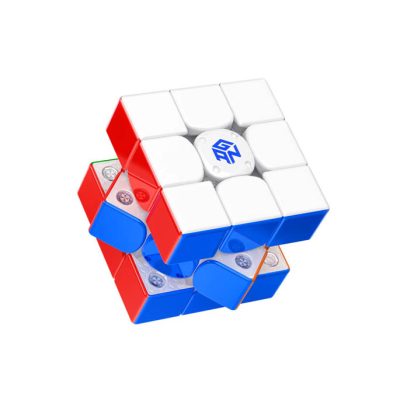
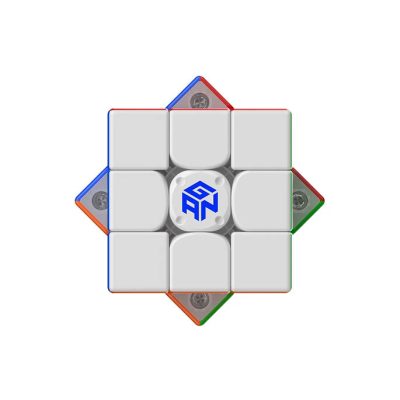
A modern magnetic 3×3 speedcube with good corner cutting and stable mechanics is essential for sub-60 development. Popular choices are the MoYu RS3M, GAN 356 M, and QiYi Warrior W, all offering excellent performance for beginners to intermediate cubers.
Magnetic cubes offer superior control and stability compared to non-magnetic variants, which is crucial when developing fast and accurate finger movements. A good speedcube should have at least 45 degrees of corner cutting and turn smoothly without locking up during fast algorithms.
While more expensive flagship cubes may offer better performance, this difference is minimal for sub-60 development. A mid-range cube ($15-25) provides all the functionality you need. More important than the specific cube is consistently using the same model, so your muscle memory can develop without adjusting to different turning characteristics.
Frequently Asked Questions
How do I know if I'm truly consistent sub-60 or just got lucky?
You're only truly sub-60 if your average of 100 solves is under 60 seconds and you regularly achieve Ao5 times (average of 5) under 60 seconds. One or two fast times don't indicate consistency yet. Track your times with a timer app and look at your progress over longer periods.
Do I need to know all 78 OLL and PLL algorithms to become sub-60?
No, for sub-60 times approximately 10-15 essential algorithms are sufficient: the 4 basic PLLs (T-perm, Y-perm, A-perms) and 6-8 most important OLL cases. Focus first on perfectly mastering this basic set before expanding to full OLL/PLL knowledge.
Why do I get slower when I try to go faster?
This happens because you're degrading your technique by forcing it. Focus on fluidity instead of speed - practice algorithms slowly until they're perfect in your muscle memory. Speed comes naturally when your movements are automated and you have no pauses between steps.
How long should I spend on cross planning during inspection?
For sub-60 times, 3-5 seconds of cross planning during the 15-second inspection time is sufficient. Plan your complete cross and try to spot the first F2L pair. Practice cross planning separately by only making the cross after inspection, without solving the rest.
Is it normal for my times to be very inconsistent while learning?
Yes, large variation in times (for example 45-80 seconds) is normal during the learning period. This comes from not yet fully mastering algorithms and inefficient case recognition. Consistency improves gradually as your muscle memory develops and you need to think less.
When should I switch from the beginner's method to CFOP?
Switch to CFOP as soon as you can consistently execute the beginner's method under 90 seconds. Start with intuitive F2L while continuing to use the beginner's method for the last layer, and gradually introduce OLL/PLL algorithms. This phased transition prevents overwhelm.
What should I do if I get stuck at a certain time level?
Analyze your solves to identify bottlenecks: measure how long each step (cross, F2L, OLL, PLL) takes. Focus your practice on your slowest component. It can also help to do a few days of slower, perfect solves to break bad habits before returning to speed.
Table of contents
Much viewed
More blogs