
-
 Dave Vinke
- Leestijd: 5 min
- Laatst geüpdatet: 26/03/2026

Speedcubing is a fascinating sport where every millisecond counts, and the way you move your fingers can make the difference between an average and an excellent time. Fingertricks form the foundation of efficient speedcubing and are essential for anyone who takes this hobby seriously.
Whether you’re just starting with your first speedcube or have been cubing for years, mastering the right fingertricks will significantly improve your performance. In this guide, we answer all the important questions about fingertricks and show you how to learn them effectively.
What exactly are fingertricks in speedcubing?
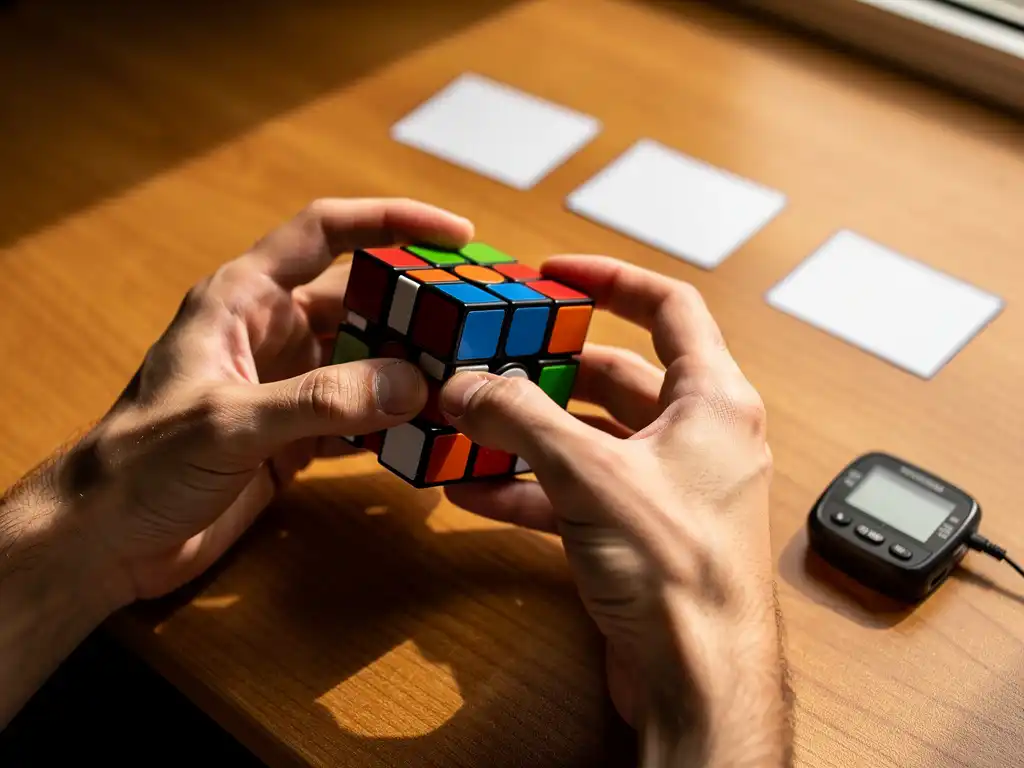
Fingertricks are specialized finger movements that speedcubers use to turn the cube as quickly and efficiently as possible, without moving the entire hand or wrist. These techniques use individual fingers to manipulate specific layers of the cube.
Instead of the traditional way of cubing, where you hold the entire cube and turn with your wrists, fingertricks use subtle movements of the thumb, index finger, middle finger, and ring finger. Each finger has specific responsibilities for certain turning movements. For example, the index finger is often used for F-moves (front), while the thumb is ideal for R-turns (right).
The key principle behind fingertricks is that smaller movements are faster than large movements. By using only your fingers instead of your entire hand, you can make much faster consecutive movements and maintain a stable grip on the cube.
Why are fingertricks so important for fast cube times?
Fingertricks are crucial for fast times because they maximize movement economy and minimize the time between individual turning movements. They eliminate unnecessary hand and wrist movements that cost precious milliseconds.
The main advantage is speed. While traditional wrist movements are limited by the size of the movement, fingers can move much faster because they use smaller muscles that can react more quickly. Professional speedcubers can easily perform 8-12 moves per second with fingertricks.
Additionally, fingertricks improve your control and accuracy. Because you hold the cube more stably, you make fewer mistakes and need less correction. This leads to smoother algorithms and fewer interruptions in your solve. You also reduce fatigue, because fingertricks require less energy than large hand movements, allowing you to practice longer without performance loss.
Which basic fingertricks should every speedcuber know?
Every speedcuber should start with the fundamental fingertricks for the six basic turns: R, U, F, L, D, and B moves, plus their inverse variants. These form the foundation of all speedcubing algorithms.
For R-moves (right), you use your right thumb to turn the right side toward you, and your right middle finger for R’ (counterclockwise). The U-move (up) is performed with your right index finger, while U’ is done with your left index finger or right thumb.
F-moves (front) are more challenging: F is done by moving your right index finger downward, and F’ by moving your left index finger upward. For L-moves (left), you use your left thumb for L and your left middle finger for L’. D-moves (down) are usually performed with the middle finger of both hands, depending on the direction.
Double-layer turns are also essential to learn. For Rw-moves (wide R), you use both hands, and M-moves (middle) are done with your ring finger. These basic fingertricks form the foundation on which all advanced techniques are built.
How do you best learn fingertricks as a beginner?
Start slowly and focus on one specific movement at a time, until it feels natural, before moving on to more complex combinations. Quality always comes before speed in the initial phase.
Start with the most common movements, like R, U, R’, and U’. Practice these movements hundreds of times until they become automatic. Use a metronome or timer to gradually build up your speed: start at a comfortable pace and slowly accelerate.
Watch slow-motion videos of experienced cubers to see exactly how their fingers move. YouTube has excellent tutorials that show fingertricks from different angles. Imitate these movements in front of a mirror, so you can observe and correct your own technique.
Also practice with simple algorithms, like the sexy move (R U R’ U’), to learn how fingertricks flow together. This helps you make the transition between different movements smooth. Be patient with yourself: it takes weeks or months before fingertricks truly feel natural.
What is the difference between wrist turns and finger turns?
Wrist turns use the entire wrist and hand to turn the cube, while finger turns only use individual fingers to move specific layers. Finger turns are significantly faster and more efficient for speedcubing.
With wrist turns, you have to release the cube or adjust your grip for each movement, which costs time and interrupts the flow. You use large muscle groups that react more slowly and consume more energy. This is the way most people naturally start cubing, but it seriously limits your speed.
Finger turns, on the other hand, keep the cube stable in your hands while only your fingers move. This eliminates the time needed to adjust your grip and makes much faster consecutive movements possible. The small muscles in your fingers can move much faster than your wrists.
The key difference lies in the flow: with finger turns you can smoothly go from one movement to another without interruptions, while wrist turns create natural pauses. For serious speedcubing, finger turns are absolutely necessary to achieve competitive times.
How do you practice fingertricks effectively for better times?
Effective fingertrick training requires targeted practice with specific algorithms, gradual speed building, and regular evaluation of your technique. Consistency in daily practice is more important than long, intensive sessions.
Start each practice session with a warm-up by making slow, controlled movements. Then practice specific algorithm families, like OLL or PLL, focusing on perfect fingertrick execution instead of speed. Use a timer to track your progress, but don’t become obsessed with times during technique training.
Vary your exercises by combining different algorithms and using random scrambles. This helps you apply fingertricks under different circumstances. Also practice mirror cases and inverse algorithms to develop your finger dexterity in all directions.
Record yourself regularly to analyze your technique. Look for unnecessary movements, tension in your hands, or inconsistencies in your grip. Take regular breaks to prevent RSI and let your muscles recover. Remember that muscle memory needs time to develop, so be patient and keep practicing consistently.
Frequently Asked Questions
How long does it take to master fingertricks?
For beginners, it usually takes 2-3 months of daily practice to make basic fingertricks feel natural. Fully mastering advanced fingertricks for all algorithms can take 6-12 months, depending on how often you practice and your natural finger dexterity.
Can I learn fingertricks on any cube, or do I need a special speedcube?
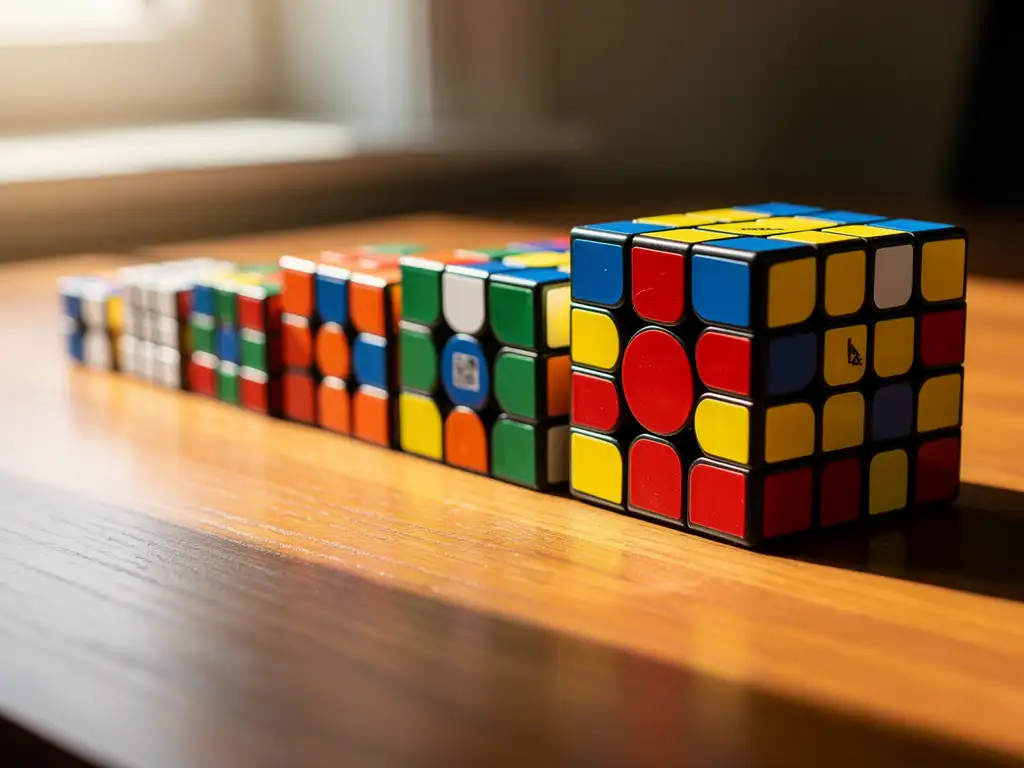
While you can practice fingertricks on any cube, a good speedcube makes the learning process significantly easier. Speedcubes have better corner cutting, smoother rotation, and less resistance, making finger movements feel more natural. A budget speedcube of $10-15 is sufficient to start with.
What should I do if my fingers hurt while practicing fingertricks?
Pain in your fingers is often a sign of too much tension or too intensive practice. Take regular breaks, do stretching exercises for your hands and fingers, and make sure your cube isn't adjusted too tightly. If the pain persists, reduce practice time and gradually build back up.
Do I need to perfect all fingertricks before working on speed?
No, you can gradually build speed while refining your technique. Start with slow, correct movements and gradually increase the tempo. It's better to speedcube with 70% perfect fingertricks than to wait months until everything is 100% perfect.
What common mistakes should I avoid when learning fingertricks?
The biggest mistakes are: wanting to go too fast before the movements feel natural, cramping your hands while cubing, not consistently using the same fingertricks for the same algorithm, and forgetting to train both hands equally. Always focus on correct form first before building speed.
Are there specific finger exercises that help improve fingertricks?
Yes, piano player exercises like moving each finger independently, grip exercises with a stress ball, and practicing the 'sexy move' (R U R' U') at different tempos help tremendously. Playing piano or guitar can also improve your finger dexterity and independence.
How do I know if I'm using the right fingertricks for a specific algorithm?
Watch tutorials from fast cubers, compare different fingertrick variations for the same algorithm, and test which variant feels most comfortable and fast for you. If you can consistently execute under 5 seconds without errors, you're probably using good fingertricks for that algorithm.
Table of contents
Much viewed
More blogs