
-
 Dave Vinke
- Leestijd: 5 min
- Laatst geüpdatet: 26/03/2026

Solving a Rubik’s cube may seem impossibly complicated for children, but with the right approach, even young puzzle enthusiasts can tackle this iconic challenge. Learning to solve a Rubik’s cube not only gives children a tremendous sense of achievement but also develops logical thinking, patience, and spatial awareness.
The key to success lies in choosing the right age to start, selecting a suitable cube for beginners, and applying a simple learning method. With proper guidance and realistic expectations, any child can master this fascinating puzzle.
At what age can a child learn to solve a Rubik’s cube?
Children can start learning to solve a Rubik’s cube from around age 8, although some bright children can be successful as early as age 6. The main requirements are sufficient fine motor skills to turn the cube smoothly and the ability to remember simple algorithms.
For children under 8, it’s often better to start with simpler puzzles, such as a 2×2 cube. This smaller variant has fewer pieces and requires shorter algorithms, making it feel less overwhelming. Children between 8 and 10 years old usually have the perfect balance of curiosity, patience, and cognitive development to tackle the standard 3×3 Rubik’s cube.
It’s important to remember that every child is different. Some children show early interest in puzzles and have a natural talent for spatial thinking, while others need more time. Pay special attention to signs of frustration and adjust the pace to your child’s individual needs.
Which Rubik’s cube is best for beginners?
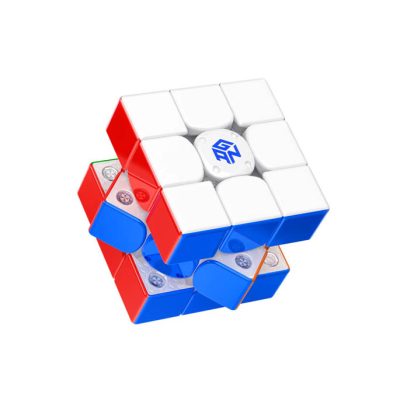
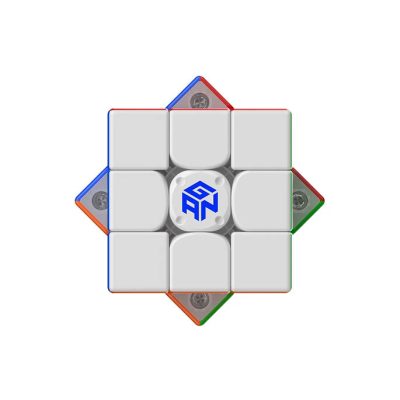
For beginners, a magnetic speed cube, such as the MoYu RS3M or Gan 356 RS, is best because these turn more smoothly than the original Rubik’s cube and are less likely to jam during practice. Magnetic cubes offer more control and stability during turning.
The original Rubik’s cube from Rubik’s Brand is iconic, but can be frustrating for beginners due to stiffer turning and less predictable movements. Modern speedcubes are specifically designed to turn smoothly and have better corner stability, allowing children to focus on learning algorithms instead of struggling with the mechanics.
A good beginner cube also has clear, contrasting colors that are easy to distinguish. Avoid cubes with colors that are too bright or too similar to each other, as this can cause confusion during the learning process. A cube with standard colors (white, yellow, red, orange, blue, green) is most suitable for beginners.
What is the easiest method to solve a Rubik’s cube?
The layer method is the easiest and most popular method for beginners. This method solves the cube in three phases: first the white cross and first layer, then the middle layer, and finally the yellow top and last layer.
This method is ideal for children because each step shows clearly visible progress. It starts with making a white cross on the bottom, which feels intuitive and motivates children to continue. Next, the white corners are placed to complete the first layer.
For the second layer, children learn a simple algorithm to get the middle pieces into place. The last layer requires more algorithms, but these can be learned step by step. Always start by making a yellow cross, then the yellow corners, and finally positioning all the last pieces.
Online tutorials and YouTube videos can be very helpful, but make sure you choose a tutorial specifically aimed at children and beginners. These often use simpler terminology and go through the steps more slowly.
How long does it take to learn to solve a Rubik’s cube?
Most children can solve their first Rubik’s cube within 2 to 6 weeks with daily practice of 15 to 30 minutes. Some children master it within a week, while others need several months to become familiar with all the algorithms.
The first week is usually devoted to learning the basics: making the white cross and completing the first layer. This gives children a good feeling because they make visible progress. The second and third weeks focus on the middle layer and the beginning of the last layer.
It’s important to have realistic expectations. The first time a child solves the cube, it can take 20 to 45 minutes. With practice, this gets faster, and after a few months, most children can solve their cube in 2 to 5 minutes.
Consistency is more important than long practice sessions. Practicing 15 minutes daily is more effective than trying for an hour once a week. Make it fun by celebrating small milestones and staying patient during difficult moments.
What common mistakes make learning more difficult?
The biggest mistake is wanting to go too fast and not properly memorizing algorithms before moving to the next step. Children get frustrated when they constantly have to look up how a particular algorithm works.
Another common mistake is using a poor cube. A stiff or poorly turning cube makes the learning process unnecessarily difficult and frustrating. Invest in a decent beginner cube to give your child the best chance of success.
Many children also try to come up with their own solutions instead of following proven methods. While creativity is great, this often leads to more confusion. Encourage your child to first learn the standard layer method before experimenting.
Finally, it’s important not to give up at the first frustrations. Many children quit just before they would have had a breakthrough. Stay positive, celebrate small victories, and remind your child that everyone who can solve a Rubik’s cube was once a beginner.
Frequently Asked Questions
What should I do if my child gets frustrated while learning?
Take breaks when frustration arises and celebrate small successes like completing the white cross. Temporarily lower expectations by focusing on one step at a time, and consider practicing together so your child feels supported. Remind your child that frustration is normal and part of the learning process.
Can my child learn a Rubik's cube without online tutorials?
Yes, with a good instruction book or step-by-step guide it's possible, but online videos make the learning process much easier because children can see the movements. Combine both methods for the best result: use videos to learn movements and a book as reference for algorithms.
How can I motivate my child to continue when progress stagnates?
Set small, achievable goals like 'today we're only going to practice the white cross' and reward these milestones. Organize friendly competitions with friends or family members, and show your child how far they've come by comparing their first attempts with their current level.
Should I as a parent also learn how to solve a Rubik's cube?
It's highly recommended to learn the basics so you can help your child and practice together. You don't need to become an expert, but understanding the first few steps helps enormously with guidance and motivation. Plus, it can become a fun family activity.
What are the next steps after my child can solve the cube?
First focus on improving speed by executing algorithms more fluently. Then your child can try other cubes like 4x4 or 5x5, or learn alternative solving methods like CFOP. Also consider participating in local speedcubing competitions for extra motivation.
How do I maintain my child's speedcube for optimal performance?
Lubricate the cube every 2-3 months with special cube oil, and regularly clean dust and dirt from the mechanisms with a dry cloth. Avoid water or soap, and teach your child not to turn the cube too hard to prevent wear. A well-maintained cube will turn smoothly for years.
Table of contents
Much viewed
More blogs