
-
 Dave Vinke
- Leestijd: 5 min
- Laatst geüpdatet: 15/10/2025

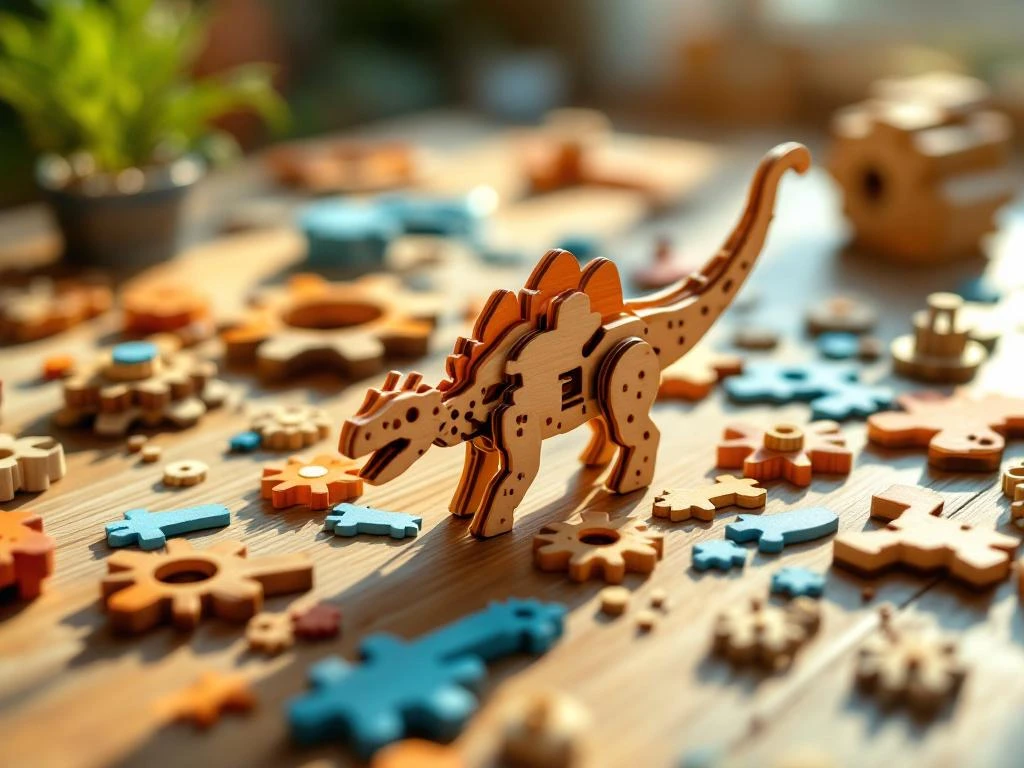
Wooden construction kits are excellent for schools because they help children develop fine motor skills, problem-solving abilities, and spatial awareness. They provide a safe, sustainable way to collaborate on projects that connect with different subjects. From kindergarten groups to secondary education, students can work with these educational materials at their own level.
Why are wooden construction kits so suitable for education?
A wooden construction kit stimulates multiple developmental areas simultaneously and offers children a natural, tactile learning experience. Wood feels warm, smells pleasant, and gives children a direct connection with natural materials. This creates a calming work environment where concentration comes more easily.
The educational benefits are diverse. During construction, children develop their fine motor skills by grasping, turning, and positioning small components in the right place. Their problem-solving thinking is challenged when they puzzle over how different pieces fit together. Spatial awareness grows naturally through the three-dimensional nature of the projects.
Collaboration emerges naturally when children work together on a construction project. They must communicate, divide tasks, and help each other with difficult parts. These social skills are just as valuable as the technical aspects of building.
Sustainability also plays an important role. Wooden construction kits last for years and can be used by different classes. They contain no harmful substances and are fully recyclable, which aligns with the sustainability goals of many schools.
Which age groups work best with wooden construction kits?
Wooden construction kits are suitable for all age groups from 4 years old, provided you choose the right complexity for each group. Kindergarten groups work best with large, simple components without small screws. Elementary school children can tackle more complex projects, while secondary school students can handle technically challenging models.
For toddlers (4-6 years), construction kits with large, easily grippable components are ideal. Think of simple animals, vehicles, or houses with a maximum of 10-15 components. The pieces must be large enough to prevent choking and sturdy enough to withstand rough play.
Elementary school children (7-12 years) can work with more detailed projects. Their fine motor skills are more developed, allowing them to handle smaller components. Projects with 20-50 components provide sufficient challenge without being overwhelming. Moving parts like wheels or hinges make it extra interesting.
For secondary education (13+ years), complex mechanical models are suitable. These students can work with precision components, gears, and advanced construction principles. Projects with 50-200 components provide adequate challenge and teach them about engineering and design.
The difficulty level can be adjusted within each age group by having children work in teams or providing extra guidance. Faster learners can make extensions or help others, while slower learners get the time they need.
How do you choose the right wooden construction kit for different subjects?
Choosing the right wooden construction kit depends on your lesson objectives and the subject you want to support. STEM subjects benefit from technical models, history comes alive with historical buildings, and geography becomes concrete with world-famous structures. Arts education takes shape through creative, open projects.
For STEM subjects (Science, Technology, Engineering, Mathematics), mechanical models are perfect. Think of working windmills that demonstrate energy generation, bridges that can bear loads, or vehicles with gear transmissions. These projects make abstract concepts tangible and understandable.
History becomes much more interesting with construction kits of castles, temples, or historical vehicles. Children gain a better understanding of different time periods by building a Roman catapult themselves or constructing a medieval castle. The physical action strengthens memory and understanding.
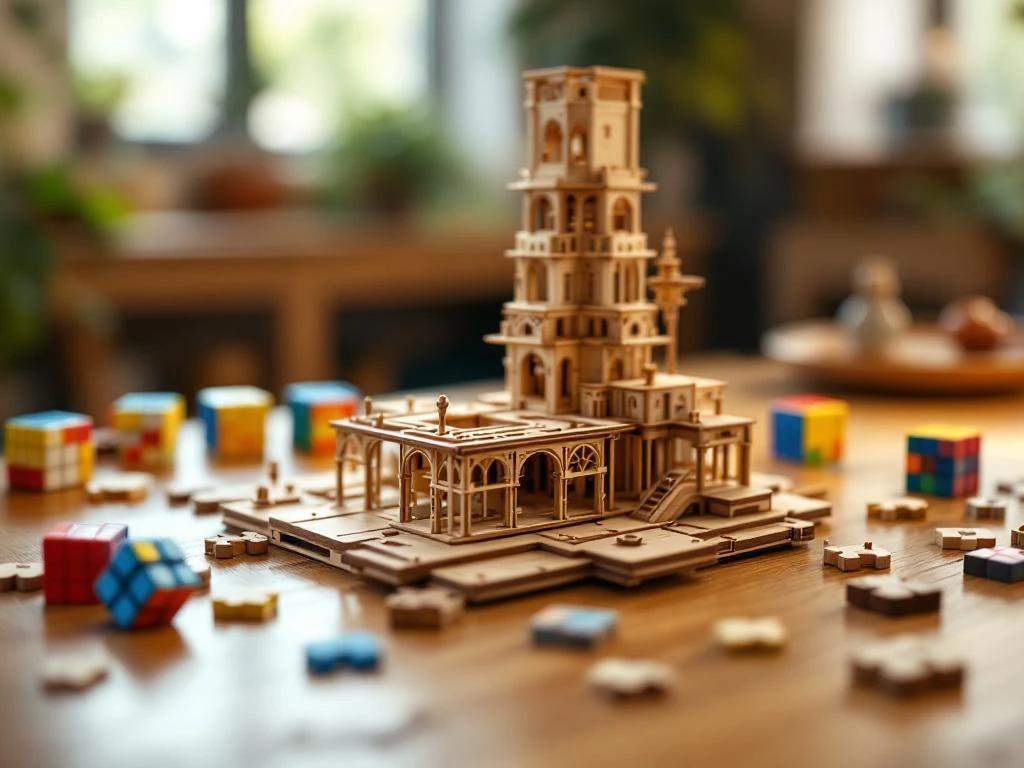
Geography projects can focus on world-famous buildings like the Eiffel Tower, Chinese pagodas, or African huts. This helps children understand different cultures and architectural styles. Landscape models with mountains, rivers, and bridges make geographical concepts visual and tangible.
For arts education, open, creative construction kits are ideal. Children can make their own designs, add colors, or modify existing models. This stimulates creativity and personal expression while they develop technical skills.
Interdisciplinary projects combine multiple subjects. A windmill project can integrate physics (energy), history (Dutch mills), geography (landscapes), and mathematics (proportions) into one engaging activity.
What are the practical advantages for teachers and schools?
Wooden construction kits are budget-friendly because they last for years and can be used by multiple classes. They require minimal maintenance, are easy to store, and create a calm working atmosphere in the classroom. For group activities, children can collaborate on larger projects or work individually on smaller models.
The budget-friendliness comes from the durability of wood. While plastic building sets can break and electronic kits become outdated, wooden construction kits remain functional. A one-time investment delivers years of educational value, drastically reducing the cost per student.
Reusability is a major advantage. After completing a project, components can be disassembled and reused. This makes it possible to do different projects without constantly purchasing new materials. Schools can build a library of construction kits that rotate between classes.
Maintenance is minimal because wood is a robust material. Occasional dusting is usually sufficient. Damaged components can often be easily repaired or replaced without throwing away the entire kit.
Storage is practical because wooden components can be stored compactly. Many construction kits come in handy wooden boxes that serve as both storage containers and presentation materials. This keeps the classroom tidy and makes material distribution simple.
For group size, construction kits offer flexibility. Small projects are suitable for individual work, while large models are perfect for teamwork. A class of 30 students can work in groups of 3-4 children, which promotes social interaction.
The required time varies from 30 minutes for simple projects to multiple lessons for complex models. This makes planning easy and provides opportunities for both short activities and extended project weeks.
A calm, concentrated working atmosphere emerges naturally because children are focused on working with their hands. The tactile nature of wood has a calming effect, which is especially useful for restless students or children with concentration problems.
For schools looking to expand their model building activities, we offer an extensive range of educational construction kits. Our wooden construction kit assortment is specially selected for educational purposes and offers various difficulty levels for all age groups.
Frequently Asked Questions
How do I best prepare my class for working with wooden construction kits?
Start by establishing clear work rules: work calmly, share materials fairly, and help each other. Ensure adequate workspace per group and lay out all components clearly. First demonstrate the basic techniques and let children practice with simple connections before they start on the actual project.
What do I do if parts of a construction kit get damaged or lost?
Check after each lesson whether all components are complete and store them in an organized manner. For damaged wooden components, you can often contact the supplier for replacement. Create an inventory list per construction kit and train students to handle materials carefully by making this part of the final assessment.
Can children with motor problems also work successfully with wooden construction kits?
Yes, wooden construction kits are actually very suitable for children with motor challenges. Choose construction kits with larger components and provide adapted tools like grip-enhancing gloves. Have these children collaborate with classmates and focus on their strengths, such as planning and giving instructions.
How do I integrate construction kits into my existing lesson plan without running short of time?
Plan building activities as practical reinforcement of theory lessons. A 30-minute building session can strengthen an entire history or science lesson. Also use construction kits as rewards for completed work or as choice activities during project weeks. Prepare materials in advance to minimize setup time.
What safety measures should I take when using wooden construction kits?
Check construction kits beforehand for splinters or sharp edges and sand them smooth if necessary. Ensure that small components are not accessible to very young children. Teach children not to put components in their mouths and to be careful with moving parts. Keep a first aid kit within reach for minor scrapes.
How do I assess students when working with construction kits?
Create an assessment rubric that evaluates both the final result and the work process. Look at collaboration, problem-solving ability, carefulness, and creativity. Have students present their project and explain what challenges they encountered. Use photos of the building process to document and discuss progress.
What are the best strategies for storing and managing multiple construction kits?
Use a clear labeling system with photos of the final result on each storage box. Create a lending register so you know which class has which kit. Store components in compartments or bags by type, and train students to put everything back the same way. Do a monthly inventory to detect missing parts early.
Table of contents
Much viewed



More blogs