
-
 Dave Vinke
- Leestijd: 5 min
- Laatst geüpdatet: 05/01/2026

Puzzling develops a broad range of valuable skills that enhance both your mental sharpness and personal growth. From cognitive functions like memory and concentration to social skills like teamwork and communication: regular puzzling stimulates various brain areas and builds important life skills. Whether you choose puzzles for adults or play with children, every puzzle experience contributes to your personal development.
What cognitive skills do you train through regular puzzling?
Puzzling activates multiple brain areas simultaneously and strengthens cognitive functions such as working memory, concentration, spatial insight, and analytical thinking ability. Your brain forms new neural connections while you recognize patterns, process information, and search for solutions.
Memory is trained because you constantly need to remember and link information. With jigsaw puzzles, you remember colors, shapes, and where certain pieces might fit. Speed cubes require you to store algorithms and movement sequences in your memory.
Your concentration improves because puzzling demands your complete attention. Distraction leads to errors, so you learn to maintain your focus for longer periods. This benefits other activities where concentration is important.
Spatial insight develops through three-dimensional puzzles and rotation elements. You learn to mentally rotate objects, estimate distances, and understand spatial relationships. Especially puzzles for children help develop this skill early.
How do you develop problem-solving ability and strategic thinking with puzzles?
Puzzles teach you to approach problems systematically by trying different strategies, recognizing patterns, and following logical steps. You develop a methodical mindset that you can also apply in other situations.
Pattern recognition emerges because puzzles often contain recurring elements. You learn to see connections between different components and make predictions about possible solutions. This skill helps in solving new challenges more quickly.
Logical reasoning is trained because every step in a puzzle has logical consequences. You learn to understand cause-and-effect relationships and systematically eliminate possibilities. Sudokus and logic puzzles are excellent examples of this.
You develop strategic thinking by planning ahead and weighing different approaches. More complex puzzles require you to think several steps ahead and consider alternative routes when a strategy doesn’t work.
Why does puzzling help improve patience and perseverance?
Puzzling builds mental resilience because you learn to cope with frustration and setbacks without giving up. You develop patience because solutions take time, and perseverance because you overcome challenges step by step.
Frustration tolerance increases because puzzles confront you with moments when progress stagnates. You learn to accept these feelings and deal constructively with setbacks. This also helps in other life situations where patience is required.
Persistence grows because puzzles reward you for persevering. Every small progress motivates you to continue, even when the solution still seems far away. You learn that complex problems are solvable with sufficient time and effort.
Puzzling also teaches you to take breaks when you get stuck. Sometimes it helps to step away for a moment and return later with fresh eyes. This skill is valuable for stress management and effective problem-solving.
What social and emotional skills do you develop through puzzling together?
Group puzzles promote teamwork, communication, and empathy, while you learn to collaborate toward a common goal. Puzzling together strengthens social bonds and improves your ability to work effectively with others.
Communication skills develop because you need to share ideas, ask questions, and give feedback. You learn to clearly explain what you see and listen to others. These skills are essential for effective collaboration.
Teamwork improves because everyone brings different strengths. One person is good at edge pieces, another sees patterns faster. You learn to appreciate each other’s qualities and distribute tasks effectively.
Your self-confidence grows through successful contributions to the team and experiencing shared victories. At the same time, you learn to remain humble and accept help when others find better solutions.
Puzzling together reduces stress through social connection and shared focus. It creates relaxing moments where you can talk and laugh while working on something constructive.
How do you choose the right puzzles to develop specific skills?
The choice of puzzle type determines which skills you develop most. By consciously selecting different types of puzzles, you can work specifically on particular cognitive, social, or emotional competencies you want to strengthen.
For concentration and patience, jigsaw puzzles with many pieces are ideal. Start with 500 to 1000 pieces and gradually build up. Puzzles for adults with complex images offer the right challenge without being overwhelming.
For logical thinking, choose sudokus, crossword puzzles, or brain teasers. These systematically train reasoning and pattern recognition. Speed cubes develop spatial insight and memory through the combination of algorithms and three-dimensional manipulation.
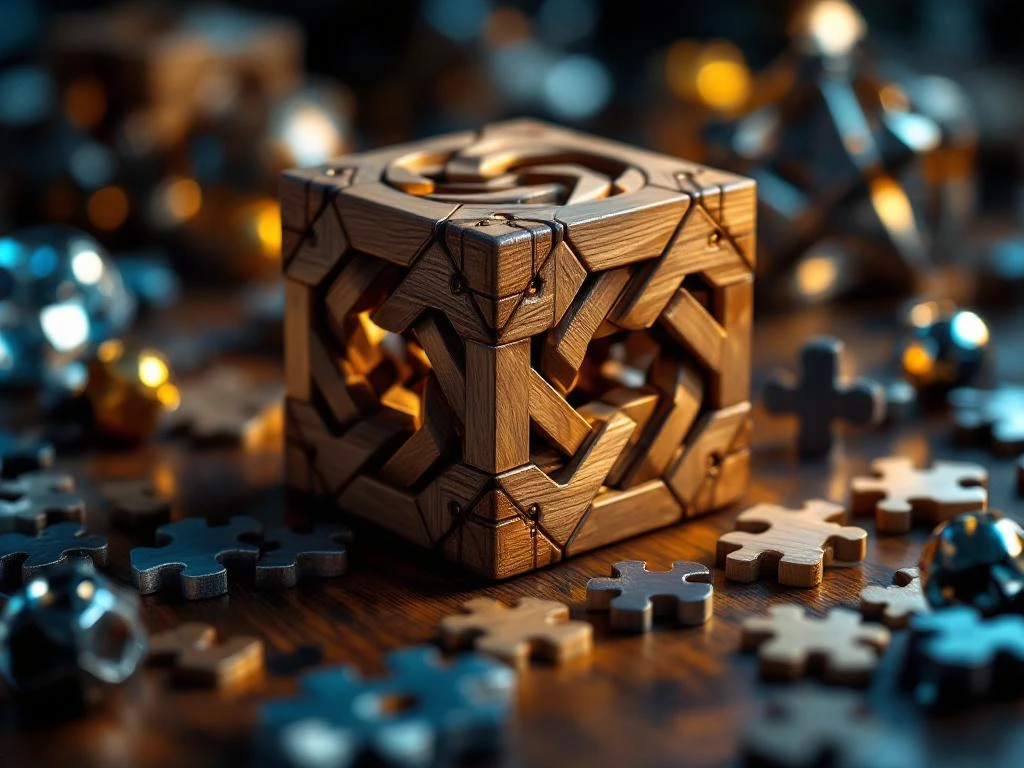
A wooden puzzle offers a tactile experience that strengthens fine motor skills and spatial awareness. The natural texture and weight provide extra sensory feedback that stimulates brain development.
For children, start with simple shape puzzles and gradually build up to more complex challenges. Puzzles for children should match their developmental level to prevent frustration and create successful experiences.
You develop social skills by choosing group puzzles that require cooperation. Large jigsaw puzzles or team challenges that need different expertise promote communication and mutual dependence.
With us, you’ll find an extensive assortment of puzzles that perfectly match your development goals, from simple beginner tasks to complex challenges for advanced puzzlers.
Frequently Asked Questions
How often should I puzzle to really see results in my cognitive skills?
For noticeable improvement in concentration and memory, 15-30 minutes of puzzling per day is sufficient. Consistency is more important than long sessions - daily short puzzling gives better results than once a week for hours. After 2-3 weeks of regular puzzling, you usually notice the first positive effects on your focus and problem-solving ability.
What should I do when I get stuck on a difficult puzzle and become frustrated?
Take a break of 15-30 minutes and do something else - often you suddenly see the solution when you come back. Try a different approach: work on another part of the puzzle or look at it from a different angle. With jigsaw puzzles, you can switch from edge pieces to color areas, or try a different strategy with logic puzzles.
Can elderly people also benefit from puzzling, or is it mainly effective for younger people?
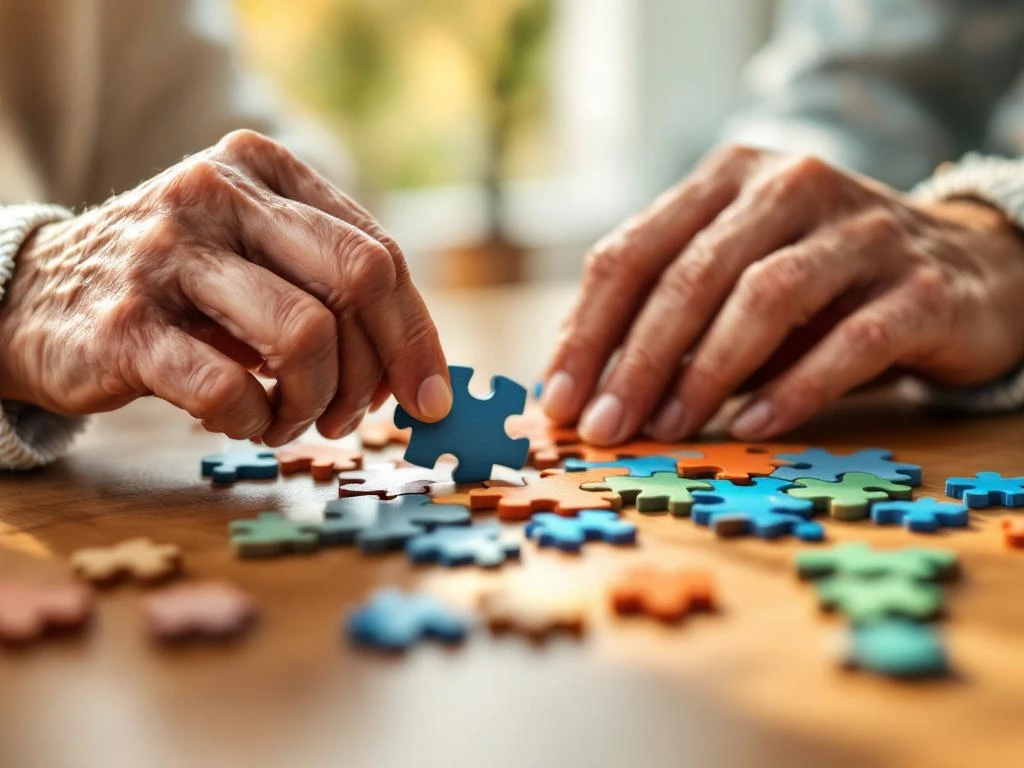
Puzzling is particularly valuable for elderly people because it helps maintain cognitive functions and memory. Research shows that regular puzzling can reduce the risk of dementia and preserve mental sharpness. Start with simpler puzzles and gradually build up - it's about mental stimulation, not the difficulty level.
How do I make puzzling fun for children who quickly lose interest?
Choose puzzles with subjects that interest them (animals, vehicles, favorite characters) and ensure the right level - not too easy but also not overwhelming. Make it a social activity by puzzling together and celebrate small successes. Alternate between different puzzle types to prevent boredom and let them choose which puzzle they want to make.
Is there a difference between digital puzzles on a tablet and physical puzzles for brain development?
Physical puzzles offer unique advantages through the tactile experience and spatial manipulation that digital versions cannot match. They train fine motor skills and provide better spatial feedback. Digital puzzles are more convenient for on-the-go and often offer more variety. For optimal brain development, a combination of both is best.
What common mistakes should I avoid as a beginning puzzler?
Don't start with puzzles that are too difficult - this leads to frustration and demotivation. Ensure good lighting and a tidy workspace to prevent eye fatigue and chaos. Never force pieces - if they don't fit, try a different combination. Don't skip the edge pieces with jigsaw puzzles; these provide structure and make the rest easier.
How can I use puzzling to reduce stress after a busy workday?
Choose calming puzzles with natural images or simple patterns that don't require too much mental effort. Create a fixed routine by puzzling for 20 minutes every evening without distractions. The repetitive movements and focused attention work meditatively and help you let go of thoughts from the workday. Soft background music can enhance the relaxing effect.
Table of contents
Much viewed



More blogs