
-
 Dave Vinke
- Leestijd: 5 min
- Laatst geüpdatet: 05/01/2026

For beginners, simple puzzles with clear colors and logical movements are most suitable. The classic 3×3 Rubik’s Cube forms the perfect starting point, followed by 2×2 cubes and pyraminx puzzles. These puzzles offer a good balance between challenge and achievability, allowing you to develop your skills step by step without becoming frustrated by overly complex mechanisms.
What makes a puzzle suitable for beginners?
A beginner puzzle is characterized by simple mechanisms, clearly distinguishable colors and a logical learning curve. The number of possible movements must remain limited, so you can learn the basics without being overwhelmed by complexity.
The most important factors that make a puzzle accessible are the size and number of parts. Puzzles for adults and puzzles for children often differ in complexity, but both groups benefit from the same starting principles. A good beginner puzzle has a maximum of six sides with contrasting colors that are easy to distinguish, even under artificial light.
The mechanism plays a crucial role in suitability for beginners. Puzzles with smooth movements and a clear click in the correct positions help you learn the right techniques. Avoid puzzles that get stuck or move unpredictably, as this causes frustration and hinders the learning process.
The learning curve should be gradual, starting with basic movements and slowly building up to more complex algorithms. Puzzles with too many variations in movement directions make it difficult to recognize patterns and remember techniques.
Which types of puzzles are best for your first experience?
The classic 3×3 Rubik’s Cube remains the best choice for beginners, because extensive learning materials are available and the puzzle offers a perfect balance between challenge and achievability. Alternatives like the 2×2 cube and the pyraminx are also excellent starting options.
For absolute beginners, the 2×2 cube is often more ideal than the 3×3 version. This smaller variant has fewer parts and requires shorter algorithms, allowing you to gain successful experiences more quickly. The movements are identical to those of a 3×3 cube, so you immediately learn the correct techniques.
The pyraminx forms an interesting alternative with its triangular shape and four sides. This puzzle has a different movement logic than cubic puzzles, which provides variety in your learning process. Moreover, the pyraminx is often faster to solve than a traditional cube.
Simple brain teasers and wooden puzzle variants offer a calmer pace for people who are less interested in speed. These puzzles focus more on logical thinking than on fast finger movements, making them perfect for relaxing puzzle moments.
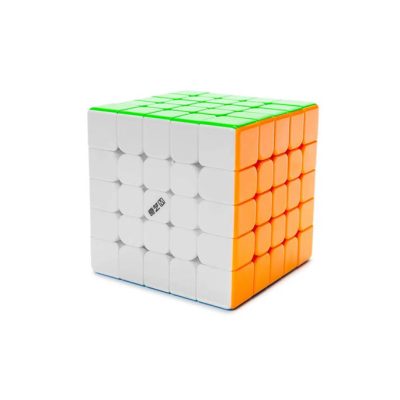
Avoid more complex variants like 4×4 or 5×5 cubes until you have completely mastered the 3×3. These larger puzzles introduce new concepts that can be confusing if you haven’t yet mastered the basics.
How do you choose between a regular cube and a magnetic cube as a beginner?
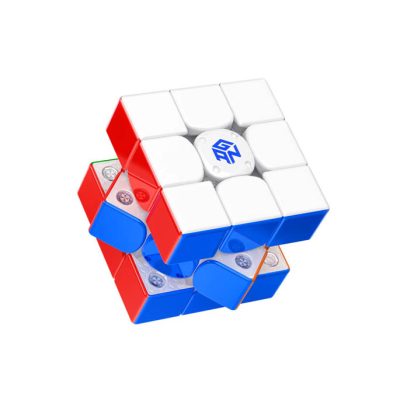
Magnetic cubes offer better control and accuracy, making them ideal for beginners who want to seriously learn puzzling. The magnets help align the layers and prevent unwanted movements during solving.
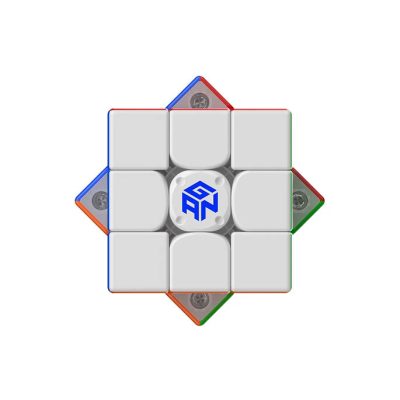
Magnetic technology places small magnets in the corners and edges of the puzzle. These magnets pull the layers to the correct positions, resulting in more stable movements and fewer missteps. For beginners, this means you can focus on learning algorithms instead of struggling with inaccurate movements.
The advantage of magnetic cubes becomes especially clear when learning faster movements. Even as a beginner, you notice that your movements become more consistent and that you make fewer accidental wrong turns. This significantly speeds up the learning process.
The extra investment in a magnetic cube is usually worth it, even for beginners. The price difference is relatively small compared to the improved experience. Moreover, you don’t need to upgrade quickly to a better puzzle, because magnetic cubes last a long time.
Regular cubes without magnets are still fine for casual use, but if you plan to puzzle regularly or seriously develop your skills, then a magnetic variant is the better choice.
What are the most common mistakes when choosing your first puzzle?
The biggest mistake is choosing overly complex puzzles, such as 4×4 cubes or special puzzles, before mastering the basics. Beginners often underestimate how much time and practice is needed to learn to solve even a simple 3×3 cube.
Many beginners make the mistake of choosing the cheapest option without considering quality. Poor puzzles with stiff movements or loose parts make the learning process frustrating and can even lead to giving up the hobby.
Another common mistake is ignoring size. Some people choose mini cubes because they look cute, but these are harder to hold and manipulate. Standard size cubes (approximately 5.6 cm) are designed for optimal ergonomics.
Beginners also often forget to consider their learning style. Visual learners benefit from puzzles with bright, contrasting colors, while tactile learners prefer puzzles with clear texture differences.
Choosing puzzles without good learning materials is also problematic. Make sure that tutorials, manuals or online resources are available for your chosen puzzle. Obscure puzzle variants often have limited learning materials.
Where can you find the best beginner puzzles and what should you expect?
Quality puzzles can be found at specialized web shops that focus on speedcubing and puzzle hobbies. These shops not only offer better products, but also expert guidance in your choice and extensive product information.
When searching for the right puzzle, you can expect prices between €10 and €30 for a good beginner puzzle. Magnetic versions usually cost €5 to €10 more than standard cubes, but this investment quickly pays for itself in an improved experience.
Expect fast delivery from quality shops, often within one to two working days. Good web shops also offer clear product descriptions with specifications such as dimensions, weight and magnetic properties. They usually also provide beginner tips and links to learning materials.
Customer service is crucial at puzzle shops, because you may have questions about suitability for your level or technical specifications. Look for shops with extensive FAQ sections and responsive customer support.
With us you will find a carefully selected assortment of puzzles for all levels, from absolute beginners to advanced speedcubers. We offer same-day shipping until 11:30 PM and personal guidance in choosing your first puzzle, so you can immediately start with this fascinating hobby.
The best beginner puzzles combine quality, educational value and fun. By making the right choice, you lay a solid foundation for years of puzzle enjoyment and personal development.
Frequently Asked Questions
How much time do I need to solve my first 3x3 cube?
For beginners it takes an average of 2-4 weeks of regular practice (30-60 minutes per day) to completely solve a 3x3 cube for the first time. Your first solution can take 10-20 minutes, but with practice you can reduce this to 2-3 minutes within a few months.
Should I memorize algorithms or can I look them up while puzzling?
In the beginning it's fine to look up algorithms, but for real progress you need to memorize the basic algorithms (about 7-10 for beginners) by heart. Start by memorizing one algorithm per week and practice it daily until it becomes automatic.
What do I do if my cube gets stuck or doesn't turn smoothly?
A stiff cube usually needs maintenance: turn all layers a few times completely around to loosen the mechanisms, and consider silicone spray for better gliding. If this doesn't help, the cube may be of poor quality and you should upgrade to a better variant.
Can I start speedcubing immediately or should I learn slowly first?
Always start slowly and focus first on correctly executing movements and algorithms. Speed comes naturally as your movements become automatic. Trying to speedcube without a solid foundation leads to bad habits that are difficult to correct later.
Are there good free resources for learning to puzzle, or do I need to take paid courses?
There are excellent free resources available, such as YouTube tutorials from J Perm and CFOP method guides online. Paid courses are not necessary for beginners - start with free material and only invest in premium content if you want to get really serious about speedcubing.
How do I know when I'm ready to move on to more difficult puzzles?
You're ready for more complex puzzles when you can consistently solve a 3x3 cube under 3 minutes without aids, and you know all basic algorithms by heart. For 4x4 cubes wait until you're under 2 minutes, because the extra complexity requires much more patience and concentration.
Table of contents
Much viewed
More blogs