
-
 Dave Vinke
- Leestijd: 5 min
- Laatst geüpdatet: 04/01/2026

Brain teasers for 6-year-old children must be simple enough to understand, but challenging enough to remain interesting. The best options are tangrams, simple wooden puzzles, basic mazes and simple logic puzzles. These brain teasers stimulate cognitive development without causing frustration and help children develop their concentration and problem-solving abilities.
What are the best brain teasers for 6-year-olds to start with?
Tangrams, simple wooden puzzles and basic mazes are ideal brain teasers for 6-year-old beginners. These puzzles have clear rules, a limited number of pieces and are visually appealing. They offer just enough challenge to remain interesting without becoming overwhelming.
Tangrams consist of seven geometric shapes that can be combined to form different figures. Six-year-olds can start with simple shapes like houses, boats or animals. The puzzle helps develop spatial awareness and creative thinking.
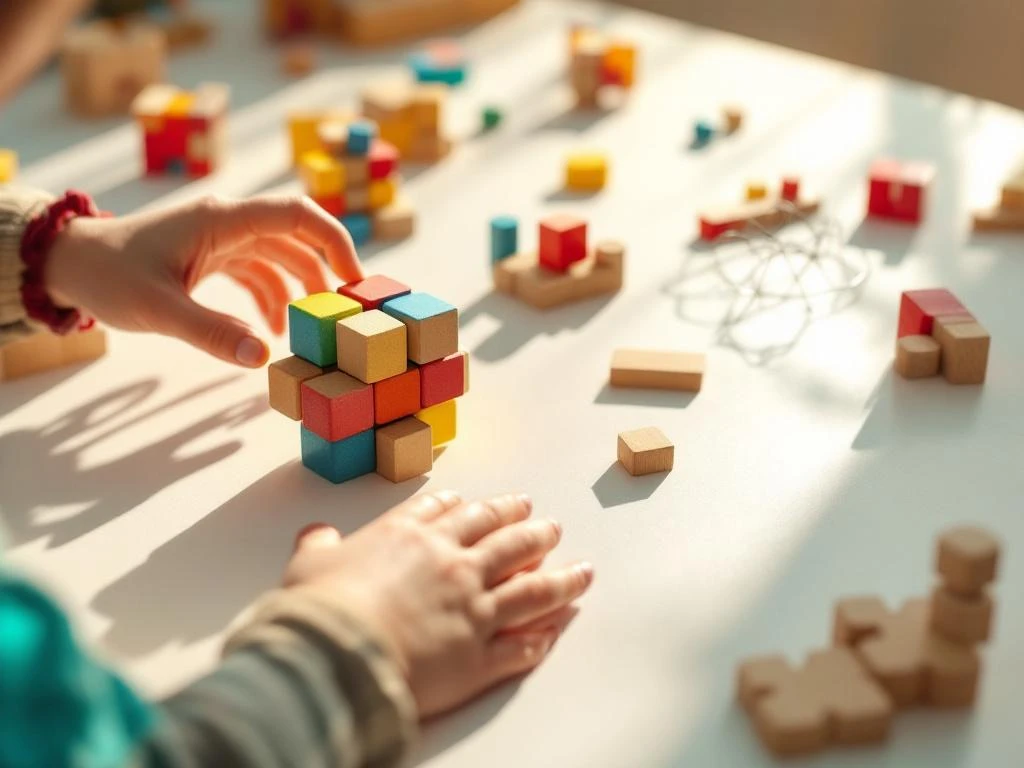
Wooden puzzles with large pieces are perfect for this age. Choose puzzles with 12 to 24 pieces that show clear images, such as animals, vehicles or fairy tale characters. The material feels pleasant and the pieces are large enough for small hands.
Simple mazes on paper or in book form provide excellent mental stimulation. Start with wide paths and clear routes. Children learn to plan ahead and try different solutions.
Basic logic puzzles, such as color and shape patterns, are also suitable. These puzzles have simple rules and help children develop their logical thinking by recognizing and completing patterns.
How do you know if a brain teaser is suitable for a 6-year-old’s developmental level?
A suitable brain teaser for a 6-year-old can be solved within 10 to 20 minutes, has clear rules and a maximum of 25 components. The child should be able to understand and solve the puzzle largely independently. Too complex brain teasers lead to frustration and loss of interest.
Pay attention to the attention span of 6-year-olds, which lasts an average of 15 to 20 minutes. A good brain teaser holds their attention within this time. If a child gives up after five minutes or becomes frustrated, the puzzle is probably too difficult.
Motor development plays an important role. Six-year-olds still make relatively large movements and are further developing their fine motor skills. Choose puzzles with large pieces that are easy to grasp. Small components of less than 2 centimeters are often too challenging.
The frustration threshold varies per child, but most 6-year-olds give up if they don’t see progress within a few attempts. Good brain teasers offer small moments of success during solving. This keeps motivation high and encourages perseverance.
Cognitive skills such as abstract thinking are still developing. Choose puzzles with concrete, recognizable images and clear connections. Avoid concepts that are too abstract or complex logical sequences that are still too far above their level.
What skills do children develop by solving brain teasers?
Brain teasers develop logical thinking, problem-solving ability, spatial insight, concentration and perseverance in 6-year-olds. These brain teasers stimulate different brain areas simultaneously and help children approach problems systematically. They learn to think step by step and try different solution strategies.
Logical thinking is stimulated because children learn to recognize cause-and-effect relationships. When solving puzzles, they must predict what will happen if they make a certain choice. This helps develop reasoning skills that are important later in mathematics and natural sciences.
Problem-solving ability grows because children learn to try different strategies. They discover that there are often multiple ways to approach a problem. This flexibility in thinking is valuable for all aspects of their development.
Spatial insight develops through puzzles where shapes must be rotated, mirrored or combined. This skill is essential for mathematics, technology and art. Children learn to think three-dimensionally and understand spatial relationships.
Concentration improves because brain teasers require focused attention. Children learn to ignore distractions and focus on the task. This skill helps later with schoolwork and other activities that require concentration.
Perseverance grows because puzzles don’t always work out the first time. Children learn that practice and persistence lead to success. They develop a growth mindset, where challenges are seen as learning opportunities.
Where can you find the best brain teasers for 6-year-olds and what should you consider when purchasing?
The best brain teasers for 6-year-olds can be found at specialized puzzle stores that guarantee quality and safety. When purchasing, look for clear age recommendations, safe materials without small parts and puzzles that gradually increase in difficulty. Always choose CE-marked products from reliable brands.
Specialized retailers often offer extensive product information and can provide advice on suitable puzzles for different developmental levels. They usually have a carefully selected assortment that meets safety standards and quality requirements.
Safety aspects are crucial when making a choice. Check that all components are larger than 3 centimeters to prevent choking hazards. Materials must be non-toxic and have smooth edges. Avoid puzzles with sharp corners or splintering parts.
Quality features include sturdy construction, clear colors and well-fitting components. Good brain teasers last for years and retain their appeal. Invest in quality for a better gaming experience and longer lifespan.
Choose the right difficulty level by starting with simple puzzles and gradually building up. Preferably buy sets that contain different levels, so the child can grow with the puzzles. This offers more value and keeps interest longer.
At specialized puzzle retailers you will often find the best selection of brain teasers, specially chosen for different age groups. These stores usually also offer help in choosing the right puzzle for your child.
Frequently Asked Questions
How long should my 6-year-old work with brain teasers per day?
For 6-year-olds, 15-20 minutes per session is ideal, with a maximum of 2-3 sessions per day. Short, regular sessions are more effective than long periods that can lead to fatigue or frustration. Observe your child and stop when concentration decreases.
What should I do if my child gets frustrated quickly with difficult puzzles?
Start with simpler puzzles and build up slowly. Help by giving hints instead of providing the solution. Celebrate small successes and remind your child that it's okay to make mistakes. Take breaks when frustration arises.
Can brain teasers help with my 6-year-old's school performance?
Yes, brain teasers improve skills that are directly applicable at school, such as concentration, logical thinking and problem-solving. These skills help especially with mathematics, reading and tasks that require planning. Regular puzzling can positively influence school performance.
Is it better to solve puzzles together with my child or let them work independently?
A combination works best. Start together to explain the rules and build confidence, but then encourage independent work. Offer support when asked, but let your child try and discover for themselves. This promotes self-confidence and independence.
How do I know when my child is ready for more difficult brain teasers?
Your child is ready for the next step when current puzzles are solved within 5-10 minutes without frustration. Other signals are: asking for more challenge, boredom with familiar puzzles, or confidently experimenting with new solution methods.
Are digital brain teasers as good as physical puzzles for 6-year-olds?
Physical puzzles have advantages for developing fine motor skills and spatial insight. Digital puzzles can be a good supplement for variety, but limit screen time and ensure balance. Physical puzzles remain the preference for this age group.
What are common mistakes when choosing brain teasers for 6-year-olds?
Common mistakes are: choosing puzzles that are too difficult because they seem 'educational', buying puzzles with parts that are too small, or expecting all children to have the same pace. Always choose puzzles that match your child's individual level and interests.
Table of contents
Much viewed


More blogs