
-
 Dave Vinke
- Leestijd: 5 min
- Laatst geüpdatet: 05/01/2026

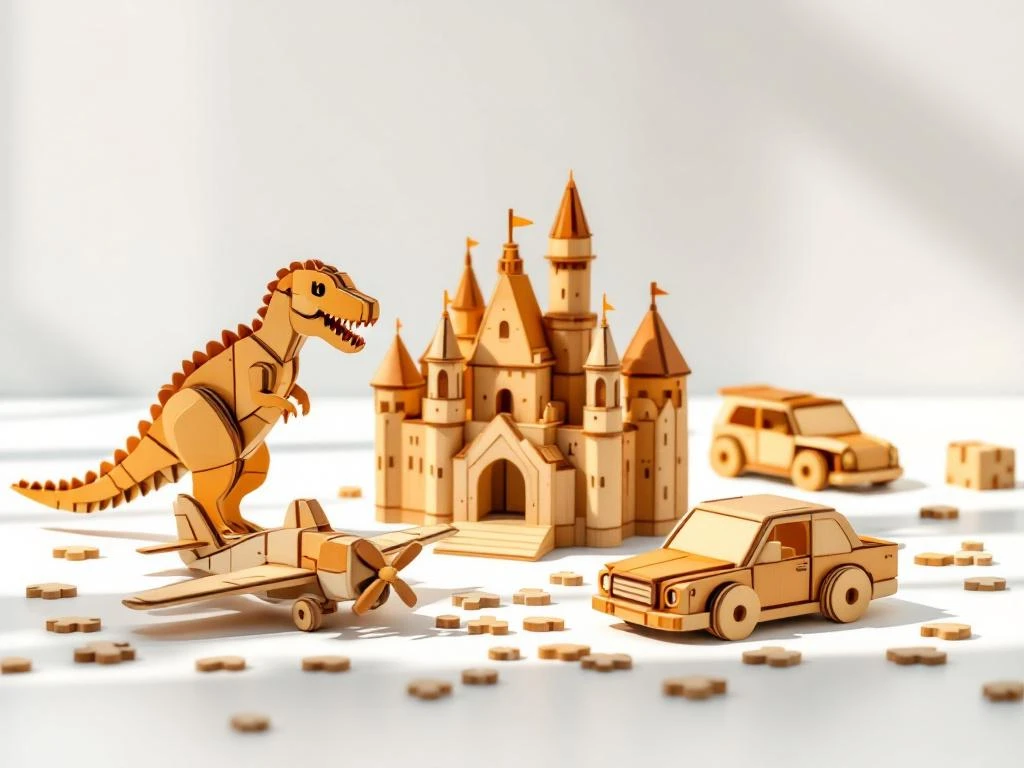
For beginners, cardboard or wooden 3D puzzles with 50 to 150 pieces are most suitable. These puzzles offer a perfect balance between challenge and achievability. Choose familiar themes, such as famous buildings or vehicles, that include clear instructions and have recognizable shapes. Wooden 3D construction kits are particularly popular because they are sturdy and produce a beautiful end result.
What is a 3D puzzle and why are they so popular?
A 3D puzzle is a three-dimensional construction game where you assemble flat pieces into a spatial object. Unlike traditional jigsaw puzzles, it creates a tangible model that you can view from all angles. These puzzles combine the mental challenge of puzzling with the satisfaction of model building.
The popularity of 3D puzzles is growing because they develop multiple skills simultaneously. They improve your spatial awareness, concentration, and problem-solving thinking. Additionally, you get a decorative object that you can proudly display.
Many people appreciate the calming effect of 3D puzzling. It requires your full attention, making daily stress temporarily disappear. For children, they are excellent educational materials that teach about architecture, vehicles, or animals in a playful way.
Which difficulty level suits absolute beginners?
Absolute beginners should start with puzzles of 50 to 150 pieces. This size offers sufficient challenge without becoming overwhelming. You can usually complete such a puzzle within two to four hours, which is motivating and prevents frustration.
Recognize beginner-friendly features by clearly numbered components and detailed step-by-step instructions. Good beginner puzzles have large, easily recognizable pieces that fit together logically. Avoid puzzles with many small details or complex mechanical components.
The difficulty level is also determined by the material and shape. Straight lines and geometric shapes are easier than organic forms. Buildings with clear structures are therefore ideal for your first 3D puzzle experience.
What are the best materials and brands for beginners?
For beginners, cardboard and wooden 3D puzzles are most suitable. Cardboard is inexpensive, lightweight, and easy to work with, while wood is more durable and has a more luxurious appearance. Both materials forgive small mistakes better than plastic variants.
Wooden 3D puzzles have the advantage of being sturdy and long-lasting. They feel pleasant and smell natural. Wooden construction kits often have laser-cut components that fit perfectly, without glue or tools.
Cardboard puzzles are perfect starter models because they are affordable and contain excellent instructions. They are lighter than wood, making them easier to handle during construction. Plastic 3D puzzles are sturdier but can be more difficult for beginners due to their tight fit.
How do you choose the right theme for your first 3D puzzle?
Choose a theme that personally interests and motivates you. Famous buildings, such as the Eiffel Tower or Big Ben, are popular choices because everyone knows what the end result should look like. This helps during construction and provides satisfaction.
Vehicles, such as trains, cars, or airplanes, are also excellent beginner-friendly themes. They have recognizable shapes and a logical construction sequence. Animal models can be more challenging due to organic forms, but are very satisfying to make.
Famous landmarks offer educational value and are great conversation starters. They combine puzzle enjoyment with learning about history and culture. Choose icons that you know and admire – this keeps you motivated during the construction process.
Which tools and tips make 3D puzzling easier?
Organization is the key to successful 3D puzzling. Sort all pieces beforehand by shape, size, or color. Use small containers or the packaging itself to keep components organized. A good workspace with adequate light and space prevents frustration.
Read the instructions completely before you begin and work step by step. Don’t rush and take breaks when you become tired. A tired mind makes more mistakes and gets frustrated more quickly.
Use tweezers if necessary for small components and a cutting mat to carefully remove pieces. With wooden puzzles, light sanding of rough edges helps. For finding quality 3D puzzles, you can visit specialized 3D puzzles webshops that offer an extensive assortment for all levels.
Start with simple models and gradually work toward more complex challenges. Each completed project gives you more experience and confidence for the next 3D puzzle. The most important thing is that you enjoy the process and are proud of your creation.
Frequently Asked Questions
How long does it take to complete my first 3D puzzle?
For beginners, a 3D puzzle of 50-150 pieces takes an average of 2-4 hours. This depends on your experience, the complexity of the model, and whether you take breaks. Take your time and enjoy the process - it's not a race!
What should I do if a piece doesn't seem to fit?
Never force a piece! First check if you have the correct components according to the instructions. See if the piece might be upside down or rotate it 180 degrees. With wooden puzzles, you can carefully sand rough edges.
Do I need special tools for 3D puzzles?
For most beginner 3D puzzles, you don't need special tools. Tweezers can be handy for small components, and with wooden puzzles, light sandpaper sometimes helps. Glue is usually not needed with quality puzzles.
Can I take apart and rebuild a 3D puzzle?
Yes, most 3D puzzles can be carefully taken apart and rebuilt. This is especially possible with wooden and cardboard versions. Note that repeated disassembly can loosen the fit.
What if I get stuck halfway through or become frustrated?
Take a break and come back later with a fresh perspective. Check if you have completed all previous steps correctly and reread the instructions. Many problems arise from haste or a missed step earlier in the process.
How do I best preserve my completed 3D puzzle?
Place your completed puzzle in a stable location out of direct sunlight to prevent discoloration. Dust regularly with a soft brush. For transport, you can carefully wrap the puzzle in bubble wrap.
Table of contents
Much viewed

More blogs