
-
 Dave Vinke
- Leestijd: 5 min
- Laatst geüpdatet: 05/01/2026

The main difference between a 3D puzzle and a jigsaw puzzle lies in the final form: 3D puzzles create three-dimensional objects such as buildings or vehicles, while jigsaw puzzles form flat images. 3D puzzles require spatial insight and structural stability, jigsaw puzzles focus on pattern recognition and colors. Both puzzle types offer unique challenges and develop different skills in puzzlers of all ages.
What are the key differences between a 3D puzzle and a jigsaw puzzle?
3D puzzles and jigsaw puzzles differ fundamentally in their end result and construction method. A 3D puzzle creates a three-dimensional object that you can view from all sides, such as a castle, car, or globe. Jigsaw puzzles, on the other hand, form a flat image that you place on a table.
The biggest difference lies in the way you puzzle. With 3D puzzles, you must consider stability and structure during construction. Each piece must not only fit in the right place but also be able to support the weight of other parts. Jigsaw puzzles are usually worked from the edges inward, while 3D puzzles are often built from bottom to top.
The puzzle pieces themselves are also shaped differently. 3D puzzle pieces often have curved shapes and special connections that provide strength. Traditional jigsaw puzzle pieces are flat, with the familiar tabs and blanks. This difference in shape directly determines how you approach the puzzle and what skills you need.
What materials are used for 3D puzzles versus jigsaw puzzles?
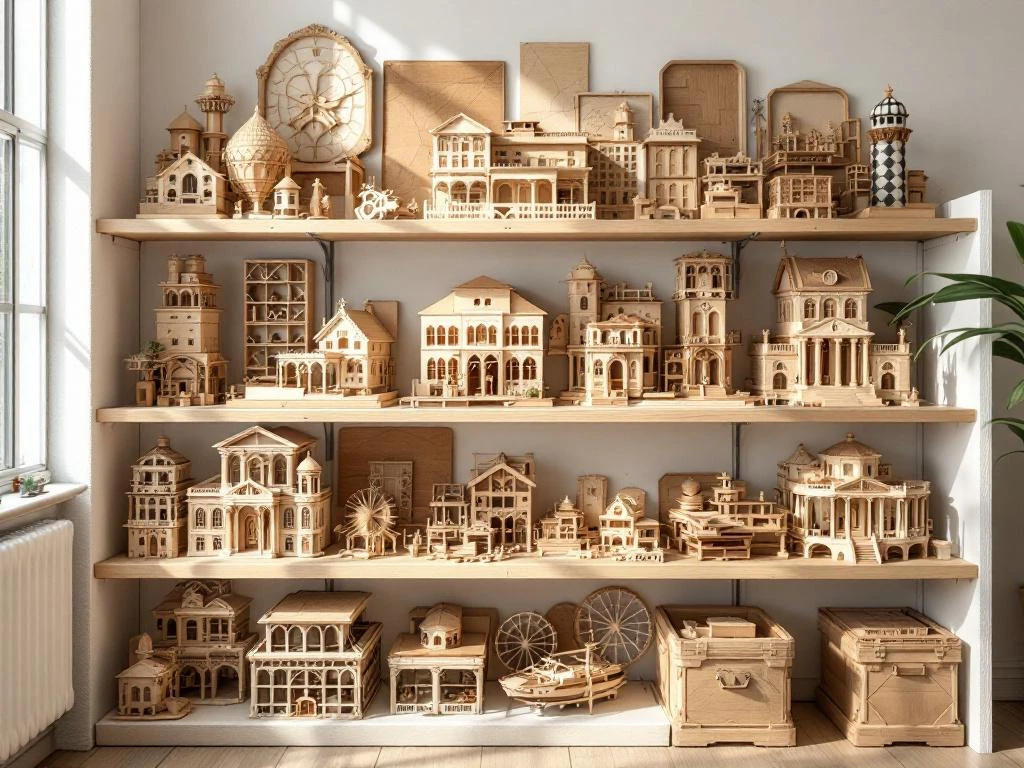
3D puzzles are made from sturdier materials than traditional jigsaw puzzles due to structural requirements. Wooden 3D puzzles are popular because of their durability and natural appearance, especially for architectural models and mechanical puzzles. Additionally, you can find 3D puzzles made of sturdy cardboard, plastic, foam, and sometimes even metal.
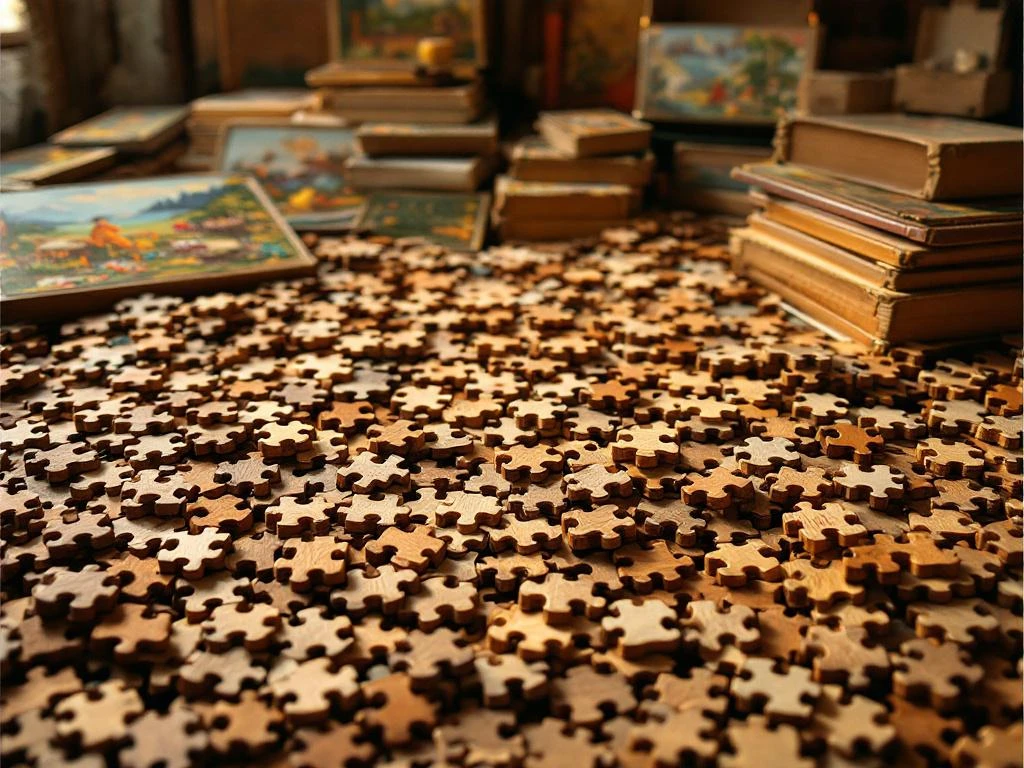
Jigsaw puzzles almost always consist of cardboard with a high-gloss finish. This cardboard is thinner than that used for 3D puzzles because it only needs to lie flat. The image is printed on the cardboard and then perforated to create the puzzle pieces.
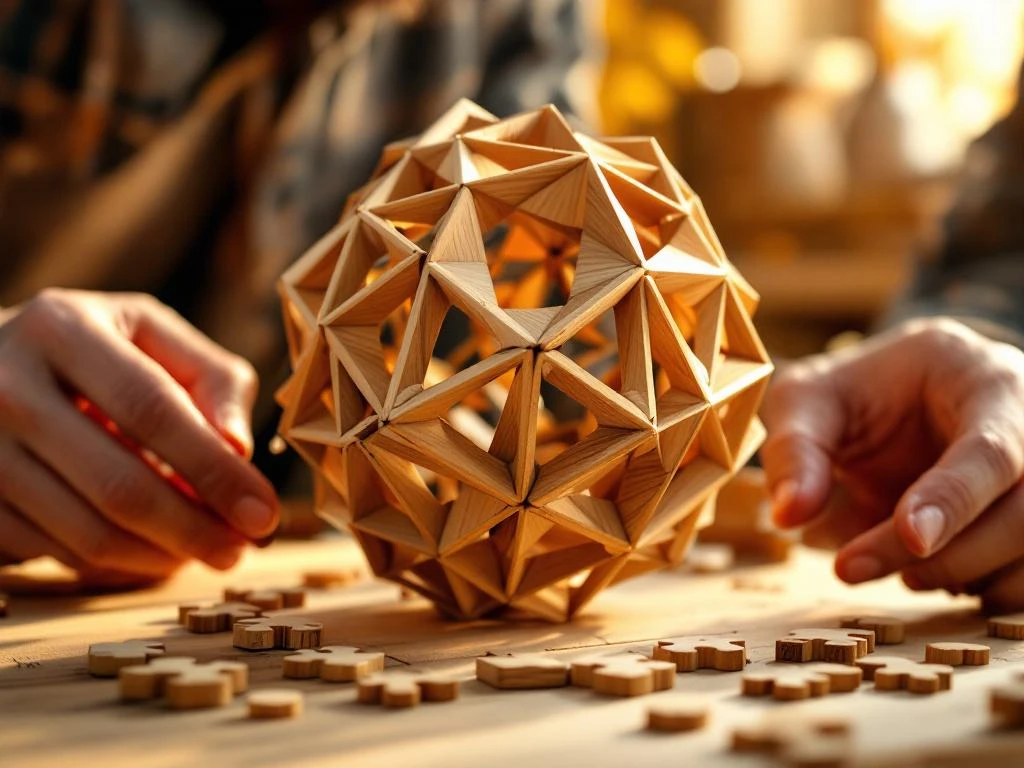
Wooden 3D puzzles are particularly interesting because they often fit together without glue. These puzzles use clever connection systems where the wood structure itself provides strength. Plastic 3D puzzles often have click connections that provide extra stability, similar to building blocks.
In 3D construction kit model building combinations, you sometimes see different materials in one puzzle. Think of wooden components for the structure, plastic for details, and metal elements for moving parts. This material combination makes the puzzle more realistic and challenging.
How does the difficulty level differ between 3D puzzles and jigsaw puzzles?
3D puzzles require spatial insight and structural thinking, while jigsaw puzzles mainly require pattern recognition and patience. With 3D puzzles, you must think ahead about stability and the order of assembly. A wrong step can mean you have to disassemble parts again.
Jigsaw puzzles offer a more linear challenge. You can usually start anywhere and make piece-by-piece progress. The difficulty lies mainly in recognizing colors, patterns, and shapes. Large jigsaw puzzles become challenging due to the sheer number of pieces, not technical complexity.
3D puzzles often have a learning curve where the first steps are more difficult than the later ones. Once started, the structure becomes clearer and progress speeds up. Jigsaw puzzles usually maintain an even difficulty level, except for very detailed or monochromatic sections.
The frustration factor also differs. With jigsaw puzzles, you can set aside a piece if it doesn’t fit. With 3D puzzles, an error in the foundations can mean you have to start over. This makes 3D puzzles more intense but also more satisfying when you succeed.
What age groups are 3D puzzles and jigsaw puzzles suitable for?
Both puzzle types are suitable for different ages but develop different skills. Jigsaw puzzles can be started by children from 3 to 4 years old, beginning with large pieces and simple images. 3D puzzles are usually suitable from 6 to 8 years old due to the more complex spatial skills required.
For children aged 6 to 12, jigsaw puzzles mainly develop concentration, pattern recognition, and perseverance. 3D puzzles additionally train spatial insight, logical thinking, and problem-solving ability. These skills are valuable for mathematical and technical subjects.
Teenagers and adults often appreciate the complexity of 3D puzzles more. They offer a tangible end result that can serve as decoration. Jigsaw puzzles remain popular at all ages because of their relaxing, meditative effect and the possibility of puzzling together.
Seniors find both types useful for keeping the mind active. Jigsaw puzzles are more accessible with reduced motor skills, while 3D puzzles offer more cognitive challenge. The choice depends on personal preference and physical capabilities.
Which puzzle best suits your preferences and skills?
The choice between 3D puzzles and jigsaw puzzles depends on your personal preferences, available time, and desired challenge. If you enjoy tangible, decorative end results and find spatial thinking challenging, 3D puzzles suit you better. For relaxation and meditative puzzling, jigsaw puzzles are more ideal.
Consider your available space and time. Jigsaw puzzles can be easily stored and completed in parts. 3D puzzles often require a longer, uninterrupted session and more workspace during construction. The end result also takes up permanent display space.
For beginners in 3D puzzling, we recommend starting with simple models of familiar objects. 3D puzzles of landmarks or vehicles are recognizable and motivating. Wooden variants offer a premium experience and are more durable than cardboard versions.
If you want to try both types, start with a small 3D puzzle alongside your usual jigsaw puzzles. This way you discover which type better matches your puzzling style and preferences. Many puzzlers eventually develop a preference for one type but appreciate the variety that both offer.
The best puzzle choice is one that challenges you without frustrating you, fits your lifestyle, and gives you long-term pleasure. Both puzzle types have their own charm and advantages for different moments and moods.
Frequently Asked Questions
How long does it take to complete a 3D puzzle compared to a jigsaw puzzle?
3D puzzles take an average of 2-8 hours depending on complexity, while jigsaw puzzles of 500-1000 pieces can take 4-12 hours. 3D puzzles require more concentration at once because you must keep the structure intact. Jigsaw puzzles can be more easily completed in parts over multiple days.
Can I take apart a 3D puzzle and rebuild it?
Yes, most 3D puzzles are designed to be built multiple times. Wooden 3D puzzles are best suited for this because they don't use glue. Store all components in a box and make sure small connecting pieces don't get lost during disassembly.
What should I do if my 3D puzzle collapses during construction?
Stop building and check the foundation - often the error lies in the first layers. Rebuild calmly from the stable section and ensure each piece clicks completely into place. With wooden puzzles, check that all connections slide together properly before continuing to build.
Are 3D puzzles suitable for making together with children?
Absolutely! Choose puzzles with large, sturdy components for children from 6 years old. Divide tasks: let children sort pieces and make simple connections, while adults handle the more complex structural parts. This promotes cooperation and teaches children spatial thinking.
How do I best store my completed 3D puzzle?
Place your 3D puzzle on a stable, flat surface away from direct sunlight. Dust regularly with a soft brush or cloth. For valuable wooden puzzles, you can use a glass dome. Avoid humid spaces that can damage the material, especially with cardboard models.
What are the best 3D puzzles for beginners?
Start with simple architectural models like the Eiffel Tower or familiar buildings with 50-150 components. Wooden animal figures or vehicles are also ideal for beginners. Avoid mechanical puzzles with moving parts as a first project - these require more experience and precision.
Can I replace missing parts of a 3D puzzle myself?
With wooden puzzles, you can sometimes cut parts yourself if you have experience with woodworking. For cardboard or plastic puzzles, this is more difficult. First contact the manufacturer - many brands send free replacement parts. Always keep the packaging with the serial number for warranty claims.
Table of contents
Much viewed

More blogs