
-
 Dave Vinke
- Leestijd: 5 min
- Laatst geüpdatet: 26/03/2026

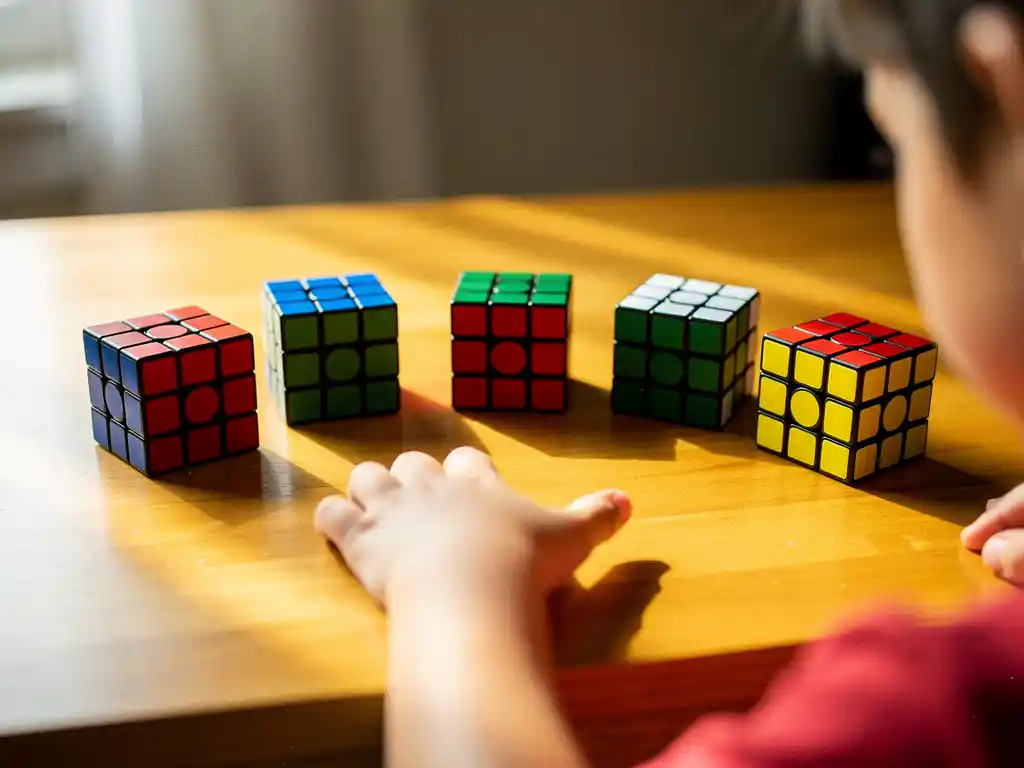
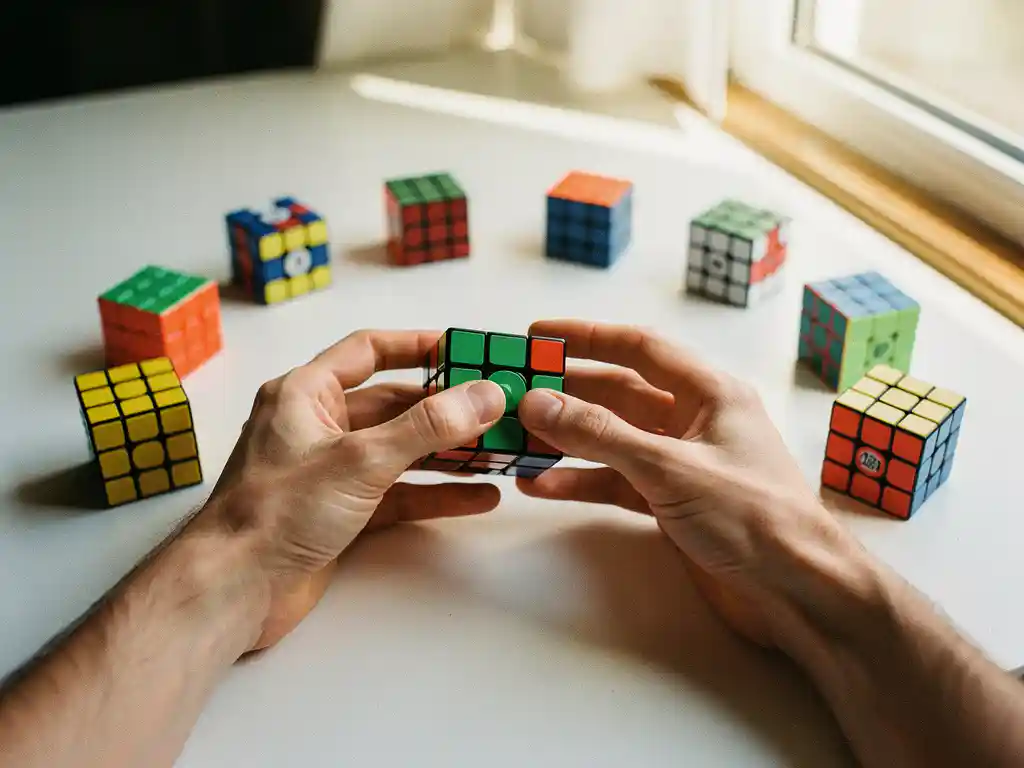
The world of speedcubing offers various challenges for puzzle enthusiasts, with the choice between a 2×2, 3×3, or 4×4 speedcube often causing confusion. Each format has its own characteristics, difficulty level, and learning curve that are important to understand before making a purchase.
Whether you’re a complete beginner wanting to take your first steps into the speedcubing world, or an experienced puzzler looking to expand your collection, it’s essential to know the differences between these popular cube formats. This knowledge not only helps you make the right choice but also provides insight into the progression possibilities within the speedcubing hobby.
What exactly is the difference in difficulty between these cubes?
The difficulty level of a 2×2, 3×3, and 4×4 speedcube differs significantly due to the number of moving parts and the complexity of the solving algorithms. A 2×2 cube has only 8 corner pieces, a 3×3 cube has 26 parts, while a 4×4 cube consists of 56 moving elements.
The 2×2 speedcube is considered the most accessible variant because you only need to solve the corners. This means you don’t have to account for center pieces or edge pieces, which drastically reduces the number of required algorithms. For beginners, this is an ideal introduction to the basic principles of cubing.
A 3×3 speedcube forms the gold standard and requires learning different phases: the cross, the first two layers, and the last layer. This means you must master multiple algorithms and develop spatial insight for various solving strategies.
The 4×4 speedcube introduces the concept of parity errors and requires knowledge of center orientation and edge pairing. This makes it significantly more complex than its smaller siblings, as you must first solve the centers before you can apply the familiar 3×3 techniques.
Which speedcube should you choose as a complete beginner?
As a complete beginner, a 3×3 speedcube is the best choice to start with. This format offers the perfect balance between challenge and accessibility and forms the foundation for all other cube formats you might want to learn later.
While a 2×2 cube is technically simpler, it doesn’t teach you the fundamental skills you need for larger cubes. By starting directly with a 3×3, you immediately develop the proper finger techniques, spatial insight, and algorithmic thinking that are essential for speedcubing.
A modern 3×3 speedcube with magnetic positioning offers beginners the advantage of improved control and accuracy during turning. This helps develop muscle memory and prevents frustration from unwanted movements during practice.
For beginners, it’s also important to choose a cube with good turning properties and durability. A quality 3×3 speedcube grows with your skills and remains relevant as your speed and techniques improve.
How much time does it take to learn to solve each cube?
You can learn to solve a 2×2 cube within 1 to 2 weeks, a 3×3 cube usually requires 2 to 4 weeks of intensive practice, while a 4×4 cube can take 1 to 3 months, depending on your experience with smaller cubes.
For the 2×2 speedcube, you only need to learn a limited number of algorithms, usually around 10 to 15 different sequences. With daily practice of 30 minutes, most people can achieve their first successful solve within a week.
The 3×3 speedcube requires more patience because you must master different phases. The beginner’s method requires learning about 20 to 25 algorithms, divided across multiple steps. With consistent daily practice of 45 to 60 minutes, beginners usually achieve their first complete solve within 2 to 3 weeks.
A 4×4 speedcube builds upon 3×3 knowledge but introduces new concepts like solving the centers and pairing the edges. This means that in addition to existing 3×3 algorithms, you must also learn new sequences for 4×4-specific situations. Experienced 3×3 cubers can usually master this within 2 to 4 weeks, while beginners need more time.
What are the costs of 2×2, 3×3, and 4×4 speedcubes?
Costs vary by cube format and quality level: budget 2×2 speedcubes cost $8 to $15, 3×3 cubes $12 to $25, and 4×4 cubes $18 to $35. Premium models with advanced magnets and coating can cost $25 to $50, depending on the format.
For beginners, cubes in the mid-range offer the best price-quality ratio. A good 3×3 speedcube from $15 to $20 usually already has magnetic positioning and smooth turning properties suitable for both learning and speed improvement.
2×2 speedcubes are generally the most affordable due to their simpler construction and smaller number of parts. However, it’s wise to invest in a model with solid magnets, as this significantly improves the learning experience.
4×4 speedcubes are more expensive due to their complex internal mechanism and large number of moving parts. However, the investment is worthwhile if you’re serious about expanding your cubing skills to larger formats.
Can you go directly from 2×2 to 4×4, or must you go through 3×3?
It is strongly recommended to first master a 3×3 speedcube before moving to a 4×4, because the 4×4 solving method directly builds upon 3×3 techniques and algorithms. A direct transition from 2×2 to 4×4 lacks essential foundational knowledge.
The 4×4 speedcube uses a method called reduction, where you first solve the centers and pair the edges to then apply the familiar 3×3 algorithms. Without thorough knowledge of 3×3 techniques, you miss these crucial building blocks for a successful 4×4 solve.
Additionally, when learning a 3×3 cube, you develop important finger techniques, spatial insight, and algorithmic thinking that are directly applicable to larger cubes. These skills are much harder to develop when you start directly with a more complex 4×4.
A logical progression is: start with a 3×3 until you can solve it comfortably, possibly experiment with a 2×2 for extra practice with corner orientation, and only then move to a 4×4 when you’ve mastered 3×3 techniques well. This approach ensures a solid foundation and prevents frustration during the learning process.
Frequently Asked Questions
Which speedcube is best for children who want to start cubing?
For children, a 3×3 speedcube with magnetic positioning is recommended, preferably a model with good grip and not too loose turning properties. Choose a cube in the mid-range ($15-20) that is durable and grows with their development. Avoid too cheap models that can jam or break.
Can I improve my speedcube performance by switching from a cheap to an expensive cube?
A better cube can improve your times, but the biggest improvement comes from practice and better algorithms. An upgrade from a budget cube to a premium model can save 1-3 seconds, but learning more efficient methods like CFOP or Roux yields much more time savings.
How do I maintain my speedcube to keep optimal performance?
Clean your cube every 2-3 months by taking it apart and cleaning the parts with a damp cloth. Use special cube lubricant (no WD-40 or household oil) to maintain turning properties. Adjust the tension if the cube becomes too loose or too tight.
What are the most common mistakes beginners make when learning speedcubing?
Beginners often focus too early on speed instead of accuracy, learn bad finger techniques that are difficult to correct later, and try to learn too many algorithms at once. Start slowly with correct movements and gradually build speed while perfecting the techniques.
Is it worthwhile to learn multiple speedcubes simultaneously, or should I focus on one format?
Focus completely on one format first until you master it comfortably before adding a new format. Learning multiple cubes simultaneously can cause confusion and slow your progress. An exception is combining 3×3 with 2×2, as they use similar techniques.
Which online resources are most effective for learning speedcubing techniques?
YouTube channels like J Perm and CubeSkills offer excellent tutorials for all levels. For algorithms, websites like algdb.net and speedsolving.com wiki are very valuable. Also download a cube timer app like csTimer to track your progress and analyze statistics.
How do I know when I'm ready to switch from the beginner method to more advanced techniques like CFOP?
Switch to CFOP when you can consistently solve under 60 seconds with the beginner method and know all basic algorithms by heart. You should also be comfortable with recognizing F2L pairs and have the motivation to learn 50+ new algorithms for the last layer.
Table of contents
Much viewed
More blogs