


Putty vs. Slime
Some talk about Putty, others about slime. Are we all talking about the same thing or is there actually a difference here? We can answer that directly, “Yes, there is a difference in this. Nowadays, it is again a hot item among children, but it is also a must-have for adults! In fact, for adults, it is like a stress ball. And to be perfectly honest, there is one on my desk with me too and when I am in a call/meeting, I often play with it anyway haha.
Putty
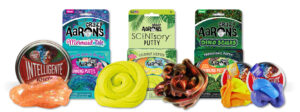
Putty is a combination of clay, kneading gum, rubber and slime all in one. It is a versatile material that you can knead, pull apart like gum and bounce when you throw it. So it is a firm substance that does not stick, but also does not dry out! So children can play with it wonderfully. In addition, it can make adults feel relaxed by kneading it nicely in the hand. All-time-favorite brand is surely Crazy Aaron’s, but Intelligent also has very fine Putty cans.
Slime
Mucus, on the other hand, is a kind of sticky substance made from various materials. The ingredients can vary, but the base is usually water, some kind of gel and sometimes dyes. It is fun to knead, deform and roll out with. Slime is also fun to make different shapes with and can be used to make original creations. We all remember the well-known Slimy keychains from our childhood, don’t we? So these are still there! Nice to give away as gifts.

Both Putty and slime are available in different colors, sizes, with & without glitter, glow in the dark and so on. So Putty and Slime are two different materials that both can give a lot of fun in addition you train your sensory and motor skills. Both materials can be used to create original works of art and help children explore their creativity. Which one is your favorite?