
-
 Dave Vinke
- Leestijd: 5 min
- Laatst geüpdatet: 26/03/2026

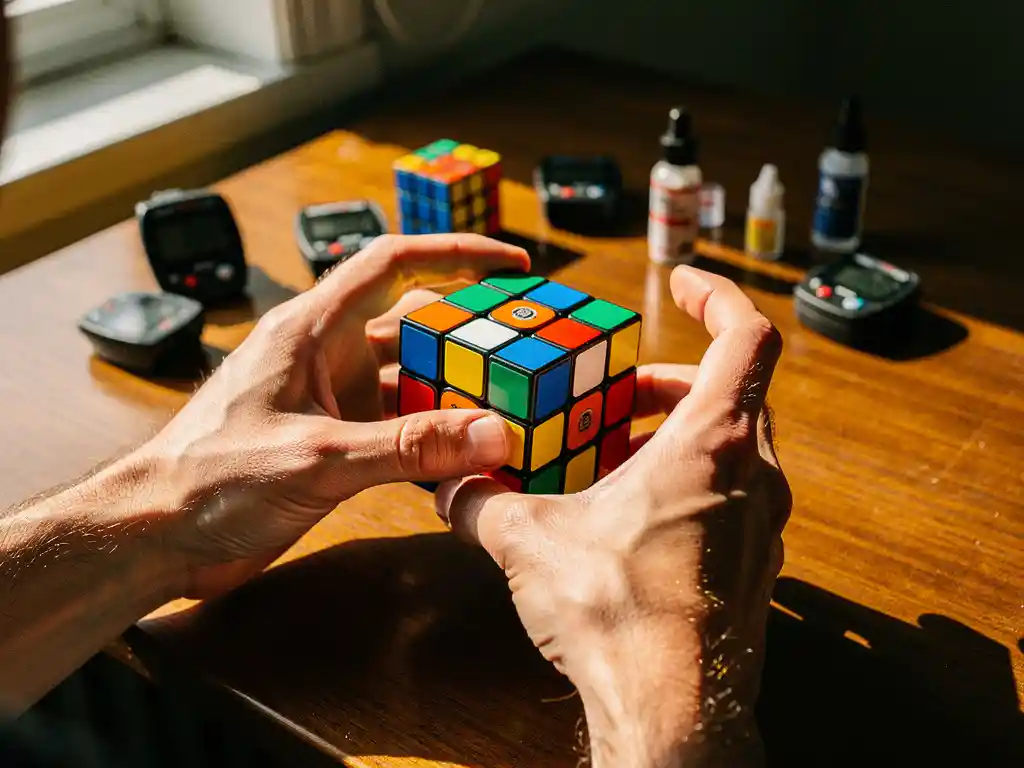
Speedcubing might seem intimidating for beginners, but in reality, anyone can learn to solve a Rubik’s Cube. The question isn’t so much whether it’s difficult, but how much time and practice you want to invest in it. With the right approach and a good speedcube, you can solve your first cube within a few weeks.
For many people, the transition from casual puzzling to speedcubing presents an exciting challenge. It does require specific techniques, the right equipment, and especially a lot of patience. Let’s take a look at what speedcubing actually involves and how accessible it really is for beginners.
What exactly is speedcubing?
Speedcubing is the sport of solving a Rubik’s Cube as quickly as possible using standardized algorithms and techniques. It goes beyond simple puzzling: speedcubers use specific methods, such as the CFOP method, to consistently achieve fast times, often under 20 seconds.
The speedcubing community organizes official competitions worldwide, where participants compete for records in various categories. From the classic 3x3x3 cube to more complex variants, such as the 7x7x7, or one-handed cubing. Modern speedcubers use specialized cubes that turn much more smoothly than traditional Rubik’s Cubes, allowing them to execute algorithms at lightning speed.
How long does it take to learn speedcubing?
Most beginners can solve their first Rubik’s Cube within 2 to 6 weeks if they practice 30 minutes daily. To become truly competitive in speedcubing usually takes 6 months to 2 years, depending on your dedication and natural aptitude.
Your learning curve progresses in clear phases. In the first weeks, you learn the basic algorithms and can solve the cube in 2 to 5 minutes. After a few months of practice, most speedcubers achieve times under one minute. Advanced speedcubers who train daily can eventually achieve times under 15 seconds, but this requires months to years of dedicated practice.
What makes speedcubing difficult for beginners?
The most difficult aspect of speedcubing for beginners is memorizing the many algorithms and developing finger dexterity. You must learn dozens of different movement sequences by heart and be able to apply them intuitively in various situations.
Many beginners become frustrated by the complexity of the terminology and the precision required. Recognizing patterns on the cube and choosing the right algorithms takes a lot of practice. Additionally, developing fast, fluid finger movements is a challenge that takes time. The mental pressure during cubing can also be intimidating, especially when you’re trying to improve your personal records.
What speedcube do you need as a beginner?
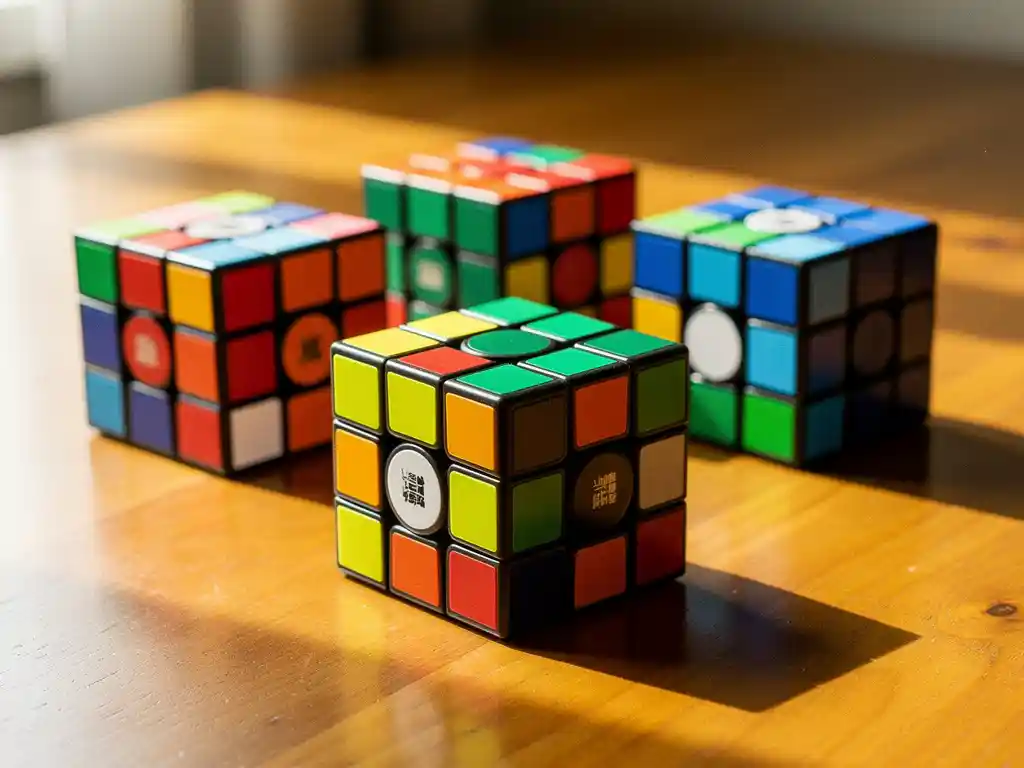
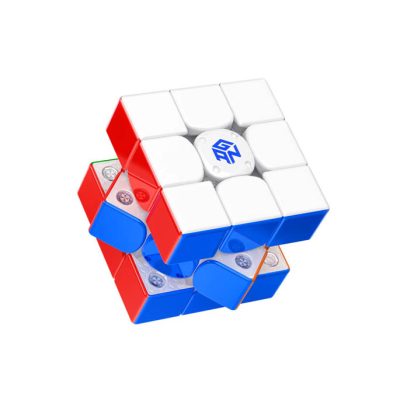
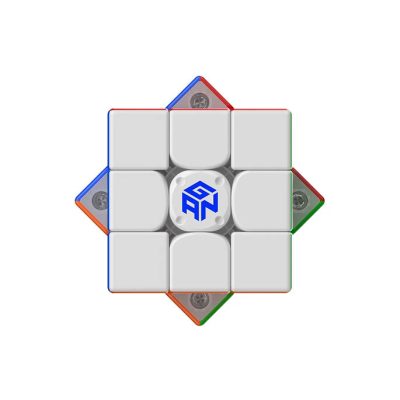
As a beginner, you need a magnetic 3x3x3 speedcube that turns smoothly and is stable. A good entry-level speedcube costs between 15 and 30 euros and offers much better performance than a traditional Rubik’s Cube from the toy store.
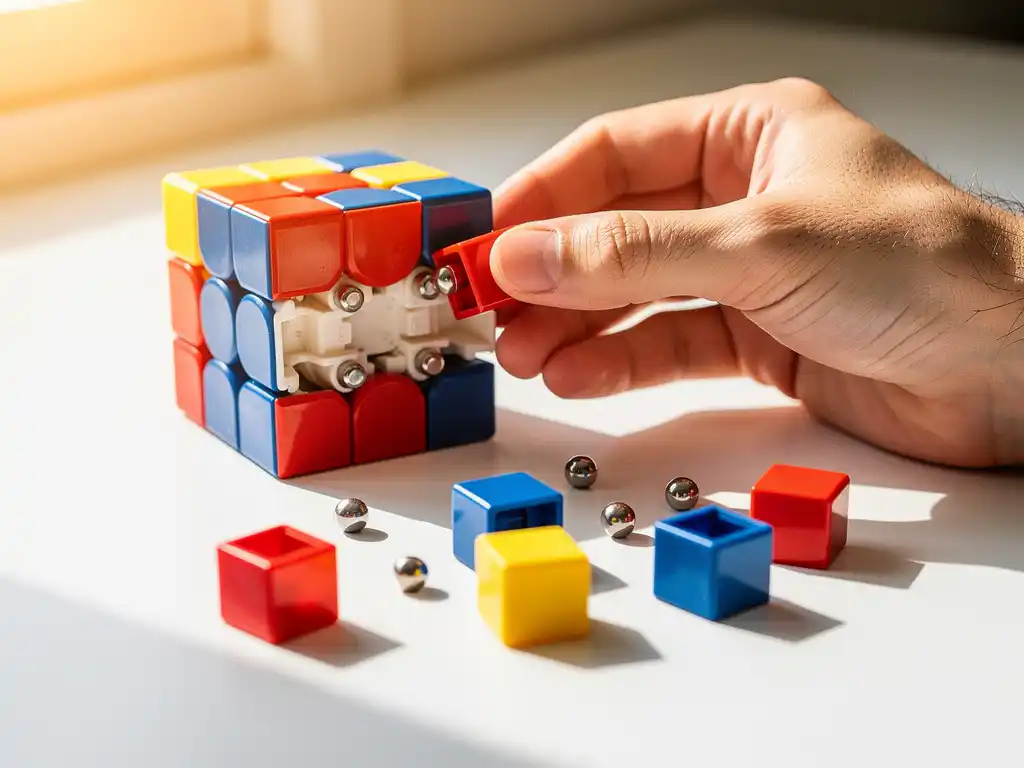
Magnetic cubes are essential because they help you develop the right turning techniques. The magnets provide better control and consistency, which is crucial during learning. We recommend starting with a proven speedcube that’s specifically designed for beginners. Avoid overly cheap alternatives that turn roughly or break quickly, as they can frustrate and slow down your learning process.
How do you start learning speedcubing?
Start by learning the layer-by-layer method through online tutorials, practice daily for 20 to 30 minutes, and focus first on correctly executing algorithms before working on speed. Begin by understanding cube notation and systematically learn each step of the solving process.
The best approach is to learn one algorithm at a time and perfect it before moving on. YouTube tutorials and speedcubing apps can help you understand the movements visually. Keep track of your times to measure your progress, but focus mainly on accuracy rather than speed in the beginning. Consider joining online speedcubing communities where you can get tips and stay motivated by other cubers.
With the right mindset, materials, and practice, speedcubing is a very accessible hobby that improves your cognitive skills and provides a great form of relaxation.
Frequently Asked Questions
Can I learn speedcubing without an expensive speedcube?
While you can technically start with a regular Rubik's Cube, you'll quickly find that this hinders your progress. A good speedcube costing 15-30 euros is an investment that makes the learning process much more enjoyable and effective. The smooth turning and magnetic stability help you develop the right techniques from the beginning.
What if I'm still stuck on certain algorithms after weeks of practice?
This is completely normal! Focus on one problematic algorithm at a time and practice it slowly until you can execute it without thinking. Use different learning methods: write down the algorithm, say it out loud while executing it, or watch different video explanations. Sometimes it helps to take a few days' break and then start again.
How do I know when I'm ready to switch from layer-by-layer to CFOP?
Switch to CFOP when you can consistently cube under 1 minute with the layer-by-layer method and know all basic algorithms by heart. This usually happens after 2-4 months of regular practice. Then start learning F2L (First Two Layers) while maintaining your existing knowledge.
Is it normal for my fingers to hurt during practice?
Mild muscle soreness in your fingers and wrists is normal during the first weeks, but sharp pain is a warning sign. Take regular breaks, do stretching exercises for your fingers, and make sure your cube isn't adjusted too tightly. If the pain persists, reduce your practice time and possibly consult a physiotherapist.
Should I immediately start attending competitions as a beginner?
You don't need fast times to attend competitions! Most competitions welcome beginners, and it's a great way to meet the community and stay motivated. Go mainly for the experience and to learn, not to win. Many speedcubers find their first competition inspiring, regardless of their level.
How can I best track and measure my progress?
Use a timer app like csTimer or Twisty Timer to track your times and view statistics. Measure your average time over 5 or 12 solves (Ao5/Ao12) instead of just your best time. Also keep track of which steps cost you the most time, so you can practice your weak points in a targeted way.
Table of contents
Much viewed
More blogs