
-
 Dave Vinke
- Leestijd: 5 min
- Laatst geüpdatet: 05/01/2026

Preserving a completed puzzle can be done in various ways, depending on your purpose and budget. The most popular methods are gluing for permanent preservation, puzzle mats for temporary storage, and laminating for extra protection. Each method has specific advantages for different types of puzzles, from adult puzzles to children’s puzzles and even delicate wooden puzzle variants.
What are the best ways to preserve a completed puzzle?
The three most effective preservation methods for completed puzzles are puzzle glue, puzzle mats, and laminating. Puzzle glue provides permanent attachment and is ideal for display purposes. Puzzle mats allow temporary storage without damaging the puzzle. Laminating offers maximum protection but is more expensive.
Puzzle glue is the most commonly used method for permanent preservation. This transparent glue penetrates between the puzzle pieces and creates a sturdy, flat surface. It works excellently for standard cardboard puzzles and is relatively inexpensive. The downside is that the process is irreversible.
Puzzle mats offer flexibility because you can roll up the puzzle and lay it out again later. This method is perfect for temporary storage or when you might want to reuse the puzzle. Puzzle mats are reusable and protect the puzzle from dust and damage during transport.
Laminating provides the best protection against moisture, light, and wear. This method is especially suitable for valuable puzzles or when you expect regular contact with the puzzle. The disadvantages are the higher costs and the fact that you need professional equipment.
How do you glue a puzzle without damaging it?
Use special puzzle glue and apply it evenly with a foam roller or brush, working from the center outward. Let the glue dry completely before moving the puzzle. Use parchment paper under the puzzle to prevent sticking to the work surface.
Start by preparing your workspace. Place parchment paper or plastic wrap under the puzzle to prevent it from sticking to the work surface. Ensure good ventilation and keep paper towels on hand for cleaning up excess glue.
Apply the puzzle glue in thin, even layers. Start in the center and work toward the edges. Pay extra attention to the edges of puzzle pieces, where glue can accumulate. A foam roller gives the most even result, but a soft brush also works well.
Avoid these common mistakes: using too much glue (this causes stains), working too quickly (which creates air bubbles), or moving the puzzle before the glue is dry. Let the puzzle dry for at least 2-4 hours, depending on humidity and temperature.
What display options are available for preserved puzzles?
Preserved puzzles can be presented in frames, on display stands, mounted on the wall, or stored in special boxes. Choose UV-resistant materials and avoid direct sunlight to prevent discoloration. Display stands are ideal for temporary presentation.
Frames offer the most professional presentation and completely protect the puzzle from dust and touch. Choose a frame that is slightly larger than the puzzle to have room for mounting. Use acid-free cardboard as a backing to prevent long-term discoloration.
Display stands are perfect for children’s puzzles who want to show their work. These stands are adjustable and allow puzzles to be displayed temporarily without permanent mounting. They are especially useful for seasonal puzzles that you change regularly.
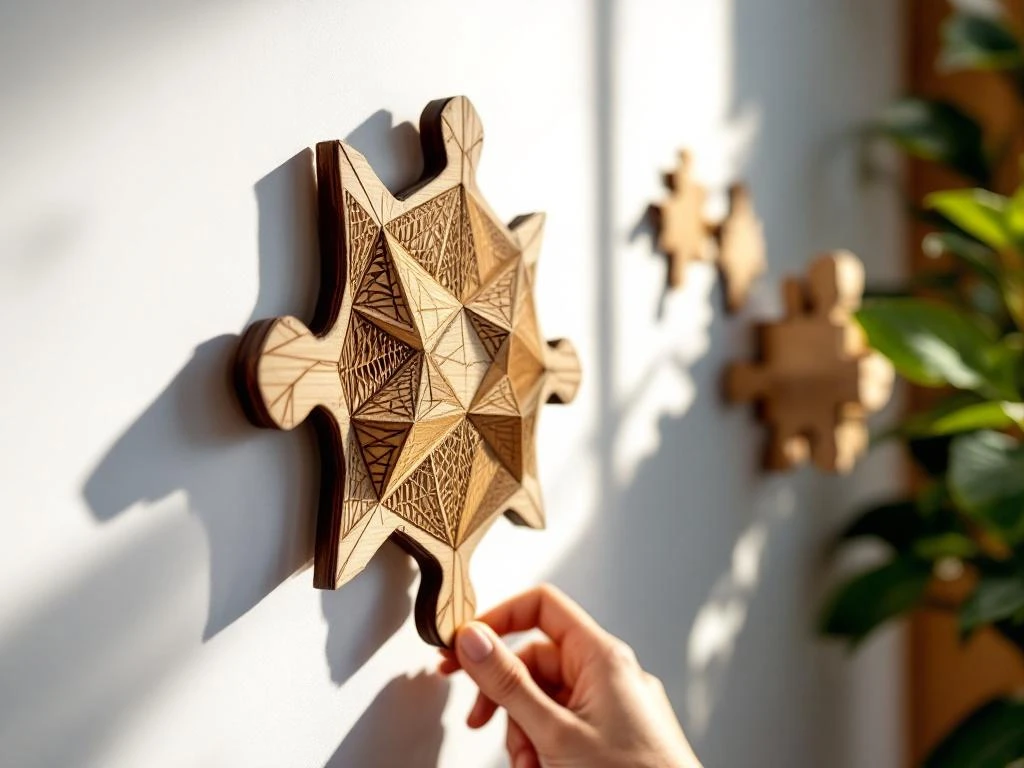
Wall mounting without a frame is also possible, but protect the puzzle from dust and moisture. Use special hanging strips that are suitable for the weight of your puzzle. Consider the humidity in the room, especially for wooden puzzle variants that are more sensitive to climate changes.
What does it cost to have a puzzle professionally preserved?
Professional puzzle preservation costs between 15 and 50 euros, depending on the method and puzzle size. Self-gluing costs 5-10 euros in materials. Laminating at a copy shop costs 10-25 euros. Professional framing can run up to 75-150 euros for larger puzzles.
Budget options for home use are very affordable. A bottle of puzzle glue costs about 8-12 euros and is sufficient for 3-5 standard puzzles. Foam rollers and brushes together cost another 5-8 euros. This investment is especially advantageous if you regularly make puzzles.
Professional services do offer additional benefits. Copy shops can laminate puzzles with professional equipment that gives better results than home laminating machines. Costs range between 0.50 and 1.50 euros per square decimeter, depending on the thickness of the laminate.
Framing services offer custom solutions for special puzzles. They can create custom frames and provide professional mounting. This is especially worthwhile for valuable puzzles or when the puzzle gets a prominent place in your interior.
Where can you find the best puzzle preservation materials?
Quality puzzle preservation materials can be found at specialized hobby shops, online puzzle stores, and DIY stores. Look for acid-free materials, UV-resistant glues, and sturdy display stands. Read reviews and compare prices for the best value for money.
Specialized puzzle stores often offer the most complete range of preservation materials. Here you’ll find special puzzle glues developed for different puzzle types, from standard cardboard puzzles to delicate wooden variants. Display stands and storage boxes are also available here in various sizes.
Online platforms offer the advantage of extensive product reviews and comparison options. Pay special attention to reviews from other puzzlers who have used the same materials. Check if the supplier has experience with adult puzzles and if they can provide advice on the best preservation method for your specific puzzle type.
DIY stores are convenient for basic materials like frames, parchment paper, and foam rollers. Here you’ll also find laminating machines for home use, although the quality is usually lower than that of professional equipment. For occasional use, these machines can be sufficient.
When choosing preservation materials, quality is more important than price. Cheap glue can cause stains or not adhere properly. Poor display stands can tip over and damage your puzzle. Invest in reliable materials to optimally protect and present your completed puzzle work.
Frequently Asked Questions
How long should I wait before hanging a glued puzzle?
Wait at least 24 hours before hanging or moving a glued puzzle. Although the surface feels dry after 2-4 hours, the glue needs more time to fully cure. In high humidity, this process can take up to 48 hours.
Can I preserve a wooden puzzle the same way as a cardboard puzzle?
Wooden puzzles require extra care because they are more sensitive to moisture and temperature changes. Use special wood glue instead of standard puzzle glue, and avoid laminating as this can cause the wood to expand. A dry, stable environment is essential for long-term preservation.
What should I do if puzzle pieces come loose after gluing?
Carefully apply a small amount of extra glue under the loose piece with a toothpick or thin brush. Press the piece firmly and place a heavy book on it for several hours. Check beforehand that all pieces fit together properly before you start gluing.
Is it possible to take apart a glued puzzle again?
Once glued puzzles cannot be taken apart again without damaging the pieces. If you want to remake the puzzle later, use puzzle mats or store the puzzle unglued in a special storage box. Puzzle glue is a permanent solution.
What frame fits best with my 1000-piece puzzle?
For a standard 1000-piece puzzle (usually 70x50 cm) you need a frame of approximately 75x55 cm to have room for mounting. Choose a frame with a depth of at least 2 cm to accommodate the thickness of the glued puzzle. Ensure UV-resistant glass to prevent discoloration.
How do I prevent my puzzle from curling after gluing?
Lay the puzzle flat under a heavy book or glass plate while drying, with parchment paper in between. Don't apply the glue too thick and ensure even distribution. Let the puzzle dry completely horizontally in a room with stable temperature and humidity.
Can I use regular all-purpose glue instead of special puzzle glue?
Regular all-purpose glue is not recommended because it often yellows, dries unevenly, and can cause stains. Special puzzle glue is transparent, flexible, and specifically developed for cardboard. The extra cost of 3-5 euros is worth the investment for a professional result.
Table of contents
Much viewed
More blogs