

-
 Dave Vinke
- Leestijd: 5 min
- Laatst geüpdatet: 15/10/2025

Maintaining a wooden construction kit differs significantly from other materials because wood is a natural, living material that responds to environmental factors. Proper maintenance prevents damage from moisture, temperature changes and wear, keeping your model building project beautiful for years to come. This guide covers the essential maintenance aspects every model builder should know.
Why do wooden construction kits require special maintenance?
Wood is a hygroscopic material that absorbs and releases moisture depending on humidity levels. This causes expansion and contraction, which can lead to warping, cracking or parts no longer fitting perfectly. Unlike plastic or metal construction kits, wood actively responds to temperature fluctuations and can suffer from insect damage.
The natural fibres in wood make it susceptible to mechanical wear. When assembling parts, edges can become damaged or crumble, especially with softer wood types like balsa or basswood. Additionally, wood can discolour from UV radiation from sunlight, affecting its original colour and texture.
Metal construction kits may rust but are otherwise stable, while plastic parts mainly suffer from UV radiation. Wooden parts, however, require preventive maintenance to preserve their structural integrity. Without proper care, wooden construction kits can seriously deteriorate within a few years, while well-maintained examples can last for decades.
How do you clean wooden construction kits without damaging them?
Always start with dry cleaning by gently wiping away dust with a soft, dry cloth or brush. For stubborn dust, you can use a slightly damp cloth, but wring it out well to avoid excess water. Always work in the direction of the wood grain to prevent damage to the fibres.
Avoid chemical cleaning agents, alcohol or solvents that can cause wood to swell or discolour. For stains, use a minimal amount of lukewarm water with a drop of neutral soap. Gently dab the stain without rubbing and immediately dry with a clean, dry cloth.
For delicate parts like thin frames or small details, use a soft toothbrush or cotton swab for precision cleaning. Always allow wooden parts to dry completely before storing or further processing them. After cleaning, check that all parts still fit properly, as even minimal moisture absorption can affect dimensions.
Which protective products work best for wooden model building?
Wood protection oil penetrates deep into the fibres and provides excellent protection against moisture and temperature changes. Apply oil thinly with a soft cloth and allow it to fully absorb before applying a second coat. This type of protection maintains the natural appearance of the wood.
Clear varnish forms a protective film on the wood surface and offers strong resistance to moisture and mechanical wear. Use varnishes specifically designed for model building, as these remain flexible and won’t crack with small wood movements. Apply multiple thin coats rather than one thick layer.
Wax provides a matte, natural appearance and is easy to apply, but offers less long-lasting protection than oil or varnish. It’s ideal for display models that are rarely handled. Don’t combine different protective products without testing first, as they may react and damage the wood.
How do you store wooden construction kits for long-term durability?
Store wooden construction kits at a constant temperature between 18-22°C and relative humidity of 45-55%. Fluctuations in these values cause expansion and contraction, leading to cracking and warping. Use a hygrometer to monitor humidity and place a humidifier or dehumidifier if necessary.
Protect your models from direct sunlight by keeping them away from windows and bright lights. UV radiation causes discolouration and weakens the wood structure. Choose a storage location without extreme temperature fluctuations, such as attics or basements, and avoid areas with high humidity like bathrooms.
Regularly check for signs of insect damage such as small holes or wood dust. Place lavender sachets or cedar wood in the storage area as natural deterrents. For valuable model building projects, you can use special storage boxes with climate control.
Our extensive range of wooden construction kits comes with specific maintenance advice for each product, so you know from the start how to best protect your investment.
Frequently Asked Questions
How often should I maintain my wooden construction kit?
For display models, annual maintenance is sufficient, but models that are regularly handled need attention every 6 months. Check monthly for dust, discolouration or minor damage. At the first signs of drying or discolouration, you can immediately intervene with a thin layer of protective oil.
What should I do if my wooden parts have warped?
Place warped parts between two flat boards with a heavy weight on top and let them acclimatise for 24-48 hours in a room with stable humidity (50-55%). For severe warping, you can lightly moisten the wood before straightening it, but do this very carefully to prevent further damage.
Can I use regular furniture varnish for my wooden model building?
Regular furniture varnish is too thick and rigid for model building and can crack with small wood movements. Always use special model building varnishes that remain flexible and can be applied in thin layers. These are specifically developed for the small parts and precision that model building requires.
How do I recognise insect damage in my wooden models?
Look for small, round holes (1-2mm diameter), fine wood dust around your model, or small worms. When in doubt, place the model in a plastic bag with a piece of white paper - fresh damage will leave wood dust on the paper within 24 hours. Treat immediately with special woodworm killer for model building.
Is it normal for wooden parts not to fit perfectly over time?
Yes, this is normal due to the natural expansion and contraction of wood. Small adjustments with fine sandpaper (220-grit or higher) can help, but never force parts. If the fit has changed drastically, check the storage conditions - overly dry or humid environments are often the cause.
What tools do I need for maintaining wooden construction kits?
A basic set consists of soft cloths (microfibre cloths), soft brushes of various sizes, fine sandpaper (220-400 grit), cotton swabs for details, and a hygrometer for monitoring humidity. For protection, you need suitable oil or varnish and possibly natural wax.
Can I repair damaged wooden parts or should I replace them?
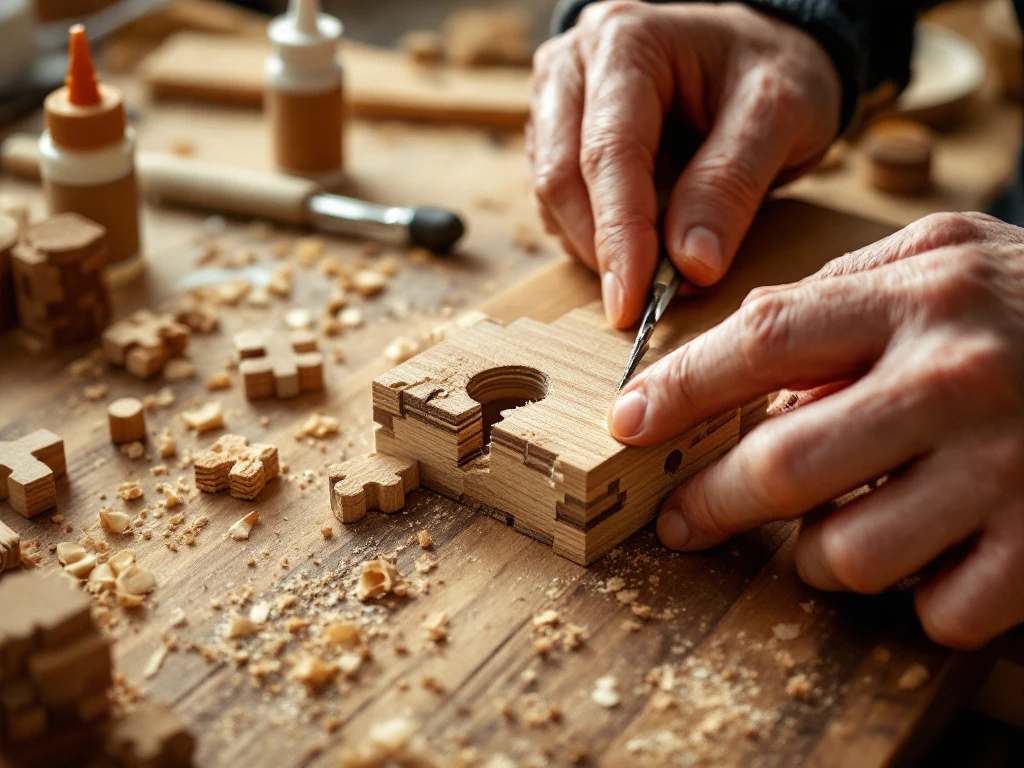
Small cracks can be repaired with wood glue (PVA) that you carefully push into the crack and let dry under light pressure. Broken pieces can often be glued back together. For major damage or structural parts, replacement is safer - always keep spare parts from your construction kit for this purpose.
Table of contents
Much viewed


More blogs

What are the ecological benefits of wooden building kits?
How do you repair a damaged wooden construction kit?
How do you choose a wooden construction kit at the right level?