
-
 Dave Vinke
- Leestijd: 5 min
- Laatst geüpdatet: 26/03/2026

Speedcubing is a fascinating sport that revolves around solving a Rubik’s Cube as quickly as possible. Whether you’re a beginning puzzler or already have experience with cubing, improving your solve time requires the right combination of technique, practice, and equipment. A good speedcube can make the difference between frustration and breakthroughs in your personal records.
In this guide, we answer the most frequently asked questions about improving your speedcubing time. From choosing the right cube to mastering advanced algorithms: you’ll learn everything needed to take your skills to the next level.
What is speedcubing and why would you want to improve your time?
Speedcubing is a competitive sport where participants try to solve a Rubik’s Cube as quickly as possible. It goes beyond just puzzling and combines speed, precision, and mental agility in a challenging discipline that has millions of enthusiasts worldwide.
Improving your solve time brings many benefits. First, you develop your cognitive skills, including pattern recognition, spatial awareness, and memory. Additionally, each new personal record gives a tremendous boost to your confidence. Many speedcubers also experience that solving cubes has a meditative effect and helps with stress reduction.
Furthermore, speedcubing opens doors to an active community of like-minded individuals. Local competitions, online forums, and social media groups offer opportunities to share experiences, learn from each other, and form friendships with people who share the same passion.
Which speedcube is best for improving your time?
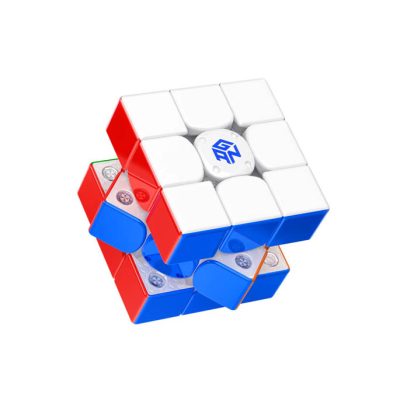
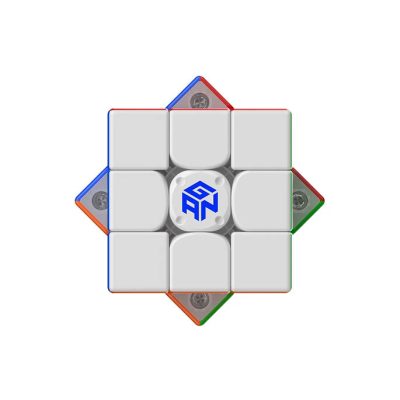
For improving your speedcubing time, a magnetic 3×3 speedcube with good corner cutting and a stable mechanism is the best choice. Magnetic cubes offer superior control and consistency compared to traditional cubes without magnets.
The key characteristics of a good speedcube are corner cutting (the ability to cut corners during imprecise turns), smooth rotation, and adjustable tension. Magnetic cubes have small magnets in the corners and edges that provide a stable feel and help with layer alignment during fast movements.
For beginners, mid-range cubes are often the best choice, as they offer a good balance between performance and price. Advanced speedcubers can choose premium models with more adjustment options for tension and magnetic strength. The most important thing is that the cube feels good in your hands and performs consistently during long practice sessions.
How do you learn the right solving method for speed?
The CFOP method (Cross, F2L, OLL, PLL) is the most popular and effective solving method for speedcubing. This method is used by most world record holders and offers the best balance between learnability and speed potential.
Start by perfecting the cross on the bottom layer, as this forms the foundation for the rest of the solve. An efficient cross can be solved in eight moves or less and should ideally be completed within 2 to 3 seconds. Practice making the cross without looking at the bottom, so you can immediately start searching for F2L pairs.
F2L (First Two Layers) is often the most difficult part to learn, but yields the greatest time savings. Instead of solving layer by layer, you learn to insert corner-edge pairs simultaneously. This requires learning about 42 different cases, but results in much more fluid solves. Start with the most common cases and gradually build your knowledge.
Which finger techniques make your speedcubing faster?
Efficient finger techniques, also called fingertricks, are crucial for fast solve times. The right finger techniques ensure that you execute movements smoothly and ergonomically, without unnecessary wrist or arm movements.
The foundation of good finger techniques is using your fingers instead of your wrists to turn the layers. Your thumbs and index fingers are the strongest and most suitable for most movements. For example, learn to execute R moves with your right index finger pushing down, and R’ moves with your right thumb pushing up.
Double moves like R2 are best executed as one fluid movement instead of two separate turns. Also practice using your ring finger and middle finger for L moves and F moves. By consistently practicing these techniques in slow motion, you develop muscle memory; then you can gradually build up speed without losing form.
How often should you practice to improve your time?
For consistent improvement in speedcubing, daily practice for 30 to 60 minutes is more effective than long, sporadic sessions. Regular, shorter sessions help with developing muscle memory and maintaining finger dexterity.
The quality of your practice is more important than quantity. Focus during each session on specific aspects, such as cross efficiency, F2L look-ahead, or perfecting certain algorithms. Alternate between timed solves for speed and slow solves to analyze and improve your technique.
For beginners, 15 to 30 minutes per day is sufficient to make steady progress. Advanced cubers aiming for competition level can benefit from longer sessions of 1 to 2 hours, divided into multiple short blocks with breaks in between. Don’t forget to also spend time learning new algorithms and analyzing your solves to identify inefficiencies.
What are the most effective algorithms to learn?
The most effective algorithms to learn are first all 57 OLL cases (Orientation of the Last Layer) and then all 21 PLL cases (Permutation of the Last Layer). These 78 algorithms form the foundation of the CFOP method and are essential for times under 20 seconds.
Start by learning the most common PLL cases, such as T-perm, A-perms, and U-perms, as these occur most frequently during solves. For OLL, start with the dot cases and line cases, followed by the L-shapes and other patterns. Use the 2-look method as an intermediate step: first learn 2-look OLL (9 algorithms) and 2-look PLL (6 algorithms) before moving on to full OLL and PLL.
Besides OLL and PLL, efficient F2L algorithms are crucial for faster times. Although F2L can be solved intuitively, learning optimal algorithms for difficult cases helps improve your look-ahead and reduce move count. Focus on cases where the corner and edge are separated or incorrectly oriented, as these are the most challenging to solve intuitively.
Frequently Asked Questions
How do I know when I'm ready to switch from beginner's method to CFOP?
You're ready to switch to CFOP when you can consistently solve under 60 seconds with the beginner's method and have fully mastered the basic movements of the cube. Start with 2-look OLL and PLL before moving to full CFOP, so the transition is less overwhelming.
What should I do if my times suddenly stagnate or even get worse?
Time stagnation is normal and happens to every speedcuber. Focus on slow solves to analyze your technique, take a break from timed solves, and work on specific weak points like cross efficiency or look-ahead. Sometimes it also helps to re-setup your cube or try a different practice routine.
How important is look-ahead and how do I develop this skill?
Look-ahead is crucial for times under 15 seconds and means you're already searching for the next pair or case while executing your current moves. Develop this by doing many slow solves where you consciously pause between steps, and practice color neutrality to have more options during F2L.
Should I invest in an expensive premium speedcube as a beginner?
No, a good magnetic cube from the mid-range ($15-25) is perfect for beginners and can help you reach times under 20 seconds. Invest in your skills first and only consider a premium cube when you're consistently under 15 seconds and need specific adjustments.
How can I optimally set up my cube for my personal preference?
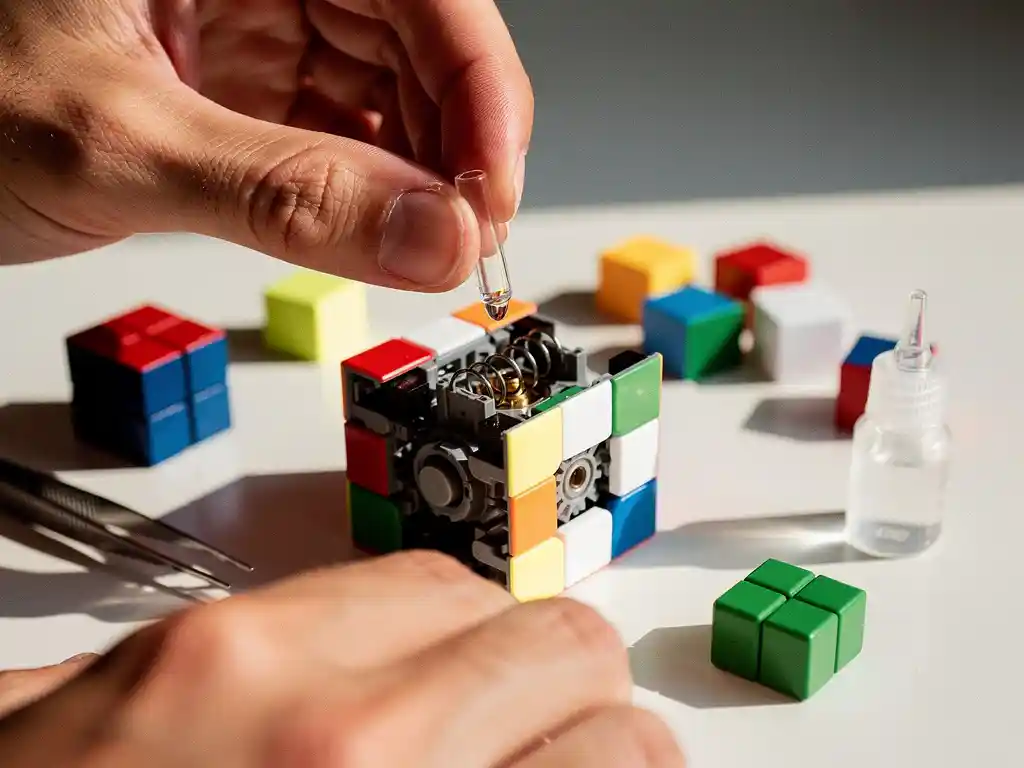
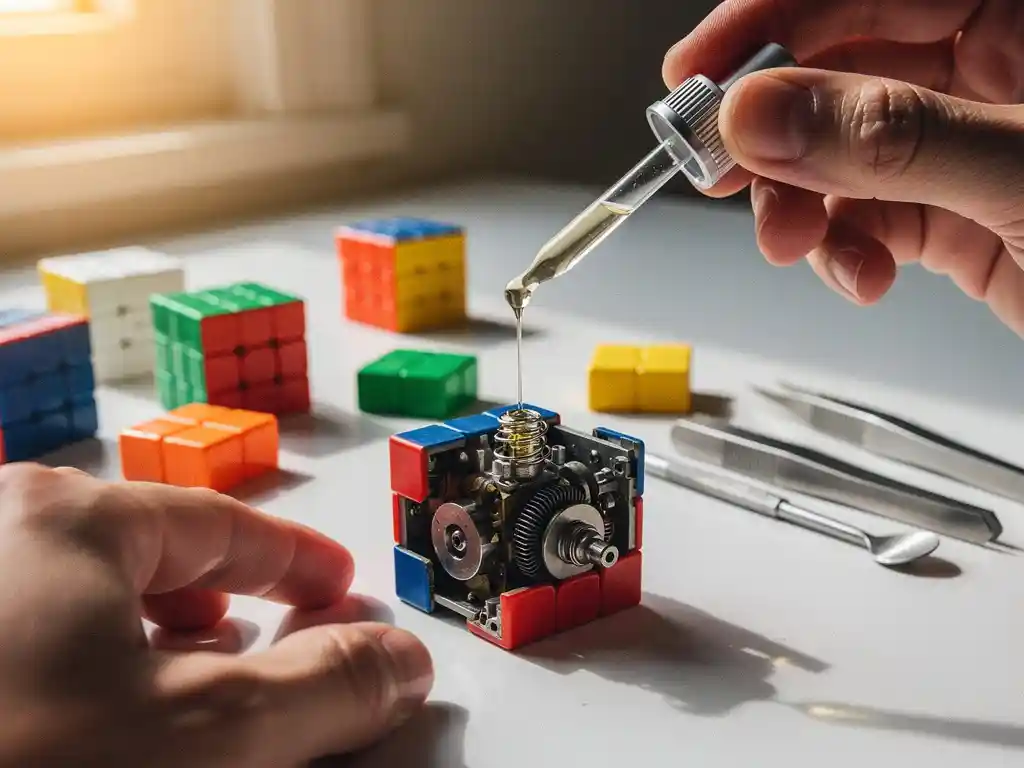
Start with a lightly tensioned cube and make small adjustments until the cube turns smoothly without layers moving spontaneously. Use silicone spray sparingly (one drop per 500-1000 solves) and experiment with different magnetic strengths if your cube supports this. Always test after each adjustment with multiple solves.
What are the most common mistakes that hinder my progress?
The biggest mistakes are: only focusing on speed without technique, learning new algorithms too quickly without mastering the previous ones, neglecting cross efficiency, and not using slow solves for analysis. Also not consistently practicing finger techniques often causes plateaus in improvement.
How do I prepare for my first speedcubing competition?
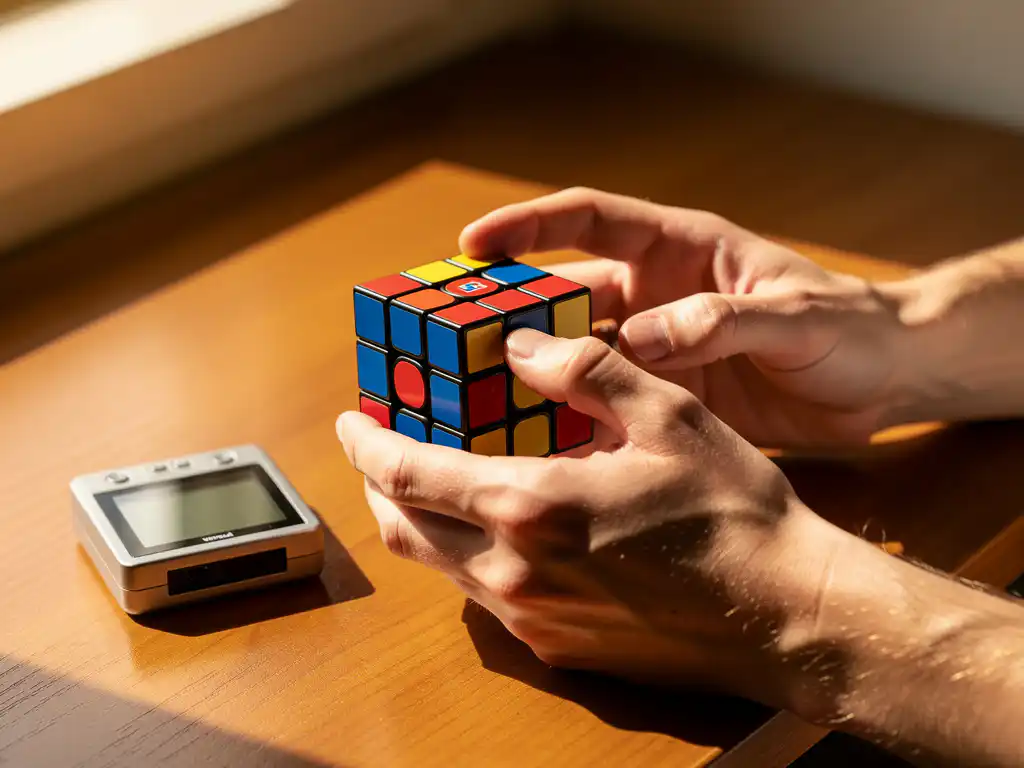
Practice solving under time pressure with a stackmat timer, learn the WCA regulations (especially the 15-second inspection time), and practice in different environments with distractions. Make sure you're comfortable with your backup cube and practice solving while others are watching to overcome nerves.
Table of contents
Much viewed
More blogs