
-
 Dave Vinke
- Leestijd: 5 min
- Laatst geüpdatet: 05/01/2026

Solving puzzles faster depends on the right techniques, good preparation, and developing efficient strategies. By working systematically, improving your concentration, and choosing the right puzzles for training, you can significantly increase your speed. This guide answers the key questions about accelerating your puzzle-solving skills.
What basic techniques help you solve puzzles faster?
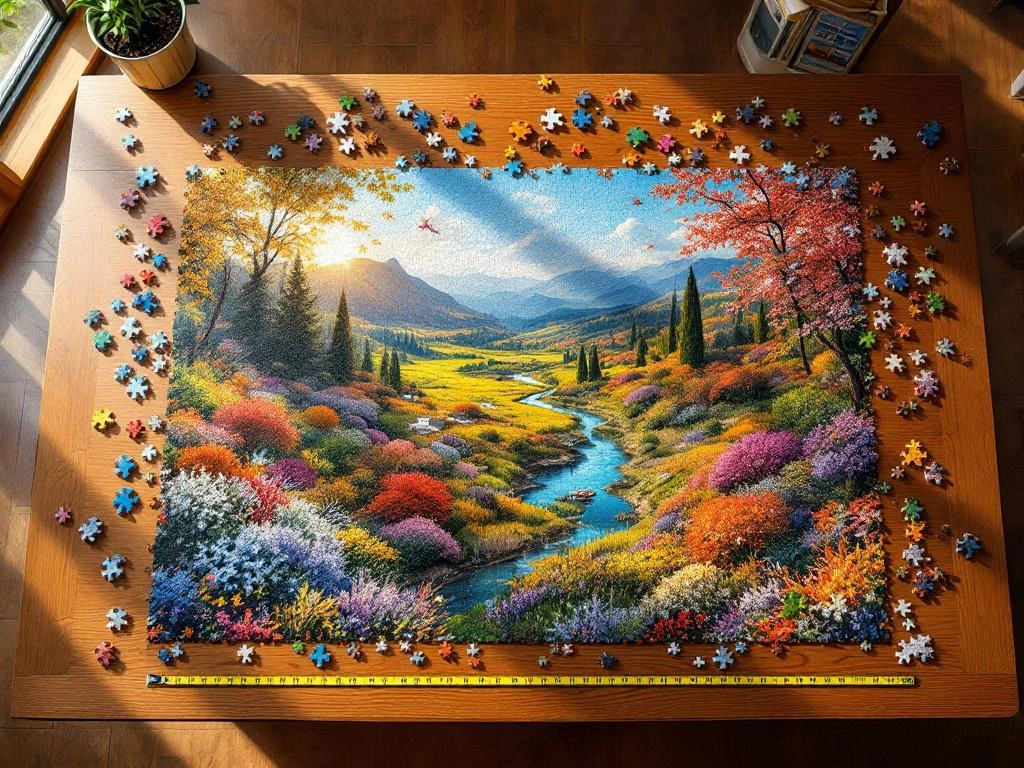
The fundamental puzzle strategies begin with systematic sorting and pattern recognition. Always start by sorting pieces by color, shape, or specific characteristics. For jigsaw puzzles, work on the edges first, while with brain teasers, identify the most recognizable elements.
Pattern recognition is crucial for speed. Train yourself to quickly spot similarities between pieces or elements. With adult puzzles, you can recognize more complex patterns than with simpler variants. Develop a fixed routine: first look at the whole picture, make a plan, and work systematically from large to small.
Another effective technique is working in sections. Divide large puzzles into smaller, manageable parts. This prevents overwhelm and gives you regular feelings of progress. Also practice rotating pieces in your mind before physically trying to place them.
How can you improve your concentration while puzzling?
An optimal puzzle environment is essential for sustained focus. Ensure adequate lighting, preferably natural daylight or a good desk lamp. Minimize distractions by putting your phone away and choosing a quiet space where you won’t be disturbed.
Take regular short breaks of 5-10 minutes to maintain your concentration. Long puzzle sessions without interruption lead to fatigue and mistakes. During breaks, you can rest your eyes and reset your mind for the next phase.
Mental techniques like conscious breathing and mindfulness help maintain focus. Train yourself to stay patient when you get stuck. Sometimes it’s better to try a different part of the puzzle rather than continuing frustratedly on one point.
What are the best strategies for different types of puzzles?
Specific approaches for each puzzle type significantly accelerate your solving process. For jigsaw puzzles, start with edges and clear color areas. With 3D puzzles, begin with the base and work layer by layer upward. Brain teasers often require a different approach: try various movements and remember which ones don’t work.
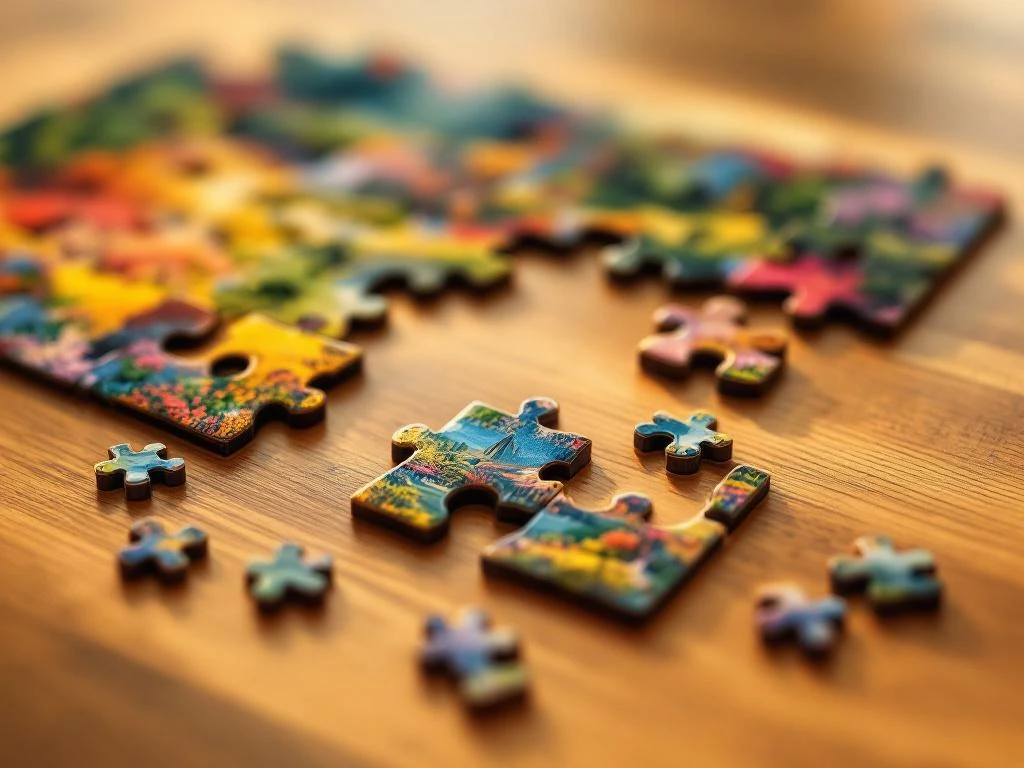
With children’s puzzles, you can often work more intuitively, while complex adult puzzles require more planning. Wooden puzzles often have unique shapes that need specific strategies – pay attention to the wood grain and the shape of the pieces for extra clues.
Timing is important: alternate between analytical thinking and intuitive trying. Some puzzles you solve faster by systematically going through all possibilities, others by experimenting creatively. Learn to recognize which approach works best with which type of puzzle.
Why is proper preparation so important for faster puzzling?
A well-organized workspace can drastically improve your puzzle speed. Use a large, flat surface with enough space for sorting and spreading out. Good lighting prevents eye fatigue and helps distinguish subtle color differences.
Invest in tools like sorting trays, a puzzle mat, or a rotating surface. These tools make it easier to work organized and get different perspectives without constantly getting up or turning your head.
Also prepare mentally by first studying the puzzle carefully. Look at the image on the box attentively and make a mental map of colors, shapes, and important reference points. This preparation saves a lot of searching time later.
Which puzzles are best for developing your skills?
For speed training, start with puzzles of 500-1000 pieces with clear patterns and contrasts. Gradually work up to more complex variants with more subtle color transitions. Wooden puzzles are excellent for developing tactile skills and shape recognition.
Regularly vary between different puzzle types to challenge your brain. Alternate jigsaw puzzles with 3D puzzles and brain teasers. This keeps your skills sharp and prevents you from falling into a routine that only works for one type of puzzle.
When choosing practice puzzles, look for progressive difficulty levels. Start with children’s puzzles if you’re a beginner and slowly build up to more advanced variants. A varied assortment of puzzles helps develop different skills and keeps puzzling interesting and challenging.
Faster puzzling is a skill that develops through consistent practice and the right approach. By applying these techniques and regularly practicing with different puzzle types, you’ll notice that your speed and efficiency gradually improve. The most important thing is to remain patient and keep enjoying the puzzle process.
Frequently Asked Questions
How long does it take before you become noticeably faster at puzzling?
With daily practice of 30-60 minutes, you usually see the first improvements in speed within 2-3 weeks. After 6-8 weeks of consistent training, you can expect to be 25-40% faster, depending on your starting point and the complexity of the puzzles you practice with.
What do you do when you get stuck and make no more progress while puzzling?
Take a break of 15-20 minutes and come back with fresh eyes. Try a different part of the puzzle or switch strategies - go from analytical to intuitive work or vice versa. Sometimes it helps to look at the puzzle from a different angle or adjust the lighting.
What common mistakes slow down the puzzle process the most?
The biggest time wasters are: not sorting properly at the beginning, holding onto one piece that doesn't fit for too long, and working in poor lighting. Also the lack of a systematic approach and not using the image on the box as reference cost a lot of extra time.
Is it better to puzzle alone or with others for speed development?
For speed training, puzzling alone is usually more effective because you can maintain your own pace and strategy. However, you can learn a lot by occasionally working with experienced puzzlers - they can share valuable techniques. Use group sessions for learning new strategies, solo sessions for speed training.
How much should you invest in professional puzzle tools to really get faster?
You can achieve a lot with basic tools: good lighting (€20-40), sorting trays (€10-15) and a puzzle mat (€15-25). More expensive tools like rotating tables do help, but are not essential. First invest in good basic puzzles and upgrade your tools gradually as you become more skilled.
Can you also improve puzzle speed through mental exercises outside of puzzling?
Yes, pattern recognition games on your phone, memory games and visual-spatial exercises all help. Meditation and concentration exercises also improve your focus during long puzzle sessions. Train your working memory by spending 10-15 minutes daily on brain-training apps specifically focused on visual processing.
Table of contents
Much viewed

More blogs