
-
 Dave Vinke
- Leestijd: 5 min
- Laatst geüpdatet: 04/01/2026

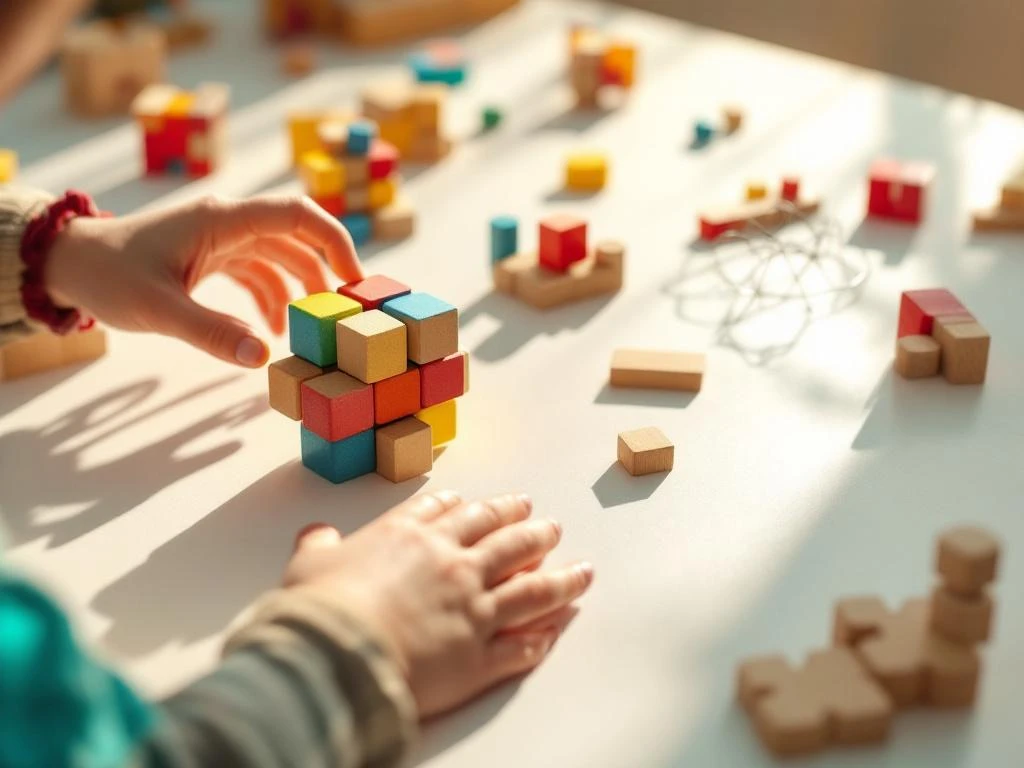
Children learning to solve brain teasers begins with choosing puzzles that match their developmental level and providing patient and positive guidance. Start with simple puzzles, teach them systematic approaches and celebrate small successes to build their confidence. With the right support, children develop problem-solving thinking, concentration and perseverance through solving brain teasers.
What are the benefits of brain teasers for children’s development?
Brain teasers stimulate children’s cognitive development by strengthening problem-solving thinking, concentration, patience and spatial insight. They help with brain development and build confidence when children successfully solve puzzles.
Solving brain teasers activates multiple brain areas simultaneously. Children learn to recognize patterns, reason logically and try different strategies. This mental training improves their ability to tackle complex problems, not only with puzzles, but also in schoolwork and daily situations.
Brain teasers also develop important social and emotional skills. Children learn to deal with frustration, persevere when something is difficult and enjoy the feeling of achievement. The process of puzzling improves their attention span and teaches them to work patiently and methodically.
The spatial insight that children develop by manipulating puzzle pieces helps them with mathematics, drawing and other subjects that require visual-spatial skills. These benefits persist and support their academic performance in the long term.
At what age can children start with brain teasers?
Children can start from 3 to 4 years old with simple brain teasers such as large wooden puzzles and shape sorters. From 6 to 8 years old they are ready for more complex mechanical puzzles, and from 10 to 12 years old they can tackle challenging brain teasers like the Rubik’s Cube.
For toddlers aged 3 to 4 years, large, safe puzzle pieces that they can easily grasp are ideal. Their fine motor skills are still developing, so puzzles with large handles and clear shapes work best. Simple stacking puzzles and sorting boxes are perfect starting options.
Children aged 5 to 7 years have better hand coordination and can handle puzzles with more pieces. They understand simple instructions and can learn basic strategies. This is a good age for magnetic puzzles and simple mechanical brain teasers.
From age 8, children develop abstract thinking and can plan multiple steps ahead. They have the patience for longer puzzle sessions and can better handle frustration. More complex brain teasers such as wire puzzles and sequential puzzles become accessible now.
Teenagers from 12 years old can tackle the most challenging brain teasers. Their logical thinking ability is sufficiently developed for puzzles that require multiple algorithms or complex strategies.
How do you choose the right brain teaser for your child’s level?
Choose brain teasers based on your child’s current skills and interests, not just on age. Start with puzzles that are challenging but achievable, so your child gains successful experiences without being overwhelmed by too high a difficulty level.
Observe how your child deals with existing toys and existing puzzles. Does it get frustrated quickly or does it persist with difficult tasks? Does it have strong fine motor skills or does it still struggle with small movements? These observations help you assess the right level.
Pay attention to your child’s interests. Does it like mechanical things, colors and patterns, or logical challenges? Some children like puzzles they can take apart and put back together, while others prefer working with colors and shapes.
Always start slightly below the level you think your child can handle. Success motivates more than frustration, and you can always introduce more difficult puzzles when your child is ready for them. Look for puzzles with different difficulty levels so your child can grow.
Check that the puzzle is safe for your child’s age. Avoid small parts for young children and ensure materials are non-toxic and durable. Read reviews from other parents to understand how suitable a puzzle really is.
Which steps help children solve puzzles systematically?
Teach children a step-by-step approach: observe the puzzle thoroughly, look for patterns and connections, systematically try different strategies and evaluate what works. This methodical approach prevents random trying and builds logical thinking.
Always start with observation. Let your child look at the puzzle calmly before it starts. Ask what it sees, which parts are moving and whether it notices patterns or colors. This initial exploration provides valuable information for the solving process.
Teach your child to set goals. Instead of “solving the entire puzzle,” smaller goals, such as “finding all corner pieces” or “completing one color,” can make the process more manageable. This approach prevents overwhelm and creates regular successful experiences.
Encourage systematic trying instead of random moving. If one approach doesn’t work, then consciously try a different strategy. Teach your child different techniques, such as working from outside to inside, grouping by color or looking for unique pieces.
Let your child think aloud during puzzling. This helps understand its own thought process and improves the ability to analyze problems. Ask questions like “Why do you think this piece belongs here?” to stimulate reasoning.
How do you motivate children when they get stuck on a difficult puzzle?
Maintain motivation by celebrating small successes, taking breaks when frustration arises and focusing on the learning process instead of only the end result. Offer hints and support without giving away the solution, so children retain ownership of their achievement.
Recognize the signs of frustration before they escalate. When your child becomes frustrated, suggest taking a break or looking at the problem together. Sometimes it helps to put the puzzle away for a while and come back later with fresh energy.
Celebrate every progress, however small. Acknowledge when your child tries a new strategy, solves part of the puzzle or perseveres despite difficulties. This positive reinforcement motivates them to continue and builds confidence.
Offer strategic hints without revealing the solution. Instead of telling them what to do, ask questions that lead them to the answer: “What happens if you turn this piece around?” or “Have you tried all possibilities for this part?”
Make puzzling a social activity by working together on difficult parts. This reduces pressure and makes the process more fun. You can also tell stories about your own frustrations and how perseverance ultimately led to success.
For parents looking for quality brain teasers suitable for different ages and skill levels, our extensive brain teaser collection offers a carefully selected assortment. From simple beginner puzzles to challenging brain teasers for advanced puzzlers: we help you find the perfect match for your child’s developmental level.
Successfully guiding children with brain teasers requires patience, positive support and the right puzzle choice for their level. By learning systematic approaches and keeping motivation high, children develop valuable thinking skills that benefit them throughout their lives. Start with simple puzzles, celebrate small victories and let your child retain ownership of the learning process for the best results.
Frequently Asked Questions
What do you do if your child shows no interest in brain teasers?
Try different types of puzzles to discover what appeals to your child - some children prefer visual puzzles, others mechanical challenges. Make it a family activity by puzzling together and show how fun it can be. Start with very short sessions of 5-10 minutes and link puzzling to something your child does enjoy, such as a favorite TV show or music.
How often per week should children practice with brain teasers?
For optimal results, 3-4 short sessions per week of 15-30 minutes are more effective than one long session. Young children (3-6 years) benefit from daily short sessions of 10-15 minutes, while older children can handle longer sessions of 30-45 minutes. The most important thing is consistency and that it remains fun, not the duration of the sessions.
When should you intervene if your child struggles with a puzzle?
Intervene when you notice that frustration is taking over and your child becomes stressed - usually after 10-15 minutes of being stuck. Offer emotional support first ('I see this is difficult') before giving practical help. Start by asking leading questions instead of direct solutions, and consider switching to a simpler puzzle if the current one proves too difficult.
Can brain teasers help children with concentration problems?
Yes, brain teasers can be very effective for children with concentration problems such as ADHD. Start with very short sessions of 5 minutes and puzzles with clear, concrete goals. The hands-on activity helps children focus their energy, while the direct feedback from puzzles holds their attention. Choose puzzles with moving parts or tactile elements for children who have trouble sitting still.
How do you recognize if a puzzle is too difficult or too easy for your child?
A puzzle is too difficult if your child makes no progress after 15-20 minutes and becomes frustrated. Puzzles that are too easy are solved within 5 minutes without any challenge. The ideal puzzle provides 15-30 minutes of focused activity with moments of 'aha!' and small breakthroughs. Watch body language: leaning forward means engagement, leaning back or walking away indicates over- or under-challenge.
Which materials are safest for brain teasers for young children?
For children under 6 years, wooden puzzles with large, smooth parts are safest - avoid small metal parts that pose a choking hazard. Check for splinters, sharp edges and toxic paints. Magnetic puzzles are safe if the magnets are securely attached and cannot come loose. Always read age recommendations and choose puzzles that meet EU safety standards (CE marking).
Table of contents
Much viewed


More blogs