
-
 Dave Vinke
- Leestijd: 5 min
- Laatst geüpdatet: 26/03/2026

In our hectic modern world, more and more people are looking for simple ways to reduce stress. A notable trend is the use of puzzles, including the iconic Rubik’s cube, as natural stress relief. This colorful three-dimensional puzzle turns out to be more than just a toy from the eighties.
Research shows that solving puzzles like a Rubik’s cube can actually help reduce stress and promote mental calm. By fully concentrating on the turning and puzzling, you create a form of active meditation that distracts your thoughts from daily worries.
What is the scientific basis behind puzzling for stress relief?
Puzzling activates the parasympathetic nervous system, which is responsible for our body’s relaxation response. During puzzling, your heart rate drops, the production of stress hormones like cortisol decreases, and the production of dopamine and serotonin, the happiness hormones in your brain, increases.
Scientific research shows that puzzle activities stimulate the prefrontal cortex, the brain area involved in problem-solving and concentration. This mental focus creates a state similar to meditation, where you become completely absorbed in the moment. The repetitive movements and pattern-seeking have a calming effect on the nervous system.
Additionally, puzzling promotes the production of alpha brain waves, which are associated with a relaxed but alert state of mind. This explains why many people feel calmer and more centered after puzzling.
How does a Rubik’s cube work as a stress reducer?
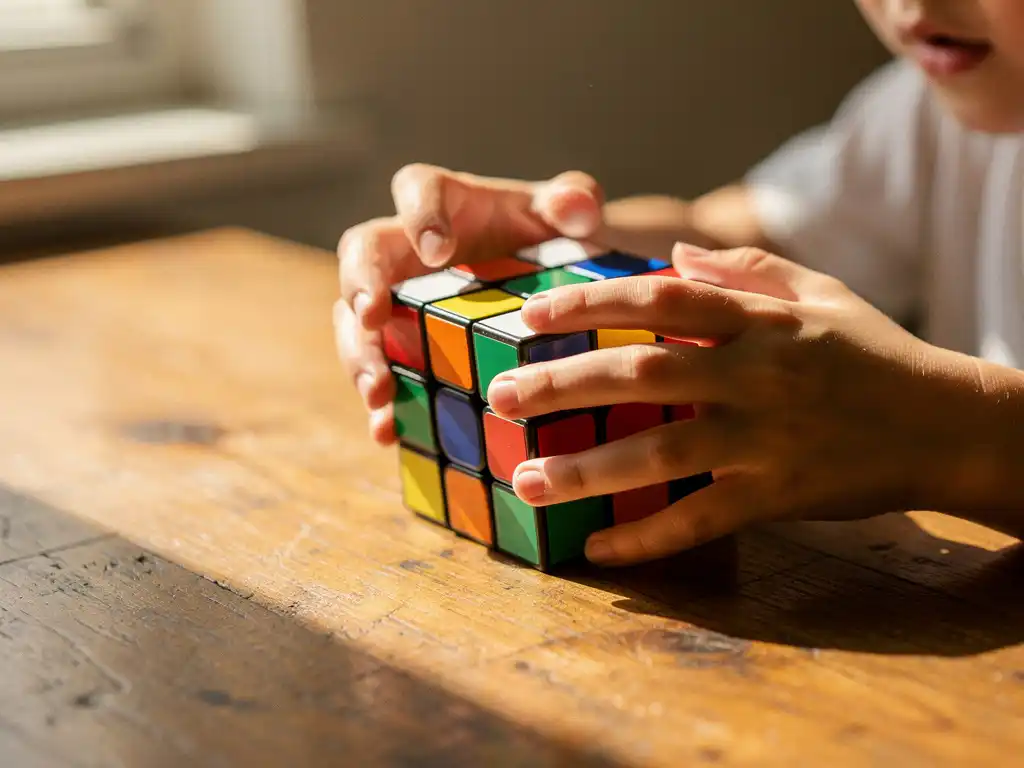
A Rubik’s cube works as a stress reducer by demanding your complete attention for solving the puzzle. This intense focus creates a natural form of mindfulness where stressful thoughts fade into the background. The tactile sensation of turning the cube also has a soothing effect.
Solving a Rubik’s cube requires a combination of logical thinking, pattern recognition, and fine motor skills. This mental challenge ensures that your brain is completely occupied with the task, leaving no room for worrying or stress. It’s a form of active meditation that helps you stay in the moment.
Moreover, successfully solving the cube gives a sense of satisfaction and self-worth. These small victories stimulate dopamine production, which improves your mood and reduces stress. Even if you don’t fully solve the cube, the turning and experimenting can already be relaxing.
What other puzzles also help with stress?
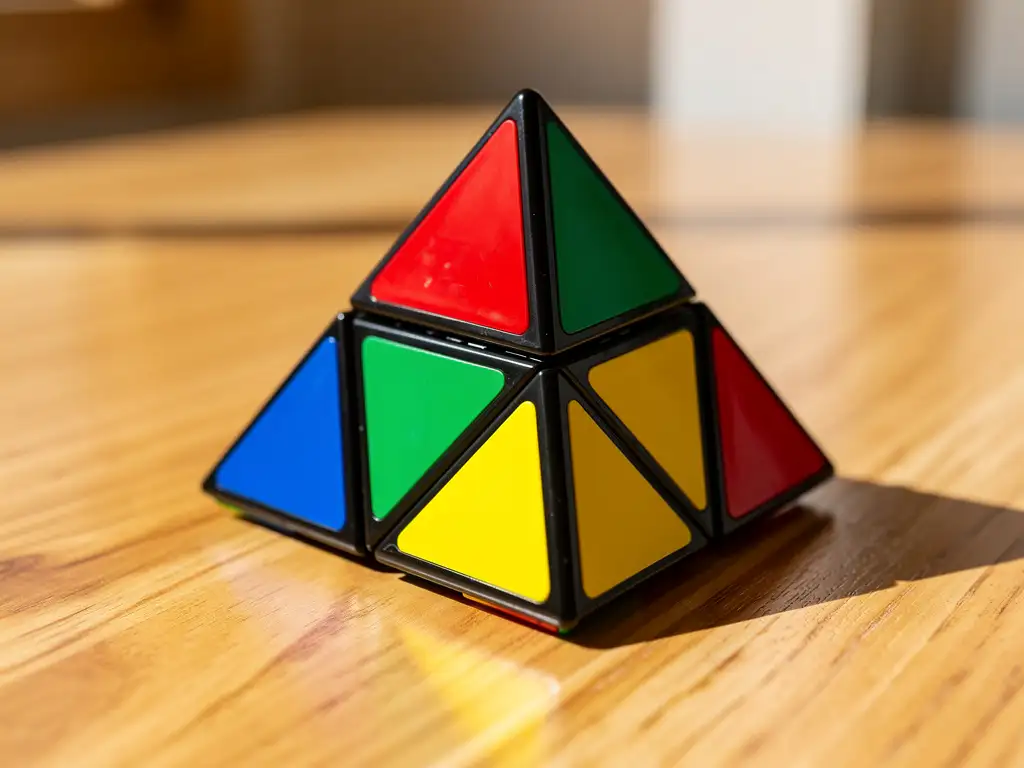
Besides the Rubik’s cube, there are various other puzzles that are effective against stress, such as 2×2 speedcubes, pyraminx puzzles, jigsaw puzzles, sudokus, and wooden brain teasers. Each puzzle type offers unique benefits for stress relief by engaging different cognitive skills.
Smaller speedcubes like 2×2 variants are ideal for beginners because they can be solved faster and therefore provide that satisfying feeling of completion more often. Pyraminx puzzles offer a different form of challenge with their triangular shape and unique turning mechanism.
Traditional jigsaw puzzles work excellently for prolonged relaxation because they can captivate for hours without being overwhelming. Sudokus and other number puzzles stimulate logical thinking and can easily be taken anywhere. Wooden brain teasers combine tactile stimulation with problem-solving, which is particularly effective for people who enjoy hands-on work.
How do you start solving a cube for stress relief?
Start with a simple 3×3 Rubik’s cube and learn the basic movements, without pressure to solve it completely right away. Focus first on the pleasure of turning and experimenting with colors and patterns. Spend 10-15 minutes daily manipulating the cube, regardless of whether you make progress.
Begin by exploring the cube through random turning and observing how the colors move. This helps you become familiar with the mechanism and already creates a meditative experience. Then learn the standard notation (F, R, U, L, B, D for the different faces), so you can understand and repeat movements.
When you’re ready for more structure, start learning the layer-by-layer method. This approach is most suitable for stress relief because each step shows clear progress. Remember that the goal is stress reduction, not speed, so take your time and enjoy the process. Even if it takes weeks to solve your first cube, each session already provides stress relief.
Frequently Asked Questions
How much time per day should I spend puzzling to reduce stress?
For optimal stress relief, just 10-15 minutes of puzzling per day is sufficient. Regularity is more important than long sessions - short daily moments of puzzling work better than sporadic long sessions. Listen to your body and stop if you feel tense instead of relaxed.
What if I get frustrated because I can't solve the Rubik's cube?
Frustration is normal and usually disappears as you gain more experience. Focus on the process instead of the result - even random turning already provides stress relief. Consider starting with simpler puzzles like a 2x2 cube or take breaks when you feel tension building up.
Can puzzling also help with insomnia or anxiety?
Yes, puzzling before bedtime can help calm your thoughts and switch to a relaxed mode. The repetitive movements and mental focus help suppress worrying thoughts that often cause anxiety and insomnia. Choose less challenging puzzles in the evening hours to avoid overstimulation.
Which cube is best for absolute beginners who want to reduce stress?
A standard 3x3 speedcube with good turning properties is ideal for beginners. Avoid cheap cubes that catch, as this can actually cause frustration. Brands like GAN, MoYu, or QiYi offer affordable options that turn smoothly and are therefore better suited for relaxation.
Is it normal that I initially feel more stressed when learning new puzzle techniques?
Absolutely normal - there's a learning curve where your brain needs to get used to new patterns and movements. Start slowly and don't force anything. After several weeks of regular practice, you'll notice that the movements become more automatic and stress relief increases. Patience with yourself is essential.
Can I combine puzzling with other relaxation techniques?
Yes, puzzling combines excellently with breathing exercises, background music, or aromatherapy. Some people enjoy puzzling while listening to meditation music or nature sounds. Avoid distracting activities like watching TV, as this can diminish the meditative benefits of puzzling.
Table of contents
Much viewed
More blogs