
-
 Dave Vinke
- Leestijd: 5 min
- Laatst geüpdatet: 05/01/2026

3D puzzles are excellent for children because they stimulate cognitive development, spatial awareness, and problem-solving abilities. These three-dimensional challenges improve fine motor skills, patience, and concentration while children have fun. The right 3D puzzle helps children from age 4 develop their skills and build confidence by successfully completing complex building projects.
What are 3D puzzles and why are they different from regular puzzles?
3D puzzles are three-dimensional building projects that challenge children to construct objects in space rather than laying flat images. They combine puzzle fun with the satisfaction of building tangible models that children can admire and use.
The main difference from traditional puzzles lies in the spatial complexity. While regular puzzles work with color and shape recognition on a flat surface, 3D puzzles require understanding of depth, height, and structural connections. Children must visualize how different components come together to form a stable three-dimensional object.
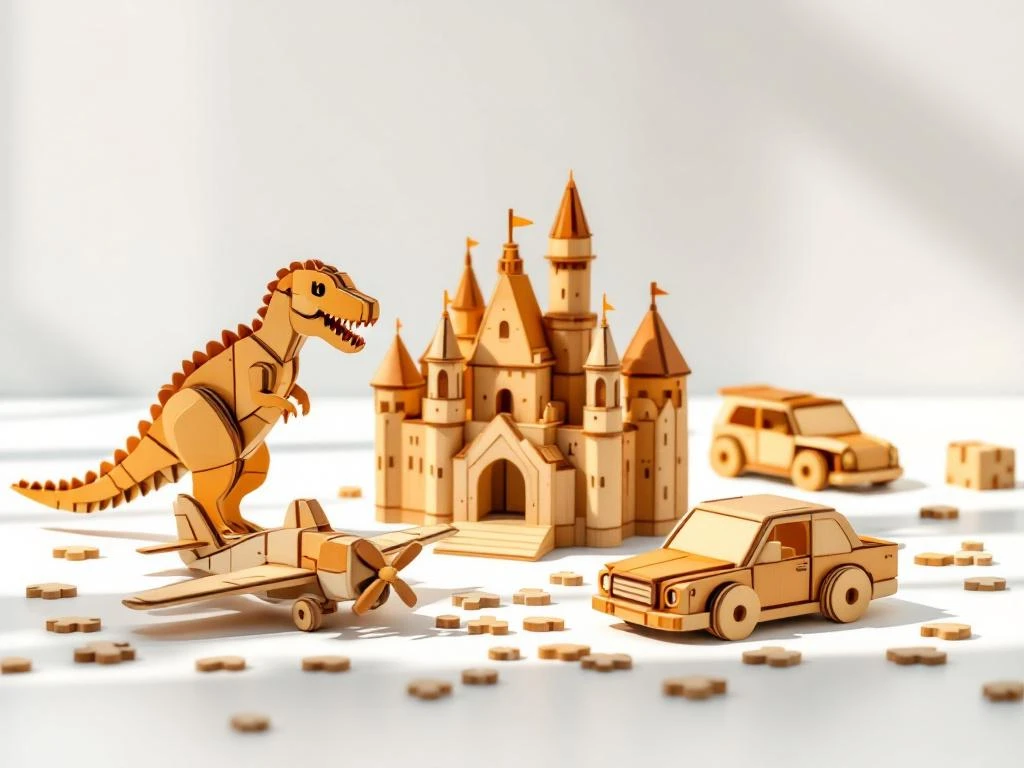
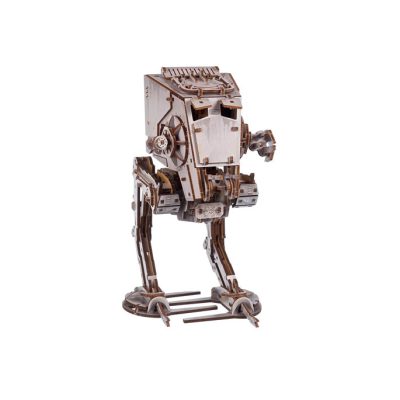
Wooden 3D puzzles offer a special tactile experience that plastic variants cannot match. The natural material feels pleasant and gives children a sense of quality and durability. These wooden puzzles stimulate not only the mind but also the senses through their texture and scent.
The challenge of 3D puzzles also lies in the assembly sequence. Children learn to plan and think ahead, because certain pieces must be placed first before other components can be added. This develops logical thinking and sequential reasoning.
What developmental benefits do 3D puzzles offer for children?
3D puzzles stimulate multiple developmental areas simultaneously by combining cognitive challenge with motor skills and emotional growth. They strengthen spatial awareness, critical thinking, and perseverance in a playful way.
Spatial awareness gets an enormous boost from 3D puzzles. Children learn to view objects from different angles and understand how components relate to each other in space. This skill is crucial for later STEM subjects like mathematics, physics, and engineering.
Problem-solving ability develops naturally during puzzling. Children analyze shapes, test different combinations, and learn from mistakes. They develop strategies to break down complex challenges into manageable steps, a skill that extends far beyond puzzling.
Fine motor skills are refined by manipulating small components and making precise movements. Hand-eye coordination improves while children carefully position and fit pieces together. These skills support writing ability and other academic activities.
Patience and concentration grow naturally, because 3D puzzles require time and persistence. Children learn to work task-focused and ignore distractions. Completing a challenging 3D puzzle builds confidence and shows children that perseverance leads to success.
From what age can children start with 3D puzzles?
Children can start with simple 3D puzzles from age 4, provided they are adapted to their developmental level. Toddlers from age 3 can try large, simple 3D shapes under parental guidance.
For toddlers (3-4 years), large, simple shapes are ideal. Think of basic geometric forms or animals with maximum 10-15 large pieces. The focus is on recognizing shapes and developing hand-eye coordination. Parental guidance is essential at this stage.
Preschoolers (5-6 years) can handle more complex puzzles with 20-50 pieces. They have developed more patience and can follow simple instructions. 3D building sets and model construction of familiar objects like houses or vehicles appeal to them because they can recognize the final form.
School children (7-10 years) are ready for more challenging projects with 50-200 pieces. Their spatial awareness is further developed and they can work concentrated for longer periods. Architectural models or more complex vehicles offer the right challenge for this age group.
Teenagers (11+ years) can tackle the most complex 3D puzzles with hundreds of pieces. They appreciate detailed replicas of famous buildings, vehicles, or mechanical objects. The challenge and end result motivate them to complete adult puzzle projects.
How do you choose the right 3D puzzle for your child?
The right 3D puzzle matches your child’s age, interests, and skill level. Start with puzzles that are challenging but achievable to prevent frustration and build success experiences.
Age is the first consideration, but also look at your child’s individual developmental level. A 6-year-old who puzzles a lot may be ready for puzzles normally suitable for 8-year-olds. Observe how your child handles challenges and adjust your choice accordingly.
Interests play a crucial role in motivation. A child who loves animals will be more motivated to complete a 3D animal puzzle than a building. Choose subjects that connect with their hobbies, favorite movies, or books to maximize engagement.
The material makes a difference in experience and durability. Wooden 3D puzzles offer a premium experience with natural texture and long lifespan. Cardboard puzzles are more budget-friendly but less durable. Plastic puzzles fall in the middle in terms of price and quality.
Consider the complexity of the instructions. Some 3D puzzles have extensive manuals with step-by-step photos, while others are more abstract. Choose instructions that match your child’s comprehension level to prevent frustration.
Consider the final destination of the completed puzzle. Some children want to display their creation, while others are more interested in the building process itself. Choose puzzles that become beautiful display pieces if your child wants to be proud of the end result.
Where can you find the best 3D puzzles for children?
The best 3D puzzles can be found at specialized puzzle stores that combine quality, variety, and expertise. Online webshops offer the largest assortment with detailed product information and customer reviews to support your choice.
Specialized puzzle webshops like our 3D puzzle collection offer advantages that general toy stores cannot match. We have in-depth product knowledge, can advise on age suitability, and often offer a broader assortment than physical stores.
Quality criteria to look for are the material type, finishing quality, and brand reputation. Examine product photos carefully and read customer reviews to gain insight into actual quality. Pay attention to details like component fit and instruction clarity.
Reliable webshops can be recognized by certifications like Trusted Shop Guarantee, clear return conditions, and good customer service. We offer, for example, same-day shipping and flexible order handling to make your shopping experience as pleasant as possible.
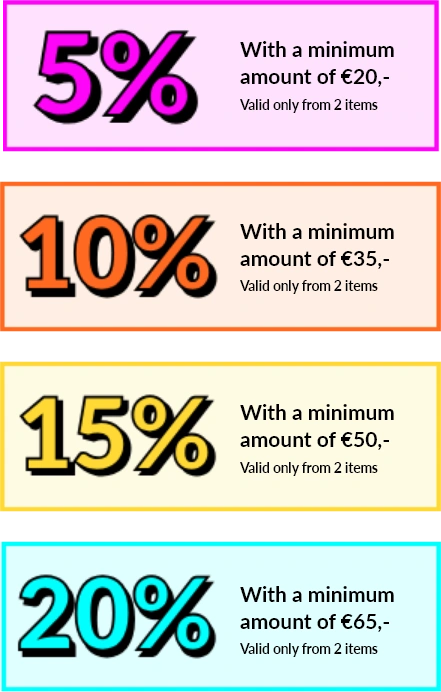
Price comparison is important, but also consider added value. Some webshops offer automatic discounts on multiple items, extensive product guidance, or special warranty conditions. These extra services can justify the added value of a slightly higher price.
Read product descriptions carefully and don’t hesitate to contact customer service if you have questions. Good puzzle specialists are happy to help you make the right choice for your child and can suggest alternatives that better fit your specific wishes.
Frequently Asked Questions
How long does it take on average to complete a 3D puzzle?
The time varies greatly depending on complexity and the child. Simple puzzles for toddlers (10-15 pieces) can be completed in 30-60 minutes, while more complex puzzles for school children (50-200 pieces) can take several hours to days. Encourage children to take breaks and complete the puzzle in stages to prevent frustration.
What should I do if my child gets frustrated while puzzling?
Take a break and return to the puzzle later. Help your child by looking at the instructions together or searching for a specific component. Celebrate small successes and remind your child that making mistakes is part of the learning process. Consider temporarily switching to a slightly easier puzzle to restore confidence.
Can 3D puzzles be reused after they are completed?
Yes, most 3D puzzles can be taken apart and rebuilt. This offers extra value because children can make the puzzle multiple times, often faster and more confidently the second time. Wooden puzzles are particularly suitable for this due to their durability. Store all components in a box to prevent loss.
Is it normal that my child needs help with 3D puzzles?
Absolutely normal, especially during the first introduction to 3D puzzles. Start by puzzling together and gradually encourage more independence. Help with interpreting instructions and finding the right components, but let your child place the pieces themselves. This guidance builds skills and makes puzzling a positive experience.
What safety aspects should I consider with 3D puzzles?
Always check the age indication due to small parts that can pose choking hazards for young children. Choose puzzles with rounded corners and splinter-free finishing, especially with wooden variants. Ensure a well-lit workspace to prevent eye strain and supervise toddlers and preschoolers during puzzling.
How do I best store 3D puzzles when they are completed?
Completed 3D puzzles can be displayed as decoration in a safe place where they won't fall over. For long-term storage, you can carefully take them apart and store all components in the original packaging. Use small bags if necessary to group loose components and prevent loss of important pieces.
Are there 3D puzzles specially designed for children with learning difficulties?
Yes, there are 3D puzzles with extra large pieces, enhanced contrasts, and simplified instructions. Look for puzzles with tactile elements or different textures that provide sensory support. Consult with the puzzle specialist about adapted options and always start with simpler variants to build success experiences before increasing the difficulty level.
Table of contents
Much viewed

More blogs