
-
 Dave Vinke
- Leestijd: 5 min
- Laatst geüpdatet: 05/01/2026

Yes, 3D puzzles are educational and offer unique learning opportunities that traditional puzzles cannot match. They develop spatial awareness, logical thinking and cognitive skills through their three-dimensional character. These puzzles stimulate different brain functions simultaneously and support the development of fine motor skills, concentration and problem-solving abilities at all ages.
What actually makes 3D puzzles educational?
3D puzzles are educational because they develop spatial awareness and logical thinking in a way that flat puzzles cannot. They require you to understand three-dimensional relationships and apply mental rotation to get parts in the right place.
The fundamental difference with traditional puzzles lies in the complexity of the thinking process. With a regular puzzle you work with a flat image and look for matching pieces. With 3D puzzles you must understand how different parts are connected in space and what sequence is needed for a stable construction.
These puzzles also train your ability to visualize abstract concepts. You learn to recognize patterns, plan sequences and develop patience while working step by step towards a complex end result. This process strengthens cognitive flexibility and helps develop systematic thinking.
Wooden 3D puzzles offer additional benefits because they add a tactile experience to the learning process. The natural material stimulates sensory perception and provides a satisfying physical experience that strengthens memory.
Which brain functions are trained by 3D puzzling?
3D puzzles train working memory, visual-spatial processing and executive functions simultaneously. They stimulate different brain areas that work together for complex problem solving and spatial orientation.
Working memory is trained because you must hold multiple pieces of information simultaneously: which parts you have already placed, which are still needed and how they fit together. This mental juggling strengthens your ability to temporarily store and manipulate information.
Concentration and attention are naturally developed because 3D puzzles require focus. You must exclude distractions and give sustained attention to details and relationships between parts. This strengthens your ability to work deeply concentrated on complex tasks.
Visual-spatial processing gets intensive training through constantly rotating, comparing and positioning parts in your mind. This skill is crucial for subjects like mathematics, engineering and physics.
Neuroplasticity is stimulated by the new connections that form between different brain areas. Regular puzzling can positively influence brain structure and build cognitive reserve.
How do 3D puzzles contribute to children’s development?
3D puzzles support children’s development by strengthening fine motor skills, hand-eye coordination and STEM skills. They teach patience, perseverance and systematic thinking in a playful way.
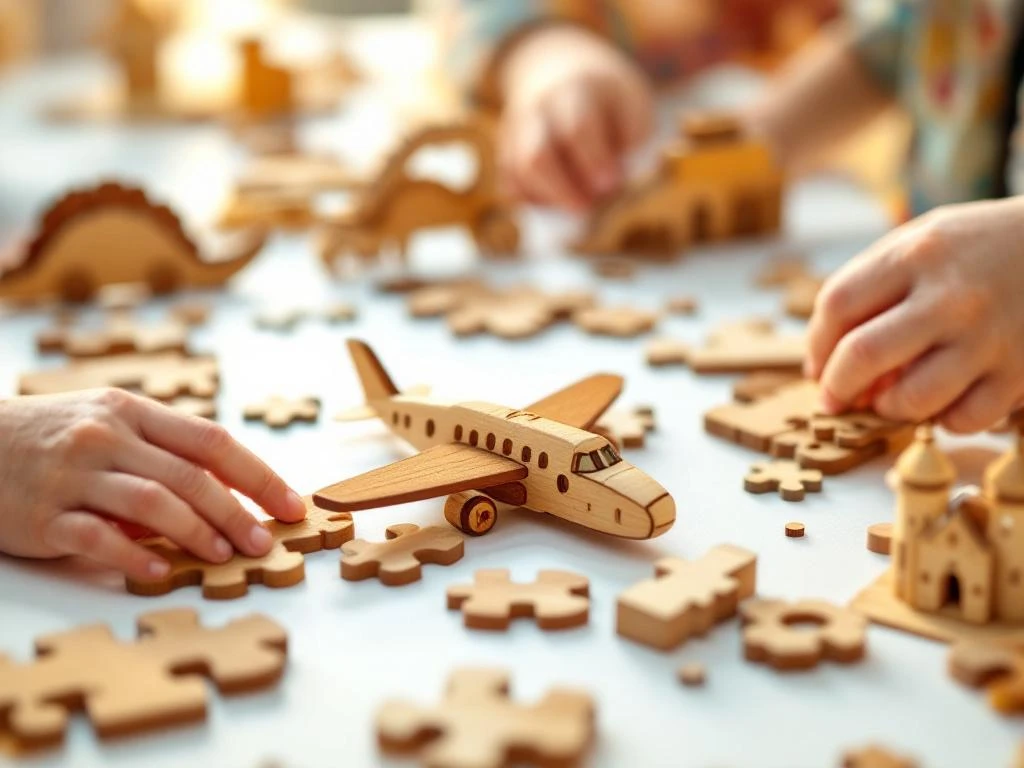
Fine motor skills are developed through the precision work needed to correctly position small parts. Children practice their finger dexterity and develop better control over their hand movements, which later helps with writing and other skills.
Hand-eye coordination improves because children must look where parts belong and guide their hands to place them precisely. This skill is fundamental for many daily activities and athletic performance.
STEM skills are naturally developed because 3D puzzles introduce engineering concepts. Children learn about stability, symmetry, patterns and logical sequences without it feeling like formal education.
Patience and perseverance grow because complex 3D puzzles require time and persistence. Children learn that valuable results often require step-by-step effort and that frustration is a normal part of the learning process.
3D building kits and model building combine these benefits with practical engineering experience, where children learn how parts work together to create functional structures.
What are the long-term benefits of regular 3D puzzling?
Regular 3D puzzling offers cognitive protection against mental decline and improves stress management. It develops mental flexibility and can function as an effective mindfulness practice for all ages.
Cognitive health is supported by the constant challenge that 3D puzzles offer to different brain functions. Regularly activating spatial thinking, pattern recognition and problem solving keeps the mind sharp and flexible.
Stress reduction occurs through the meditative aspects of puzzling. The focused attention and repetitive actions can have a calming effect, similar to mindfulness exercises. This helps lower cortisol and promote relaxation.
Mental flexibility grows through the variety in puzzle types and solution strategies. You learn to apply different approaches and quickly switch between different thinking patterns when a strategy doesn’t work.
For elderly people, regular puzzling can help maintain cognitive functions and slow mental decline. The social aspect of puzzling together offers additional benefits for emotional well-being and social connection.
The mindfulness aspects of puzzling help develop focus and reduce mental restlessness. It provides a healthy break from digital stimuli and promotes deep concentration.
Which 3D puzzles are most educational for different ages?
For children aged 4-8 years, simple wooden 3D animal puzzles are ideal because they have large parts and recognizable shapes. For teenagers, mechanical puzzles and architectural models are more challenging and educational.
Toddlers and preschoolers (3-6 years) benefit most from large, colorful 3D puzzles with 6-12 parts. Choose puzzles with animals, vehicles or simple buildings that capture their interest and are safe to play with.
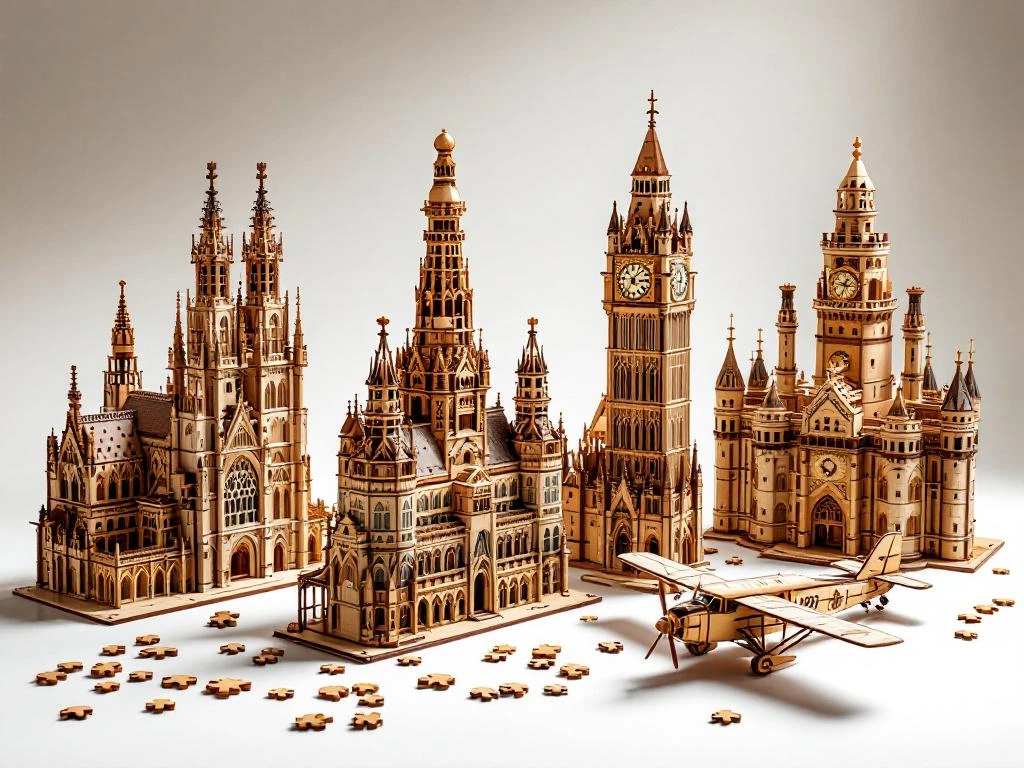
School children (7-12 years) can handle more complex challenges with 20-50 parts. Educational themes like the solar system, historical buildings or anatomical models combine fun with learning about specific subjects.
Teenagers (13-18 years) find mechanical puzzles, architectural replicas and engineering challenges most engaging. These puzzles can have hundreds of parts and introduce advanced concepts from physics and technology.
Adults and seniors can choose from artistic sculptures, complex architectural models or puzzles with moving parts. These offer mental stimulation and can become social activities when you puzzle together.
When choosing the right 3D puzzle, it’s important to respect the current skill level while offering an appropriate challenge. A too easy puzzle offers little learning value, while a too difficult puzzle can be frustrating.
For those looking for quality options, our range of 3D puzzles offers a carefully selected collection for all ages and levels, from beginning puzzlers to experienced enthusiasts.
Frequently Asked Questions
How long does it take on average to solve a 3D puzzle?
The time varies greatly depending on complexity and your experience. Simple 3D puzzles for children can be solved in 30-60 minutes, while complex architectural models can take 5-20 hours. Beginners typically need 2-3 times longer than experienced puzzlers.
What should I do if my child gets frustrated while puzzling?
Encourage breaks and offer subtle hints instead of direct solutions. Help by looking for patterns together or by sorting parts by color or shape. Celebrate small successes and remind your child that frustration is normal and part of the learning process.
Are 3D puzzles suitable for children with concentration problems like ADHD?
Yes, 3D puzzles can actually help develop focus and concentration. Start with shorter sessions of 10-15 minutes and choose puzzles with clear, contrasting colors. The tactile experience and concrete end result often make it easier for children with ADHD to stay engaged.
How can I assess the difficulty level of a 3D puzzle for my child?
Pay attention to the number of parts, the size of the pieces and the complexity of the shape. As a rule of thumb: 5-10 parts for ages 4-6, 15-30 for ages 7-10, and 50+ for teenagers. Also check if there are moving parts, which increases complexity.
Which materials are best for educational 3D puzzles?
Wood is ideal for young children because of safety and tactile experience. High-quality plastic offers more detail possibilities for more complex models. Metal puzzles are suitable for older children and adults. Avoid puzzles with sharp edges or small parts for children under 3 years.
Can 3D puzzles help with school subjects like math and physics?
Absolutely! 3D puzzles develop spatial awareness that is crucial for geometry and physics. They help understand concepts like symmetry, volume and structural stability. Architectural puzzles introduce engineering principles, while mechanical puzzles demonstrate physics concepts like levers and gears.
How do I maintain wooden 3D puzzles to make them last long?
Store wooden puzzles in a dry place to prevent warping. Clean them carefully with a slightly damp cloth and let them dry well. Don't use chemical cleaners. Regularly check for loose parts and store all pieces in a closed box to prevent loss.
Table of contents
Much viewed


More blogs