
-
 Dave Vinke
- Leestijd: 5 min
- Laatst geüpdatet: 26/03/2026

Speedcubing seems so simple: turn the sides until all colors match. Yet many beginners make the same mistakes that significantly slow their progress. These common missteps cause cubers to get stuck at the same level for months, while they could make much faster progress with the right approach.
Whether you’re just starting with your first speedcube or have been struggling to improve your times for a while, recognizing these eight classic mistakes can make the difference between frustration and rapid progress. Let’s look at the pitfalls that almost every beginner encounters.
Why beginners often get stuck in their speedcubing development
Most beginners start with great enthusiasm, but quickly become frustrated when their times don’t improve. This happens because speedcubing is more than just knowing algorithms. It requires the right techniques, tools, and a thoughtful approach to the learning process.
Many beginners think that speed is the most important thing, while efficiency and good habits actually form the foundation for long-term progress. Due to these fundamental misunderstandings, they make mistakes that are difficult to correct later. The eight mistakes below are the most common obstacles that hold beginners back.
1: Buying the wrong speedcube for your level
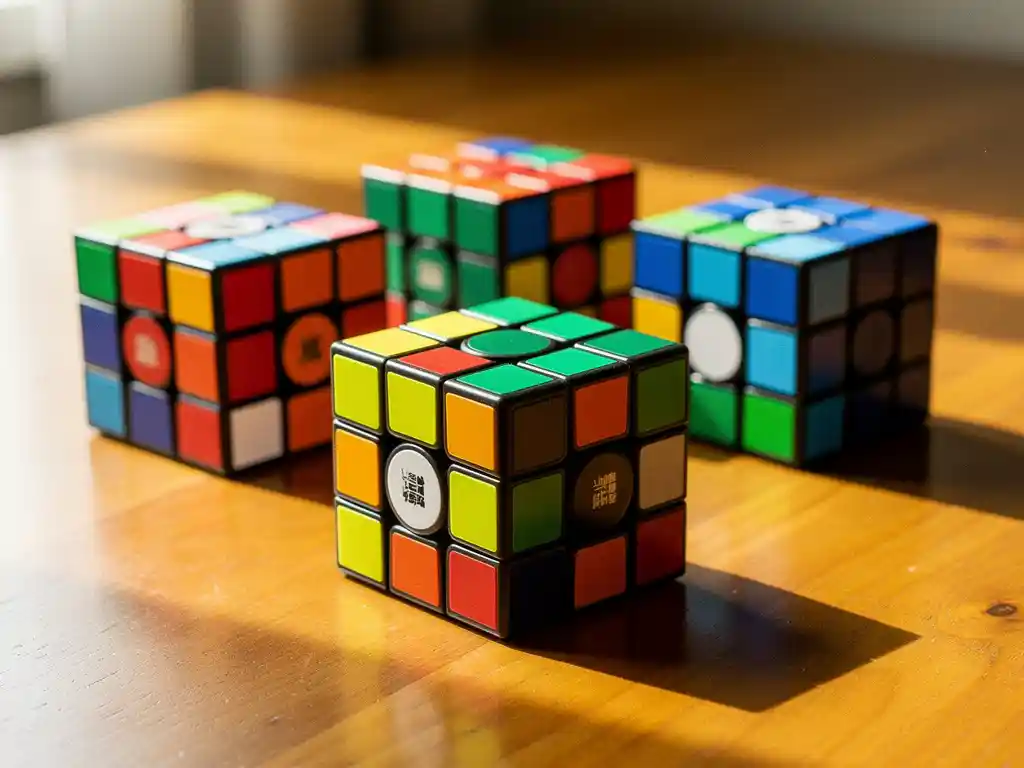
Beginners often choose a cube that doesn’t match their skill level. Too-cheap cubes turn roughly and frustrate, while too-advanced magnetic cubes actually distract from learning basic skills. A bad cube makes every turn harder and significantly slows the learning process.
For beginners, a solid 3×3 speedcube with good turning properties is essential, but without too many bells and whistles. Look for a cube that turns smoothly, isn’t adjusted too loose or too tight, and fits your budget. Invest in quality, but don’t immediately choose the most expensive model that professionals use.
2: Immediately trying to be super fast
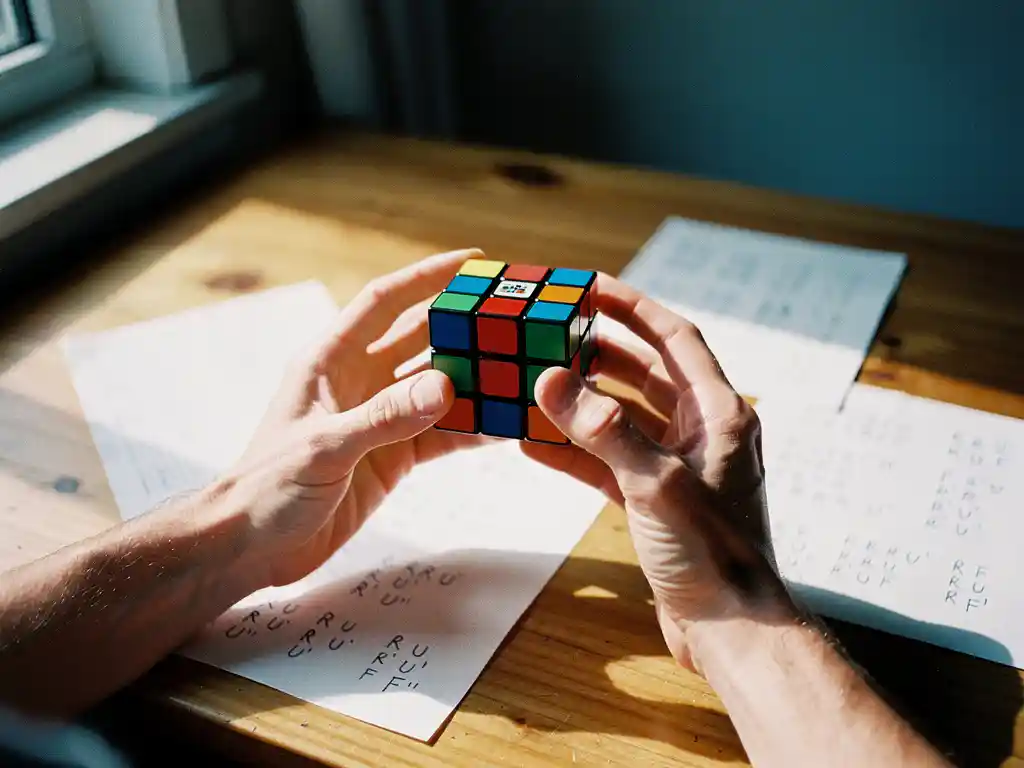
Many beginners want to achieve impressive times right away and force their fingers to move faster than their techniques allow. This leads to sloppiness, wrong grips, and ultimately slower times. Speed without control causes more mistakes and frustration.
Focus first on accuracy and smooth movements before adding speed. Practice algorithms slowly until they become automatic; then speed comes naturally. Good cubers build speed gradually while maintaining precision, not the other way around.
3: Learning bad finger techniques
Beginners often use their whole hand to turn the cube, instead of efficient finger movements. They turn with their wrist, use wrong fingers for certain moves, or develop other bad habits that are difficult to unlearn later.
Learn the correct finger techniques from the beginning. Use your thumb and index finger for most turning movements, keep the cube stable with your other fingers, and avoid wrist movements. Watch tutorials that specifically focus on fingertricks and practice these consciously, even if it feels slower at first.
4: Trying to learn too many algorithms at once
Enthusiastic beginners often try to memorize dozens of algorithms simultaneously, which leads to confusion and incomplete knowledge. They know many algorithms halfway, but can’t execute any of them smoothly. This causes hesitation during cubing and slower times.
Concentrate on perfectly learning a limited number of essential algorithms before adding new ones. Start with the basic OLL and PLL algorithms, practice these until they become automatic, and only then slowly expand. Quality over quantity when learning algorithms.
5: Not using a speedcube timer
Without a timer, beginners don’t know if they’re making progress and miss motivation to continue. They have no objective measure for their development and can’t set realistic goals. Additionally, a timer helps develop consistency and recognize patterns in performance.
Use a speedcube timer from day one, whether it’s a physical timer or an app on your phone. Track your times, analyze your averages, and celebrate small improvements. A timer gives structure to your practice sessions and helps you stay focused on progress.
6: Solving the cross without planning ahead
Beginners start turning immediately without planning the cross during inspection time. They improvise the cross while cubing, which leads to inefficient solutions and slower times. Without planning, they make unnecessary moves and miss opportunities for elegant solutions.
Use inspection time to plan your cross completely at minimum. Look at the cube, visualize the steps, and only start turning when you know how you’re going to solve the cross. Practice cross planning separately from cubing to develop this skill without time pressure.
7: Neglecting cube maintenance and setup
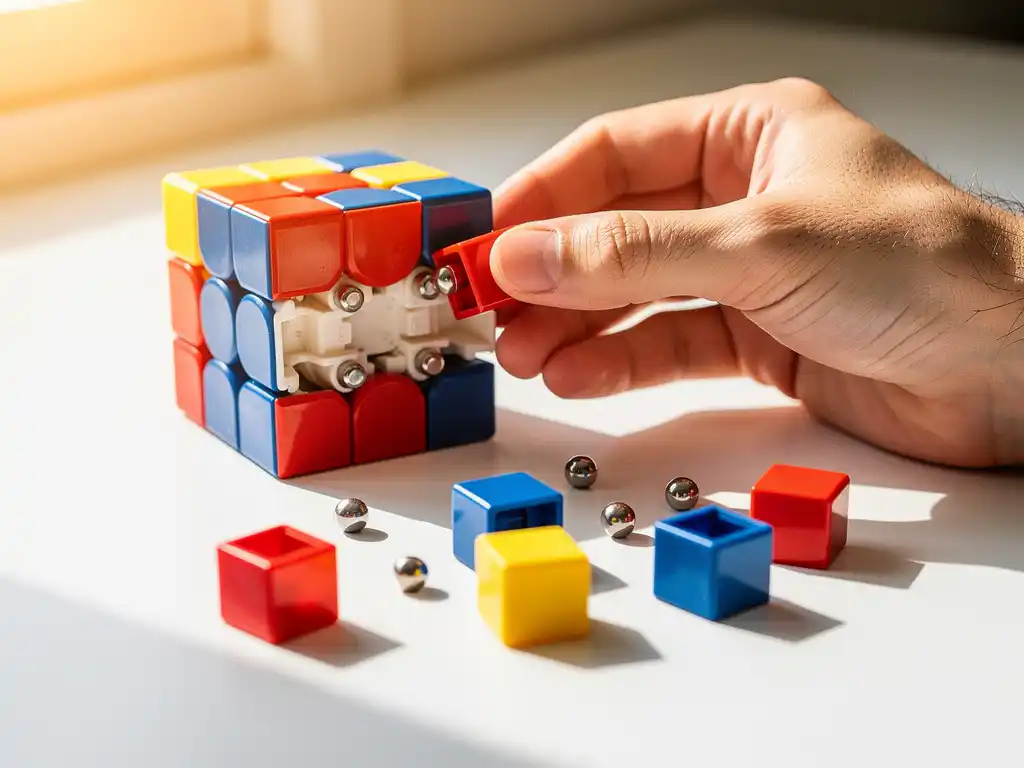
Many beginners think maintenance is unnecessary and use their cube for months without any care. Dust, dirt, and wear make the cube slower and less predictable. A poorly maintained cube requires more force to turn and disrupts rhythm during solving.
Clean your cube regularly, lubricate the mechanisms when needed, and adjust the tension correctly. A well-maintained cube turns smoother, responds better to your movements, and helps you achieve better times. View maintenance as an investment in your speedcubing performance.
8: Not practicing with different scrambles
Beginners often use the same scrambles or create simple scrambles themselves, preventing them from gaining experience with difficult situations. They get used to certain patterns and can’t handle unexpected configurations that occur in real scrambles.
Use random, computer-generated scrambles for all your practice sessions. Switch between different scramble generators and avoid reusing scrambles. This prepares you for all possible situations and prevents you from becoming dependent on recognizable patterns.
From beginner to fast cuber in less time
Avoiding these eight mistakes can significantly accelerate your speedcubing journey. Focus on one aspect at a time: start with the right cube and good finger techniques, then systematically add algorithms while consistently practicing with a timer. Don’t forget maintenance and keep challenging yourself with diverse scrambles.
Remember that speedcubing is a marathon, not a sprint. Those who take the time to build strong foundations will ultimately make faster progress than cubers who want to skip all the steps. With patience, the right approach, and avoiding these common mistakes, you’re well on your way to impressive times.
Frequently Asked Questions
How long does it take on average to go from beginner to sub-30 seconds?
With consistent practice and avoiding the mistakes mentioned above, most cubers can achieve sub-30 times within 3-6 months. The key is practicing 30-60 minutes daily with focus on techniques rather than just speed. Cubers who master the fundamentals well often make faster progress than those who skip steps.
Which speedcube is most recommended for absolute beginners?
For beginners, the MoYu RS3M 2020 or GAN 356 R is an excellent choice. These cubes offer good performance without being overwhelming, cost around $15-25, and have sufficient customization options to grow with you. Avoid extremely cheap cubes under $10, but also don't buy premium cubes over $40 yet.
Do I need to learn all OLL and PLL algorithms before working on speed?
No, you don't need to know all 78 algorithms before developing speed. Start with the most common 10-15 OLL and PLL cases, master these perfectly, and then gradually add more. Many sub-20 cubers don't know all algorithms yet, but do master the essential cases flawlessly.
How often should I maintain my speedcube and what do I need for it?
Clean your cube every 2-3 weeks with intensive use, or monthly with normal use. You only need some tissues, possibly a toothbrush for stubborn dirt, and cube lubricant (like Traxxas 50K or specialized cube oil). The entire process takes 10-15 minutes and can noticeably improve your times.
What do I do if I'm stuck at the same time level for weeks?
Plateaus are normal in speedcubing. Then focus on specific aspects: practice cross planning separately, work on lookahead during F2L, or learn new algorithms for cases you encounter often. Sometimes it also helps to take a few days' break and return to cubing with a fresh perspective.
Is it normal for my times to sometimes get worse as I practice more?
Yes, this is very normal, especially when learning new techniques or trying to unlearn bad habits. Your brain needs to store new movement patterns, which can temporarily lower your performance. Keep persisting - within 1-2 weeks you'll notice that your new techniques feel natural and your times improve.
How can I effectively practice cross planning without frustration?
Start by planning just one cross edge during inspection, not the entire cross. Practice this first without a timer to remove pressure. Use online cross trainers that guide you step by step through the planning process. Accept that you'll be slower for the first few weeks - cross planning is an investment that yields big time savings later.
Table of contents
Much viewed
More blogs