
-
 Dave Vinke
- Leestijd: 5 min
- Laatst geüpdatet: 04/01/2026

How many hours per day do we spend looking at screens? Whether it’s work, entertainment, or social media, our eyes are almost constantly focused on digital displays. Especially for children and teenagers, this can pose a challenge to their development and concentration. Fortunately, there are fantastic alternatives that are not only entertaining but also actively challenge your brain.
Brain teasers offer the perfect balance between fun and mental stimulation. They help develop problem-solving skills, improve concentration, and provide a calming moment away from all digital stimuli. In this list, you’ll discover eight different types of brain teasers suitable for various ages and interests.
Why brain teasers are the perfect replacement for screens
Physical puzzles offer unique advantages that digital entertainment simply cannot match. When you work with tangible materials, you activate different parts of your brain simultaneously. Your hands, eyes, and brain work together to recognize patterns, develop strategies, and solve problems.
The beauty of brain teasers is that they force you to be completely present. No notifications, no distractions, just you and the challenge in front of you. This form of mindful concentration helps reduce stress and gives a sense of satisfaction when you solve a puzzle.
Additionally, brain teasers stimulate social interaction. Families can puzzle together, friends can challenge each other, and it becomes a shared experience rather than an individual activity behind a screen. The cognitive development that results from this is scientifically proven and lasting in nature.
1: Rubik’s Cube – the classic that never gets boring
The Rubik’s Cube remains one of the most popular brain teasers in the world after more than fifty years. This iconic cube with its colored squares offers endless challenges for both beginners and advanced puzzlers. Learning to solve a Rubik’s Cube develops spatial awareness, memory, and logical thinking.
For beginners, a Rubik’s Cube might seem overwhelming, but there are different variants to start with. A 2×2 cube is ideal for children, while the classic 3×3 cube is suitable for teenagers and adults. Advanced puzzlers can enjoy 4×4, 5×5, or even more complex variants.
The process of learning to solve a Rubik’s Cube teaches patience and systematic thinking. You learn algorithms and pattern recognition, which also comes in handy in other life situations. Moreover, it gives enormous satisfaction when all sides are finally monochrome again.
2: Tangram puzzles for spatial insight
Tangram is an ancient Chinese puzzle consisting of seven geometric shapes that together form a square. The goal is to use these seven pieces to recreate different figures, from animals to houses and abstract shapes. This deceptively simple puzzle offers hundreds of possible combinations.
Working with tangram puzzles develops spatial awareness and geometric insight in a playful way. Children learn about shapes, angles, and how different pieces fit together. For adults, it offers a relaxing way to stimulate creativity.
Modern tangram sets often contain example cards with silhouettes you can recreate. Start with simple shapes and gradually work toward more complex figures. The beauty is that there’s no time pressure: you can puzzle at your own pace and experiment with different combinations.
3: Sudoku – number puzzles that keep the brain sharp
Sudoku has fascinated millions of people worldwide over the past decades. These number puzzles, where you must fill a 9×9 grid with numbers from 1 to 9, seem simple but can be quite challenging. Each row, column, and 3×3 block may contain each number only once.
Solving sudoku puzzles significantly improves logical reasoning and concentration. You learn to work systematically, eliminate possibilities, and recognize patterns. These skills are transferable to many other situations in daily life.
Sudoku is available in different difficulty levels, from simple for beginners to expert level for experienced puzzlers. You can start with puzzles where many numbers are already filled in and gradually switch to more challenging variants. The progressive nature makes it perfect for long-term mental training.
4: Wooden lock and maze puzzles
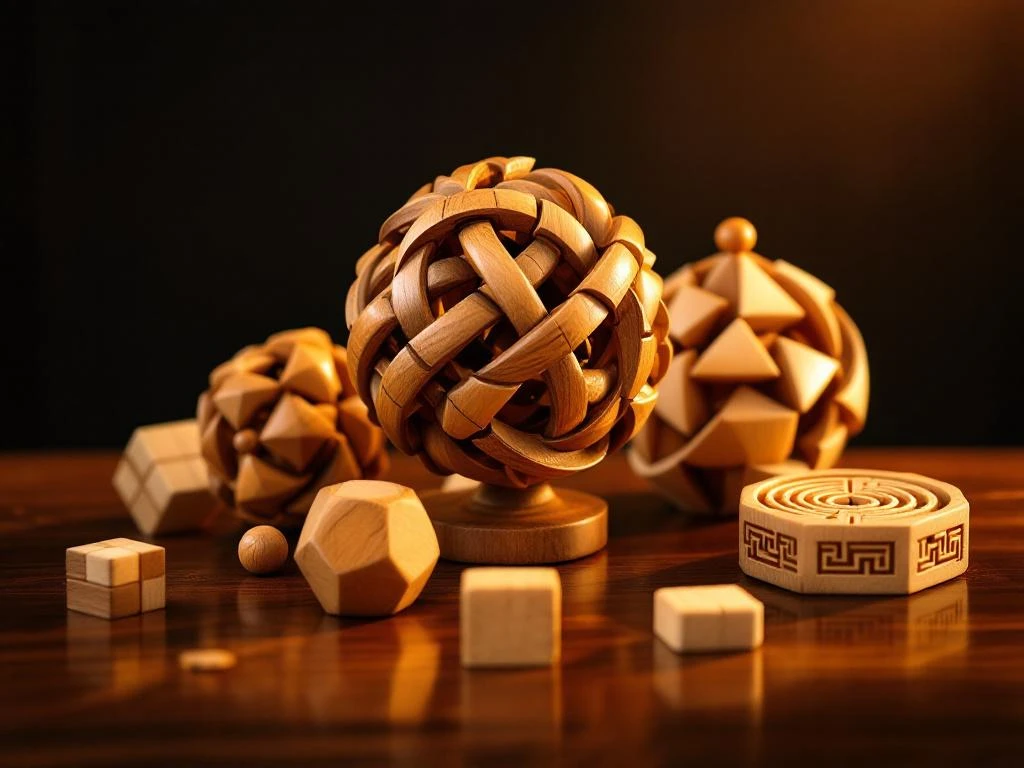
Traditional wooden brain teasers have a timeless charm and offer a unique tactile experience. Lock puzzles, maze puzzles, and other wooden brain teasers have existed for centuries and remain popular due to their elegant simplicity and challenging nature.
These puzzles range from relatively simple locks you need to unlock to complex constructions where you must move multiple components in the correct sequence. Working with wood provides a warm, natural experience that feels very different from plastic or digital alternatives.
Wooden brain teasers develop not only problem-solving ability but also fine motor skills and patience. They’re perfect for people who love craftsmanship and tangible challenges. Moreover, they’re often so beautifully made that they can also stand decoratively in the home.
5: Which age fits which brain teaser?
Choosing the right brain teaser for the right age is crucial for a positive experience. For toddlers and preschoolers (3-6 years), large, colorful puzzles with simple shapes are ideal. Think of large wooden block puzzles, simple tangrams, or magnetic puzzles.
School children (7-12 years) can be challenged with Rubik’s Cubes, beginner sudoku, and simple lock puzzles. Their developing logical skills make them perfectly suited for systematic brain teasers that can be solved step by step.
Teenagers and adults can handle all types of brain teasers, from complex 3D puzzles to challenging metal wire puzzles. For seniors, brain teasers are an excellent way to keep memory and cognitive functions active. The most important thing is to start with an appropriate level and gradually increase the difficulty.
6: Metal wire puzzles for patience and precision
Metal wire puzzles are among the most challenging and frustrating brain teasers that exist. These puzzles, often made of bent metal wire or metal rings, seem impossible to solve until you suddenly find the right movement.
Solving wire puzzles requires a combination of spatial insight, patience, and sometimes a bit of luck. They teach you to look at a problem from different angles and show perseverance when the solution isn’t immediately clear.
These puzzles are compact and portable, making them perfect for travel or during waiting times. They vary in difficulty from relatively simple to expert level, with some puzzles able to keep even experienced puzzlers busy for hours. The satisfaction when you finally find the solution is indescribable.
7: Patience games and sequential puzzles
Patience games are brain teasers where you must perform a specific sequence of moves to reach the solution. Think of the classic Tower of Hanoi, where you must move discs of different sizes, or modern variants where you must get colored balls in the correct order.
These puzzles teach systematic thinking and planning. You often need to think several steps ahead and understand how each move affects the final result. This develops strategic insight that is also valuable in other situations.
Sequential puzzles are perfect for people who enjoy working methodically and solving problems step by step. They offer a meditative experience where you can completely immerse yourself in the process of finding the correct sequence of movements.
8: Magnetic and 3D brain teasers
Modern technology has led to innovative brain teasers that use magnets and three-dimensional constructions. Magnetic puzzles use the attractive force of magnets to create unique challenges where pieces interact with each other in unexpected ways.
3D brain teasers go beyond traditional flat puzzles and require spatial thinking in three dimensions. These puzzles can range from complex geometric shapes to mechanical constructions where you must manipulate different components.
The fascinating thing about these modern brain teasers is that they often have surprising solutions that aren’t immediately obvious. They combine traditional puzzle principles with innovative materials and designs, making them feel both familiar and refreshing.
Start puzzling without screens today
Introducing brain teasers into your daily life doesn’t have to be complicated. Start small, with one puzzle that matches your interests and skills. Create a dedicated puzzle corner at home where you can sit quietly, without distraction from phones or televisions.
Make puzzling a social activity by inviting family and friends to join. Organize puzzle evenings or challenge each other to solve the same brain teaser. These shared experiences make it even more fun and motivate you to persevere.
For those looking for quality brain teasers, it’s important to choose puzzles that are well-made and remain challenging. A good brain teaser collection offers variety and growth opportunities for puzzlers of all levels.
Which brain teaser will you try first to replace your screen time?
Frequently Asked Questions
How long does it take to learn to solve a Rubik's Cube?
For beginners, it takes an average of 2-4 weeks to learn the basic algorithms and consistently solve a cube. With daily practice of 15-30 minutes, you can go from minutes to seconds within a month. Patience and systematic learning of the steps is more important than speed.
Are brain teasers suitable for children with concentration problems?
Yes, brain teasers can actually help develop concentration. Start with simple puzzles of 10-15 minutes and gradually build up. The tactile experience and feeling of success when solving strengthens focus. Choose puzzles that are challenging but not frustrating for the child.
What do I do if I get stuck on a difficult brain teaser?
Put the puzzle aside for a while and return to it later with a fresh perspective. Try looking from different angles or ask someone else to think along. For complex puzzles like metal wire puzzles, it's normal to take days or weeks - this is part of the process.
How much should I spend on a good brain teaser collection?
Start with a budget of €20-40 for 3-4 different types of puzzles. A good Rubik's Cube costs €10-15, sudoku books €5-8, and simple wooden puzzles €8-12. Invest in quality - cheap puzzles can be frustrating due to poor finishing or unclear instructions.
Can I use brain teasers to improve my memory?
Absolutely! Regular puzzling activates different brain areas and improves working memory, pattern recognition, and problem-solving ability. Sudoku and sequential puzzles are particularly effective for memory training. Combine different types of puzzles for optimal cognitive stimulation.
How do I motivate teenagers to try brain teasers instead of their phone?
Make it competitive and social by organizing challenges or trying speedcubing. Let them choose a puzzle that appeals to them and start with short sessions. Show interest in their progress and celebrate successes. Combine puzzling with music or make it a family activity.
Which brain teaser is best for travel or during trips?
Metal wire puzzles and small Rubik's Cubes are perfect for travel - they're compact and don't make noise. Sudoku books or puzzle apps are also handy for long journeys. Avoid puzzles with small parts that can easily be lost in planes or cars.
Table of contents
Much viewed


More blogs