
-
 Dave Vinke
- Leestijd: 5 min
- Laatst geüpdatet: 04/01/2026

Choosing your first brain teaser can make the difference between a lifelong passion and short-lived frustration. Many beginning puzzlers make the mistake of going directly for the most difficult challenge, without considering their current skills and preferences. This often leads to disappointment and the feeling that brain teasers are simply “too difficult.”
A good first brain teaser motivates you to continue, builds confidence and lays the foundation for your further puzzle journey. It is therefore essential to choose thoughtfully, taking into account various factors that influence your puzzle experience. The following tips will help you find that perfect first brain teaser that fits your unique situation.
1: Start with your current skill level
Assessing your own puzzle experience is crucial for a successful start. Many beginners overestimate their skills and choose puzzles that are far too complex for their current level. This leads to frustration and loss of interest in the hobby.
Brain teasers are available in various difficulty levels, from simple beginner variants to extremely complex challenges for experts. If you are new to the world of puzzles, start with a level 1 or 2 brain teaser. These puzzles are designed to teach the basic principles without being overwhelming.
Think about your experience with other puzzles, such as sudokus, crossword puzzles or even video games. Do you have a lot of trouble with them, or do you solve them relatively easily? This experience gives a good indication of which starting level suits you. It is always better to start too low and grow quickly than to get stuck on a puzzle that is too difficult.
2: Choose a puzzle that matches your interests
Brain teasers come in different categories, each with their own unique challenges and thought processes. Mechanical puzzles often require spatial insight and manual dexterity, while logical puzzles focus more on reasoning and pattern recognition.
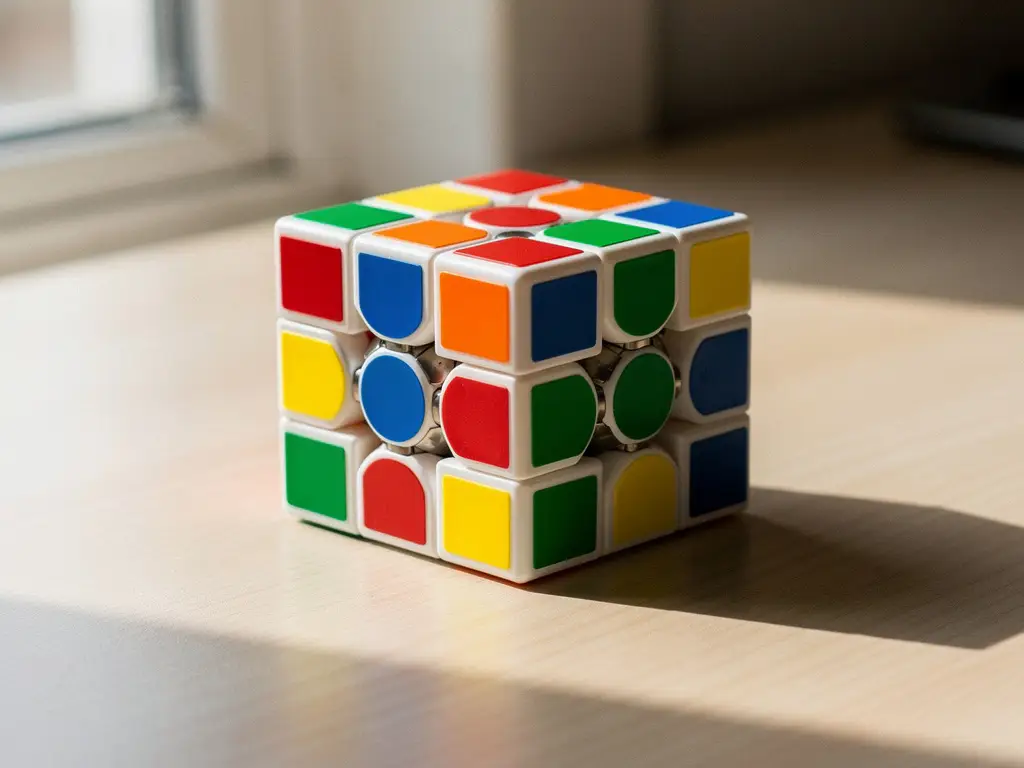
Mechanical brain teasers, such as the classic Rubik’s Cube or metal disentanglement puzzles, are ideal for people who like to work with their hands. They provide tactile feedback and visual satisfaction when you solve them. Logical brain teasers on the other hand, such as sudoku variants in 3D form or sequential puzzles, appeal more to people who love numbers and patterns.
Spatial puzzles combine both elements and are perfect for those who enjoy architecture, engineering or 3D thinking. Think about which activities you enjoy in your free time. Do you like building, drawing or taking things apart? Then mechanical puzzles are probably your thing. Are you more of a thinker who likes to devise strategies? Then go for logical challenges.
3: Pay attention to the quality of materials and finish
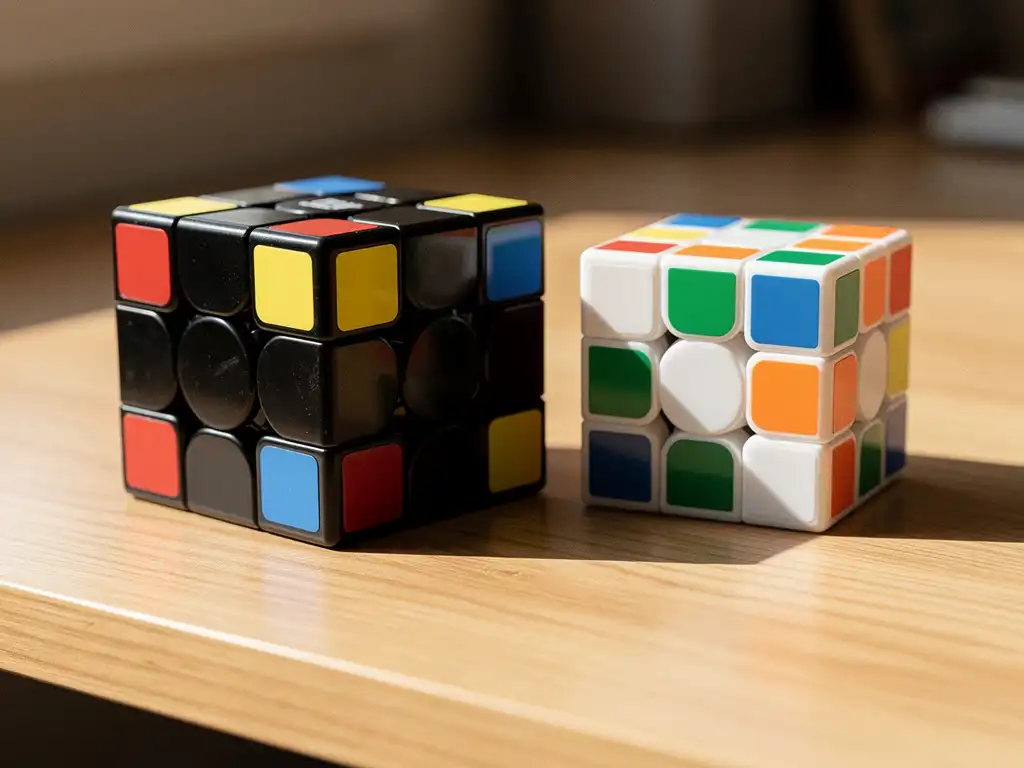
The quality of your first brain teaser has an enormous impact on your puzzle experience. Cheap puzzles with poor finish can jam, break or simply not function properly, which can seriously undermine your motivation.
Look at the material the puzzle is made from. High-quality plastic, well-finished wood or precisely machined metal not only feel better, but also last longer. The precision of the components is especially important with mechanical puzzles, where parts must move smoothly or fit perfectly.
Durability is another important aspect. Your first brain teaser will probably be used extensively while you learn and practice the solution. Good quality means that the puzzle can handle this intensive use without significant wear. Moreover, a quality finish contributes to the pleasure of puzzling: a puzzle that feels pleasant and looks beautiful motivates more than a cheap variant.
4: What size fits best with your situation?
The dimensions of your brain teaser influence not only where and when you can puzzle, but also the difficulty level and the pleasure you derive from it. Larger puzzles often offer more detail and complexity, but are less portable.
Think about where you will mainly be puzzling. If you are often on the road or want to puzzle during breaks at work, a compact brain teaser is ideal. You can easily put this in your bag and take it anywhere. At home you have more space and can choose larger, more impressive puzzles.
Size also influences difficulty. Smaller components require more precision and can increase the challenge. Large puzzles on the other hand are often clearer and can be easier for beginners. Also consider your storage space: if you like to collect puzzles, it is convenient if they don’t take up too much space.
5: Determine your budget and value expectation
Realistic budgeting prevents disappointments and helps you get the best value for your money. Brain teasers are available in all price ranges, from a few euros to hundreds of euros for collector’s items.
For your first brain teaser you don’t need to immediately choose the most expensive model. A puzzle from the mid-price range often offers the best balance between quality and price. Too cheap puzzles can put you off due to poor quality, while very expensive puzzles might be too intimidating for a beginner.
Think about how much you are willing to invest in this new hobby. If you doubt whether puzzling is something for you, start conservatively. If you notice that you develop a passion for it, you can always upgrade to more complex and expensive models. Don’t forget that a good brain teaser lasts for years and can provide many hours of pleasure, which justifies the investment.
6: Read reviews and ask advice from experienced puzzlers
Doing research before you buy can save you a lot of frustration and wrong purchases. Reviews from other puzzlers provide valuable insights into the actual quality and difficulty level of brain teasers.
Look for reliable sources, such as specialized puzzle websites, YouTube channels from experienced puzzlers and forums where the community actively discusses different models. Pay special attention to reviews from beginners who were in a similar situation as you are now.
The puzzle community is generally very helpful and enthusiastic about helping newcomers. Ask questions about which puzzles are suitable for your level and interests. Ask about the learning curve, the quality of the instructions and how satisfying the solution is. Experienced puzzlers can also warn you about common beginner mistakes and help you make an informed choice.
Start your brain teaser adventure with confidence
Choosing your first brain teaser is an important step that can determine the direction of your puzzle journey. By taking into account your skill level, personal preferences, quality requirements and budget, you lay the foundation for a successful and enjoyable puzzle experience.
Don’t forget that every expert was once a beginner. The most important thing is to start with a puzzle that motivates and challenges you without overwhelming you. Give yourself time to learn and experiment – some brain teasers need time to reveal their charm.
When making your choice you can visit specialized shops that offer an extensive range of brain teasers, complete with expert guidance and reliable quality. Which brain teaser will you choose as the first step in your puzzle adventure?
Frequently Asked Questions
How long does it take before I can solve my first brain teaser?
This varies greatly per person and type of puzzle, but for a level 1-2 brain teaser you can count on several hours to a few days. Give yourself time and take regular breaks - sometimes the solution comes just when you take some distance from the puzzle.
What should I do if I get stuck and cannot solve the puzzle?
Try different approaches first and take a break if you get frustrated. Online there are often video tutorials and step-by-step guides available. The puzzle community is also happy to help via forums, but try different strategies yourself first before seeking help.
Are there specific brands that are reliable for beginners?
Yes, brands like Hanayama, Professor Puzzle and ThinkFun are known for their quality and good instructions for beginners. These brands often offer clear difficulty indications and have a good reputation regarding durability and finish.
Can I break a brain teaser by puzzling incorrectly?
With quality puzzles this is very unlikely if you don't use excessive force. Mechanical puzzles are designed to be used repeatedly. Never force parts and if something doesn't want to move, try a different approach instead of pushing harder.
How do I know when I'm ready for a more difficult brain teaser?
If you can solve your current puzzle within a reasonable time and understand the solution (not just by chance), you are probably ready for the next step. Then choose a puzzle that is one level higher, not immediately the most difficult available option.
Should I use instructions or try to figure out how the puzzle works myself?
For your first brain teaser it is recommended to read the basic instructions to understand the goal and rules. After that you can try to find the solution yourself. Some puzzles come without instructions - this is normal and part of the challenge.
What are common mistakes I should avoid as a beginner?
The biggest mistake is starting too high in terms of difficulty level. Other common mistakes are: giving up too quickly, buying based on appearance alone, and having no patience for the learning process. Start simple and slowly build your skills.
Table of contents
Much viewed
More blogs