
-
 Dave Vinke
- Leestijd: 5 min
- Laatst geüpdatet: 05/01/2026

Puzzles are much more than just toys; they are powerful tools for children’s development. From the moment toddlers grasp their first wooden knob puzzle to pre-teens solving complex Rubik’s Cubes, each age has specific needs and capabilities. However, choosing the right puzzles for children can be overwhelming due to the enormous selection available.
This guide helps you find the perfect puzzle for every developmental stage. By understanding which puzzle types best match your child’s cognitive and motor skills, you can optimally support their growth while they have fun.
Why puzzles are essential for child development
Puzzles offer many more benefits than just entertainment. They stimulate cognitive development by challenging children to recognize patterns, think logically, and solve problems. This mental gymnastics strengthens brain connections and prepares children for more complex learning tasks.
From a motor perspective, puzzles improve hand-eye coordination and fine motor skills. Grasping, turning, and placing puzzle pieces develops muscle memory and precision that are later essential for writing and other skills. Additionally, children learn patience and perseverance, valuable qualities that will serve them throughout their lives.
Socially, puzzles can also develop collaboration skills when children puzzle together. They learn to communicate, share, and jointly search for solutions, which strengthens their emotional intelligence.
1: Wooden knob puzzles for toddlers (2-3 years)
For the very youngest, wooden puzzles with large knobs are the perfect introduction to the puzzle world. These puzzles usually consist of 3-8 large, thick pieces with sturdy knobs that fit perfectly with small hands. The knobs make it easy for toddlers to grasp and manipulate the pieces without frustration.
These puzzles focus on basic concepts like shapes, colors, and simple images of animals or vehicles. They help develop shape and color recognition while strengthening hand-eye coordination. The wooden material is not only durable but also safe for this age group, which sometimes puts things in their mouths.
Successfully placing a puzzle piece gives toddlers a sense of achievement and self-confidence. This positive feeling motivates them to continue and take on more challenging tasks.
2: Jigsaw puzzles with large pieces for preschoolers (3-4 years)
Preschoolers are ready for the next step: jigsaw puzzles with 12-24 large pieces. At this age, children can understand more complex images and have developed more patience to stay concentrated for longer periods. The pieces are still large enough to handle easily but offer more challenge than knob puzzles.
Popular themes for this age group are familiar animals, vehicles, fairy tale characters, or simple landscapes. These familiar subjects help children understand the puzzle and provide clues for where pieces might belong. Recognizing parts of an image develops their visual perception and logical thinking ability.
When choosing puzzles for preschoolers, it’s important to look for clear, high-contrast images without too many small details. This prevents frustration and keeps the experience positive and motivating.
3: Educational puzzles for preschool children (4-5 years)
Preschool children stand on the threshold of formal learning, and educational puzzles can perfectly support this transition. These puzzles combine the fun of puzzling with learning letters, numbers, countries, or animal species. They prepare children for elementary school in a playful way.
Alphabet puzzles help with letter recognition and can even introduce simple word formation. Number puzzles familiarize children with numbers and can introduce basic mathematical concepts like counting and sequence. Geographic puzzles open up the world and stimulate curiosity about other countries and cultures.
The most important thing about educational puzzles is that they seamlessly combine learning and playing. Children should feel like they’re playing, not being taught. The educational elements should be naturally integrated into the puzzle experience.
4: What puzzle size fits school-age children (6-8 years)?
School-age children can handle considerably more challenge than younger children. Puzzles with 60-100 pieces are ideal for this age group. Their improved concentration and problem-solving ability enable them to tackle more complex images and sustain longer puzzle sessions.
When choosing the right difficulty level, it’s important to observe the individual child. Some 6-year-olds are ready for 100 pieces, while others are better off with 60 pieces. Start with a slightly easier puzzle to build confidence before increasing the difficulty.
Interesting themes for this age can vary from nature scenes and animals to space exploration and adventure stories. Children of this age often develop specific interests, so choosing puzzles that align with their passions significantly increases motivation.
5: Challenging puzzles for older children (8-10 years)
Older children are ready for serious puzzle challenges. Puzzles with 150-300 pieces offer the perfect balance between challenge and achievability. At this age, children can think more strategically, for example by sorting pieces by color or working on specific parts of the image.
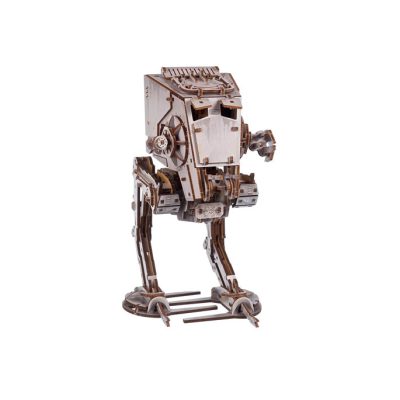
3D puzzles introduce a completely new dimension to puzzling. They develop spatial insight and give children the chance to understand three-dimensional structures. From famous buildings to animals: 3D puzzles offer a tactile experience that traditional jigsaw puzzles cannot match.
Thematic puzzles that stimulate logical thinking, such as mazes or puzzles with hidden images, are perfect for this age group. They develop perseverance and teach children that complex problems can be solved by working systematically.
6: Advanced puzzles for pre-teens (10-12 years)
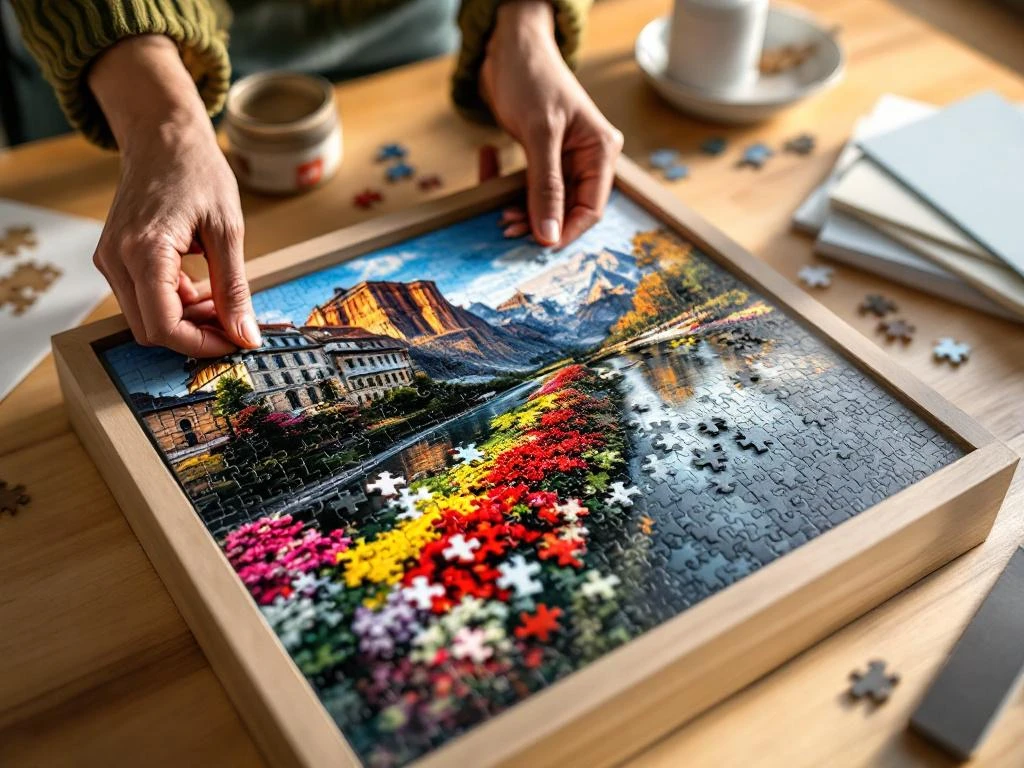
Pre-teens can handle the most challenging puzzles suitable for children. Jigsaw puzzles with 500 or more pieces offer hours of challenge and give an enormous sense of satisfaction when completed. At this age, children can also sustain puzzle projects over multiple days or even weeks.
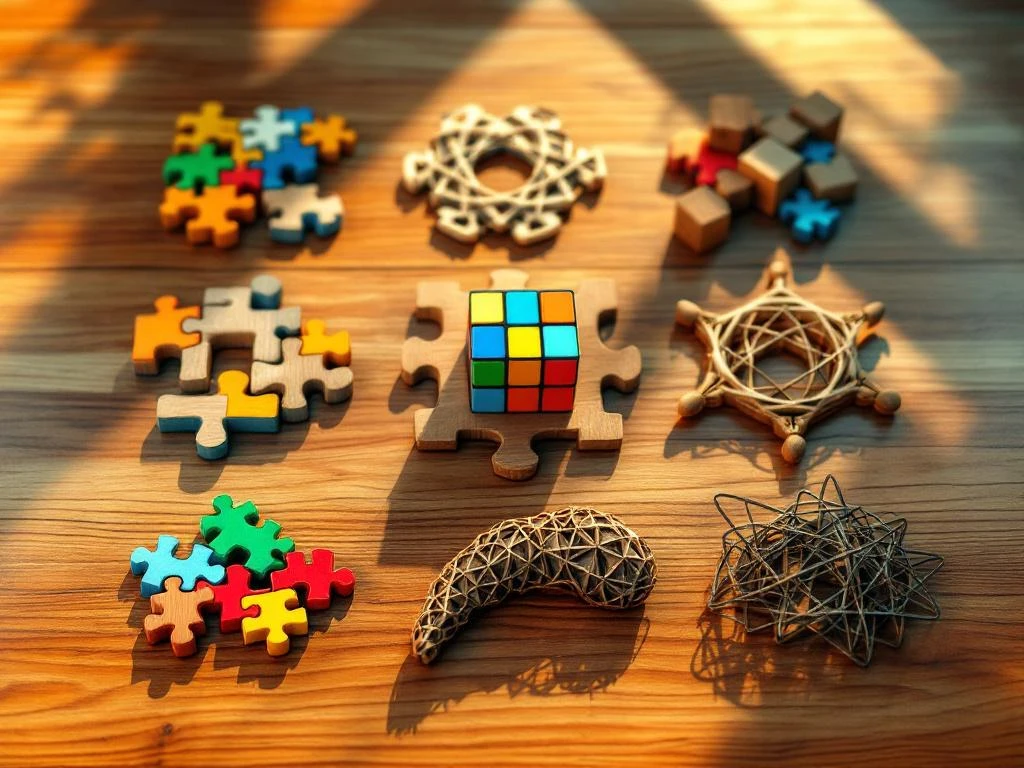
Mechanical puzzles like the Rubik’s Cube open up a completely new world of challenges. These puzzles require not only logical thinking but also memorizing algorithms and sequences. They develop memory skills and strategic thinking in a unique way.
Specialist puzzles like metal brain teasers, wooden puzzles, or puzzle boxes combine problem-solving with fine motor skills. These puzzles can be solved repeatedly and offer long-lasting challenge. They’re also perfect to take along during travels or to share with friends.
Find the perfect puzzle for your child
Choosing the right puzzle requires more than just looking at the age indication on the packaging. Observe your child while puzzling: do they get frustrated quickly or become bored? This gives valuable information about which level best fits their current skills and temperament.
Interest is a crucial factor in puzzle success. A child who is passionate about dinosaurs will be more motivated to complete a challenging dinosaur puzzle than a simple puzzle with a subject that doesn’t interest them. Listen to your child and choose puzzles that align with their current obsessions and interests.
For parents looking for quality puzzles for children and puzzles for adults, a specialized webshop often offers the best advice and largest selection. At puzzles you’ll find an extensive assortment that serves all ages and skill levels, from simple wooden puzzles to advanced mechanical challenges.
Which puzzle will you choose to stimulate your child’s development?
Frequently Asked Questions
How do I know if a puzzle is too difficult or too easy for my child?
Watch your child's signals while puzzling. If they give up or get frustrated within 10-15 minutes, the puzzle is probably too difficult. If they solve the puzzle within a few minutes without any challenge, it's time for a more difficult variant. The ideal puzzle keeps your child busy for 20-45 minutes, depending on their age.
My child only wants puzzles with their favorite characters. Is this a problem?
Not at all! Interest is one of the most important motivators in puzzling. Use their favorite themes as a starting point and gradually introduce variety. You can, for example, offer different difficulty levels of the same theme, or look for puzzles that combine their interest with educational elements.
From what age can children puzzle independently without help?
Most children can solve simple puzzles independently from 4-5 years old, but this varies per child. Start with guidance and gradually reduce your help. Offer support by teaching strategies like sorting edge pieces or pieces by color, but let them find the solution themselves.
What do I do if my child quickly loses interest in puzzles?
Try different puzzle types and themes to discover what motivates them. Make puzzling social by puzzling together or creating a puzzle corner at home. Sometimes it helps to put puzzles away temporarily and reintroduce them later. Never force it - puzzling should remain enjoyable.
Are expensive puzzles always better than cheaper alternatives?
Not necessarily, but quality does make a difference. Good puzzles have sturdy cardboard, precise fit, and clear prints. Wooden puzzles are more durable for young children. Invest in quality for puzzles that are used frequently, but feel free to experiment with cheaper options to discover new interests.
How can I use puzzling to develop specific skills?
Choose puzzles strategically: alphabet and number puzzles for pre-academic skills, 3D puzzles for spatial insight, and large jigsaw puzzles for concentration and perseverance. Geographic puzzles develop world knowledge, while mechanical puzzles like Rubik's Cubes train logical thinking and memory.
What are the best strategies to teach children puzzle techniques?
Start with basic techniques: first look for the edges, then sort by color or pattern. Teach them to look at shapes, not just images. For older children: work in sections and use the image on the box as reference. The most important thing is showing patience and celebrating small successes during the process.
Table of contents
Much viewed

More blogs