
-
 Dave Vinke
- Leestijd: 5 min
- Laatst geüpdatet: 05/01/2026

Solving puzzles together is one of the most valuable activities that families can undertake together. In our digital world, where screens often dominate, puzzles offer a unique opportunity to truly connect with each other. Whether you choose traditional jigsaw puzzles, challenging brain teasers, or modern escape room games, solving puzzles together not only stimulates the brain, but also strengthens family bonds in a natural and relaxed way.
The beauty of puzzling as a family activity is that it is suitable for all ages and skill levels. From toddlers learning to put together their first shape puzzle to grandparents building complex 3D models, everyone can participate and contribute to the collective success. This activity teaches patience, cooperation and perseverance, while providing hours of quality time without distraction.
1. Jigsaw puzzles: the classic choice for all ages
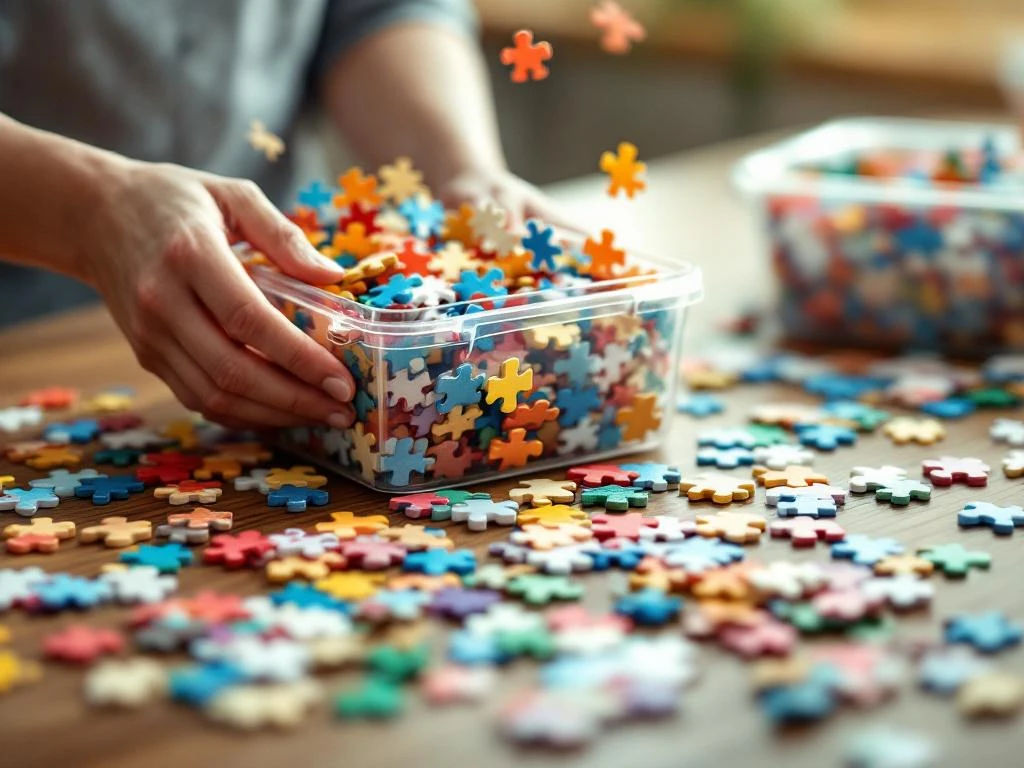
Traditional jigsaw puzzles remain the most popular choice for families, and for good reason. These timeless puzzles for children and adults offer a perfect balance between challenge and relaxation. The secret success of jigsaw puzzles lies in their adaptability, from simple puzzles with 50 pieces for the little ones to complex challenges with 3000 pieces for experienced puzzlers.
When choosing the right jigsaw puzzle for your family, it is important to consider the youngest participant. Start with puzzles that everyone can understand and where the image is attractive to all family members. Nature scenes, animals or famous landmarks often work well, because they contain enough recognizable elements to keep everyone engaged.
A practical tip is to have multiple puzzles available at the same time. While adults work on the more complex edges and details, children can focus on clearly recognizable objects or color areas. This division of tasks ensures that everyone feels useful and contributes to the final result.
2. Rubik’s Cube: learning and challenging together
The iconic Rubik’s Cube offers a completely different puzzle experience that is perfect for families who enjoy an intellectual challenge. Unlike jigsaw puzzles, where the end result is visually clear, the Rubik’s Cube requires logical thinking and pattern recognition. These skills make it an excellent educational tool for children and an engaging challenge for adults.
Learning to solve a Rubik’s Cube works best step by step. Start with understanding the basic principles: how the different layers move and which colors belong together. Many families enjoy following online tutorials together or going through instruction booklets. This collaborative learning process strengthens not only problem-solving skills, but also mutual communication.
For families with children of different ages, you can start with simpler variants, such as the 2×2 cube or even special beginner versions. As everyone gains more experience, you can move on to the classic 3×3 version and eventually even to more complex variants. The beauty is that every progress can be celebrated as a collective victory.
3. Escape room puzzles: excitement and teamwork at home
Escape room board games and puzzle sets bring the excitement of a real escape room to your own living room. This modern form of puzzling combines different types of challenges, from logical riddles to hidden clues, allowing each family member to use their unique skills. The time pressure and mysterious story make these puzzles for adults and older children extra exciting.
The success of escape room puzzles lies in collaboration. Where some family members might excel at finding hidden objects, others are better at solving number codes or word puzzles. This diversity in skills ensures that everyone plays an important role in achieving the common goal: escaping within the set time.
For beginners, there are escape room games specially designed for families, with adjusted difficulty levels and help systems. These games often contain multiple scenarios, so you can experience different stories. Afterwards, families can discuss the puzzles, evaluate strategies and make plans for the next challenge.
4. 3D puzzles: building and creating as a team
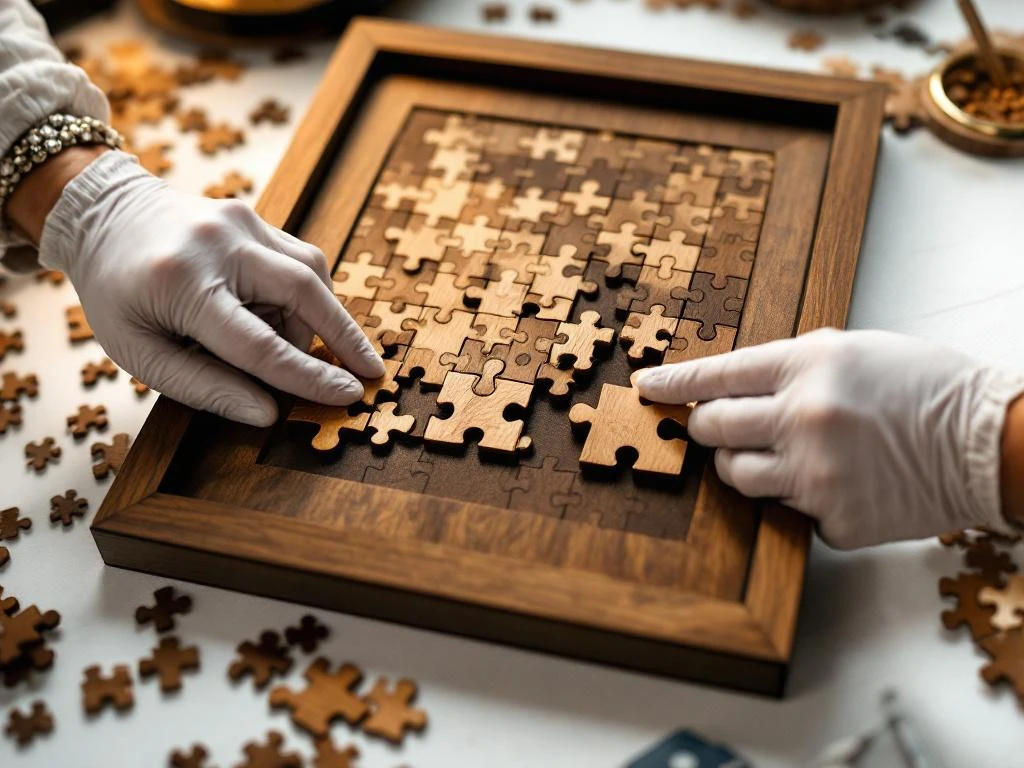
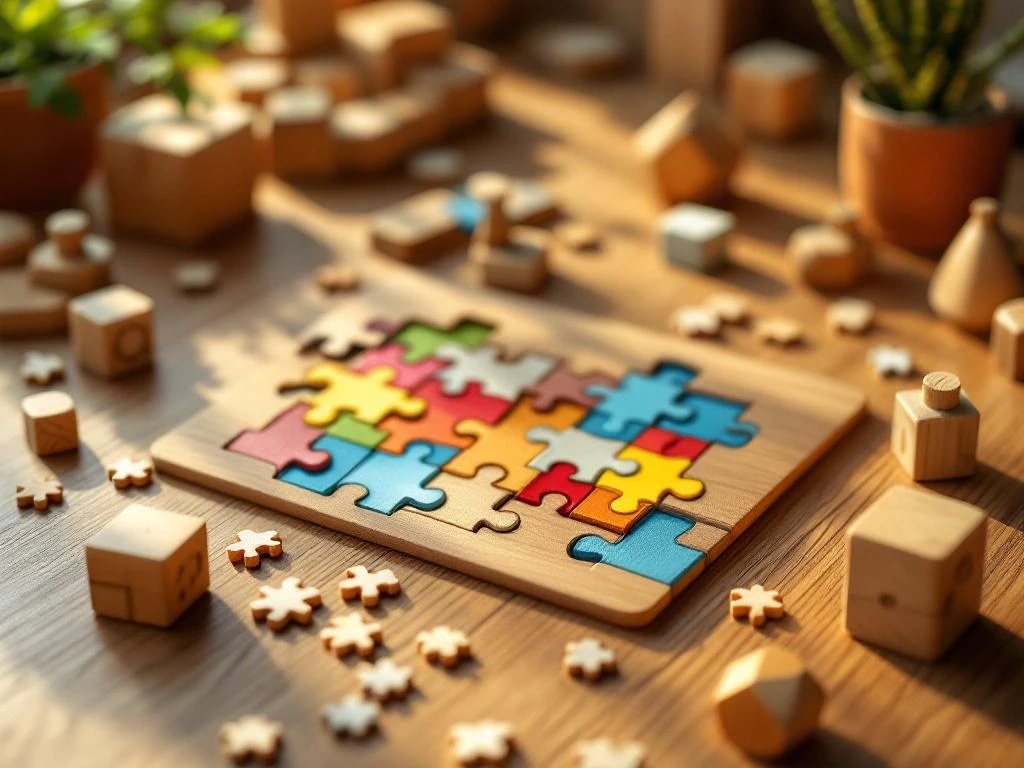
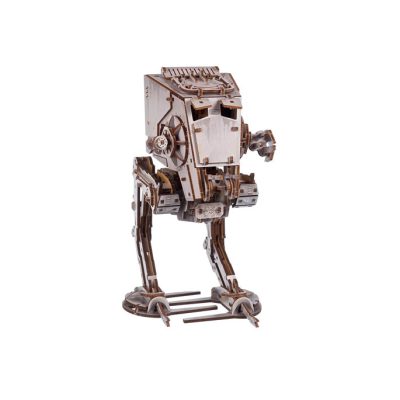
3D puzzles open up a completely new dimension in the world of family puzzling. From architectural wonders like the Eiffel Tower to mechanical marvels like working clocks: these puzzles combine the satisfaction of puzzling with the pride of creating something tangible. Variants of wooden puzzles are particularly popular, because they are durable and have a natural, warm appearance.
For beginners, architectural models of famous buildings are an excellent choice. These puzzles usually have clearly numbered parts and step-by-step instructions that are easy to follow. The building process can be divided over multiple sessions, making it a long-term family project that everyone can look forward to.
Mechanical 3D puzzles, such as working gear systems or moving models, add an extra educational dimension. These puzzles teach children about engineering and physics while building together. The end result is not only beautiful to look at, but can also actually move or function, providing extra satisfaction and pride for everyone involved.
5. Brain teasers and logic puzzles: thinking as a team
Logic puzzles and brain teasers offer a mental workout that is perfect for families who enjoy intellectual challenges. From classic tangrams to modern sudokus and from mazes to number puzzles: these puzzles train different aspects of thinking ability. The beauty of this type of puzzle is that they are often compact and portable, making them perfect for vacations or outings.
Tangrams, the classic Chinese puzzles where you have to make different figures with seven geometric shapes, are particularly suitable for families with children of different ages. Younger children can start with simple shapes like houses or animals, while older children and adults take on more complex challenges. Searching for solutions together stimulates creativity and spatial insight.
For families who enjoy numbers and patterns, sudoku variants and logical sequence puzzles are an excellent choice. These puzzles can be solved together by thinking out loud and trying different strategies. The process of elimination and logical deduction thus becomes a joint journey of discovery that strengthens the analytical thinking of everyone involved.
Start your family puzzle tradition today
Setting up a regular puzzle tradition in your family doesn’t have to be complicated. Start small by declaring one evening per week as ‘puzzle night’ and create a fixed place where you can work undisturbed. A puzzle corner with good lighting and a large table makes the difference between a frustrating and a pleasant experience.
Invest in a varied collection of puzzles suitable for different moments and moods. Always have some simple puzzles for children ready for quiet afternoons, more complex challenges for weekends and portable brain teasers for on the go. This variety keeps puzzling interesting and challenging for all family members.
The most important thing is to see puzzling as a joint activity, not as a competition. Celebrate small victories, help each other with difficult parts and enjoy the conversations that arise during puzzling. These moments of connection are often more valuable than the puzzle itself. Do you want to start building your puzzle collection? Then take a look at our extensive range of puzzles that are perfectly suitable for families of all levels and interests.
Frequently Asked Questions
How long does it take on average to complete a jigsaw puzzle as a family?
This depends greatly on the size of the puzzle and the number of participants. A 500-piece puzzle can be completed in 3-5 hours with the whole family, while a 1000-piece puzzle often requires 6-10 hours. It is advisable to divide the puzzle over multiple sessions, so that it remains a relaxed activity and no one gets frustrated.
What should I do if my child gets frustrated quickly while puzzling?
Start with puzzles that are slightly below your child's skill level and provide lots of positive encouragement. Divide the puzzle into smaller, achievable goals like 'let's first find all the corner pieces'. Take regular breaks and celebrate small successes to keep motivation high.
How do I best store a half-completed puzzle?
Invest in a puzzle mat or puzzle board that you can easily store. You can roll this up or put it away without the pieces shifting. Alternatively, you can use cardboard or a large tray. Make sure the place where you store is dry and flat to prevent damage.
Are there special techniques to puzzle together more efficiently?
Yes, divide tasks based on strengths: have one person make the edges, another can sort colors, and yet another can focus on recognizable objects. Use different containers to sort pieces by color or pattern. Communicate openly about what you are looking for, so others can help.
From what age can children participate in escape room puzzles?
Most family escape room games are suitable from 8-10 years old, depending on the child's reading ability and attention span. For younger children, there are special versions with more visual clues and simpler riddles. Always choose games that explicitly state they are family-friendly.
What if our family members have different difficulty levels?
Choose puzzles with different approaches, such as jigsaw puzzles with both simple and complex parts, or 3D puzzles where different components can be built in parallel. With brain teasers, you can give hints to younger children or let them help with simpler steps. The goal is to have fun together, not to make everyone perform at the same level.
How often per week is puzzling as a family ideal?
Start with one fixed puzzle night per week to build a routine. If this goes well, you can add spontaneous puzzle sessions during weekends or vacation days. The most important thing is consistency: a weekly tradition works better than irregular but longer sessions. Listen to your family and adjust the frequency based on everyone's enthusiasm.
Table of contents
Much viewed


More blogs