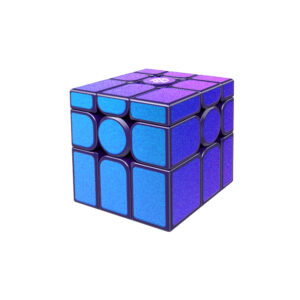
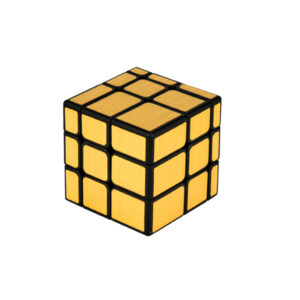
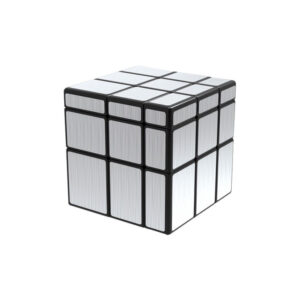
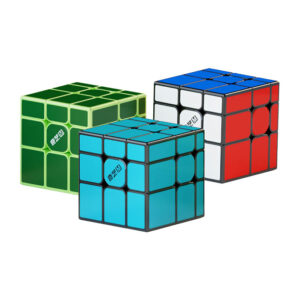
This makes solving fundamentally different from solving a regular Rubik’s cube and means your brain has to work in a completely new way. In this article, we answer the most frequently asked questions about the mirror cube, from the basics to useful solving tips.
What makes the mirror cube different from an ordinary Rubik’s cube?
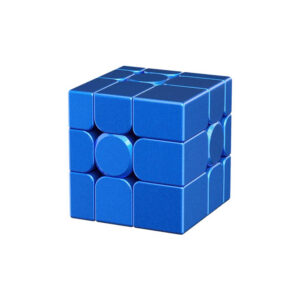
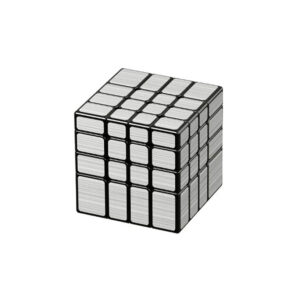
The mirror cube differs from a regular Rubik’s cube in that all the pieces are the same color but have different dimensions. While a standard Rubik’s cube uses six colored faces to distinguish the pieces, with a mirror cube you use only the height and width of each piece as clues. The cube is solved when all the sides are flat and it forms a smooth cube shape.
Mechanically, the mirror cube works exactly like a 3×3 speedcube. The turning movements and the structure of the corner pieces, edge pieces, and center piece are identical. Yet solving it feels completely different because your visual frame of reference is gone. Instead of thinking, “this blue piece belongs on the blue face,” you have to reason in terms of geometry: “this tall, narrow block belongs in this specific position.”
That makes the mirror cube a particularly educational challenge. You learn to really understand the underlying structure of a 3×3 cube instead of blindly following the colors.
Why is it so difficult to recognize the right pieces?
Recognizing pieces on a mirror cube is difficult because all the faces are the same color and your brain is used to relying on color as its primary way of identifying them. You now have to assess each piece by its exact dimensions, which in practice requires much more concentration and spatial awareness than a colorful cube.
Imagine solving a puzzle where all the pieces are the same color. You know there’s a solution, but you have to measure and compare each piece individually. That’s exactly what happens with a mirror cube. Each corner piece has a unique combination of height and width, and each edge piece has a specific thickness. When the cube has been scrambled, many pieces look very similar, even though they’re slightly different.
In addition, the shape of the entire cube changes when you scramble it. This is something you don’t see with a regular Rubik’s cube, and it makes it even more confusing to keep track of which piece belongs where.
How does piece orientation work on a mirror cube?
On a mirror cube, the orientation of a piece determines whether the cube will eventually be flat. A piece can be in the correct position but still be incorrectly oriented, leaving the side uneven. This orientation problem is one of the most frustrating aspects of the mirror cube, because it’s difficult to see until you’re almost finished.
With an ordinary Rubik’s cube, you can immediately tell if a piece is incorrectly oriented because its color won’t match. With the mirror cube, you need to look closely to see whether a piece’s height matches the surrounding pieces. A corner piece that has been rotated 180 degrees is in the right place but sticks out slightly differently, making the face look wavy instead of flat.
This requires good spatial reasoning. A useful trick is to regularly place the cube on a flat surface and check that all the sides are even. This helps you quickly identify which pieces still need correcting.
Which solving techniques work best for a mirror cube?
The best approach to solving a mirror cube is to use the same layer-by-layer method as for a 3×3 Rubik’s cube, but focus on shapes rather than colors. Since the mechanics are identical to those of a standard 3×3, all the familiar algorithms work, as long as you can identify the pieces correctly.
In practical terms, this means the following:
- Start with the center piece. The largest center piece determines the orientation of the entire cube. Set it in place first as a reference point.
- Build the bottom layer based on size. The thickest edge pieces belong in the bottom layer, and the thinnest in the top layer.
- Use familiar algorithms for the second and top layers. The F2L, OLL, and PLL methods from CFOP work here too.
- Check the orientation at each step. Set the cube down regularly to see whether the faces are becoming even.
If you already have experience solving a regular speed cube, you’ll find that the mirror cube is much more accessible. The algorithms are the same; it’s just that recognizing the pieces requires extra attention.
What are common mistakes when solving a mirror cube?
The most common mistake with the mirror cube is mixing up pieces that are very similar in size but slightly different. This can leave the cube looking almost solved, but not quite flat. Another common mistake is ignoring the orientation of pieces during the early stages of solving.
Other mistakes that are common:
- Ignoring the center piece. Many people start at random, but the center piece is your only fixed reference point. Without this anchor, you can quickly lose your bearings.
- Placing pieces by feel. With a regular cube, you can rely on color, but with the mirror cube, you need to measure and compare each piece carefully.
- Working too quickly. The mirror cube requires patience. Turning it hastily without a plan almost always leads to more confusion.
- Applying algorithms without checking. Only perform an algorithm once you’re sure the correct piece is in the correct position.
Is a mirror cube suitable for beginners?
A mirror cube isn’t ideal as a first puzzle, but it is suitable for beginners who can already solve an ordinary 3×3 Rubik’s cube. The mechanics are identical, so you can use the same techniques. The extra challenge is recognizing pieces by their shape, making it a fun next step after the standard cube.
For someone who has never solved a cube before, it’s a good idea to first learn how to solve a 3×3 speedcube. Once you understand the basic algorithms and the layer-by-layer method, moving on to the mirror cube is a logical and challenging next step.
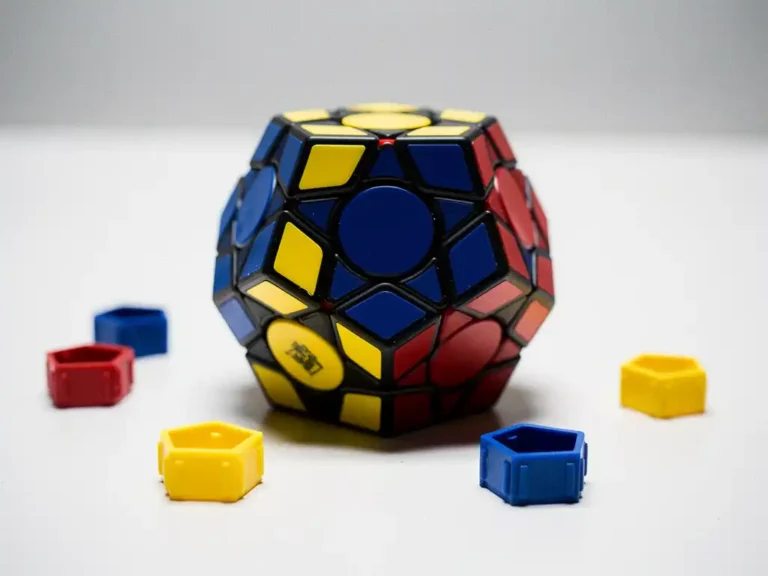
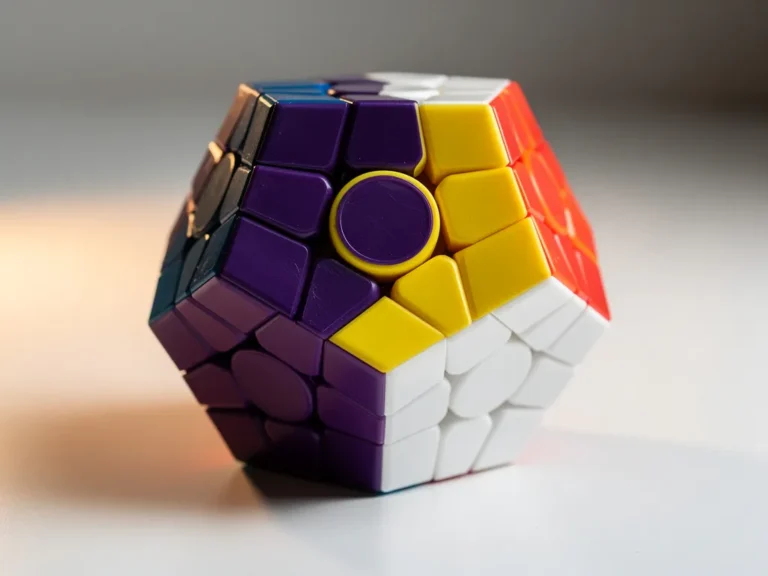
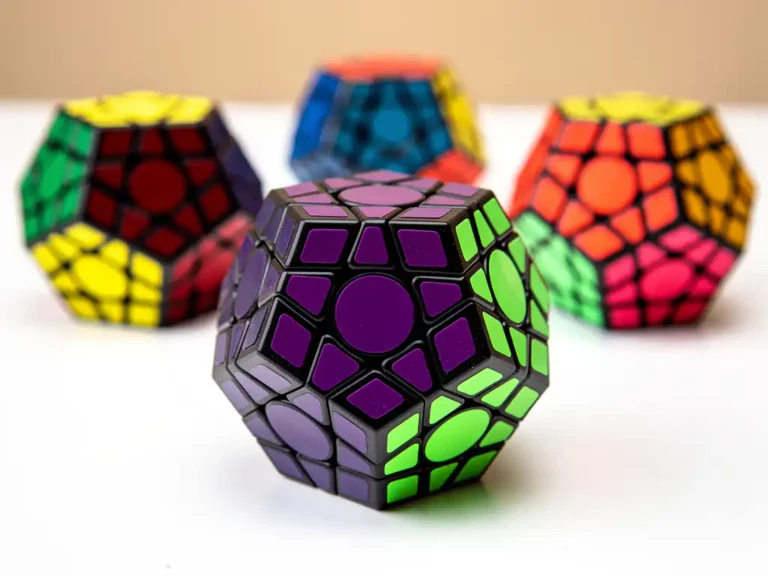
Would you like to try other shape-modifying puzzles too? The pyraminx (a tetrahedron-shaped puzzle) and the megaminx (a dodecahedron-shaped puzzle) are popular choices for expanding your collection. Like the mirror cube, these puzzles train your spatial awareness in a unique way, each with its own mechanics and challenges.
In short, the mirror cube is a fantastic challenge for anyone ready to take the next step in puzzling. With patience, the right technique, and a good understanding of the basics, you’ll definitely be able to solve it.
Frequently Asked Questions
How long does it usually take to solve a mirror cube for the first time?
If you can already solve a 3×3 Rubik’s cube, you can usually solve a mirror cube for the first time after a few hours of practice. You already know the algorithms, but learning to recognize pieces by their shape takes extra time. Expect to spend a few practice sessions before the process starts to feel smooth.
What should I do if the mirror cube looks almost solved but still isn’t completely flat?
This is a classic orientation problem: one or more pieces are in the right position but are incorrectly oriented. Place the cube on a flat surface and look for the side that appears wavy or uneven. Then use an OLL algorithm to correct the orientation of the pieces in question without disturbing the rest of the cube.
Can I use the same algorithms as for my regular 3×3 cube?
Yes, absolutely. Because the mirror cube is mechanically identical to a standard 3×3 cube, all the familiar algorithms, such as CFOP, layer-by-layer, and specific OLL and PLL algorithms, work just fine. The only difference is that you recognize the pieces by their dimensions and proportions rather than by their colors.
Which mirror cube is best for beginners to start with?
Choose a mirror cube with a smooth, stable mechanism so you can focus on solving it instead of dealing with stiff or jerky turns. Brands such as MoYu and QiYi offer affordable mirror cubes that turn smoothly and are durable. Avoid the very cheapest versions, as a poor mechanism can make the learning process unnecessarily frustrating.
How can I learn to recognize the pieces faster?
A useful practice technique is to scramble just one or two layers of the mirror cube and then solve it again. This lets you practice identifying pieces without feeling overwhelmed by a fully scrambled cube. As you become more familiar with the dimensions of each piece, you’ll get faster and more intuitive at recognizing them.
Is it possible for a mirror cube to be unsolvable because it was assembled incorrectly?
Yes, just like a regular Rubik’s cube, a mirror cube can become unsolvable if it has ever been taken apart and put back together incorrectly. You can tell when you reach a situation where one piece seems to be mirrored or shifted, but no algorithm fixes it. In that case, you’ll need to carefully take the cube apart and put the piece back in the correct position.
Which other shape puzzles are a natural next step after the mirror cube?
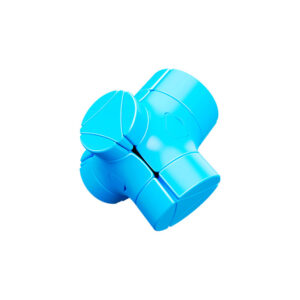
After the mirror cube, the skewb and Fisher cube are popular next steps, as they also rely on shapes and geometry rather than just color. For a bigger challenge, the 4×4 mirror cube is an interesting option that adds even more complexity. If you’d rather explore a different type of mechanism, the pyraminx offers a refreshing change with its tetrahedron-shaped structure.