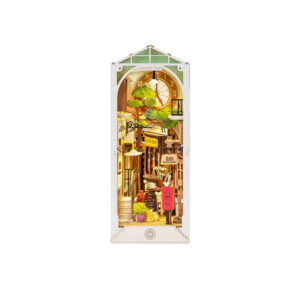
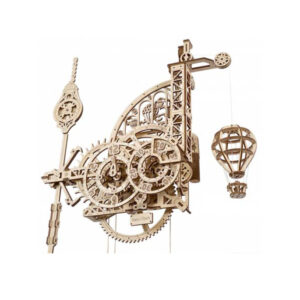
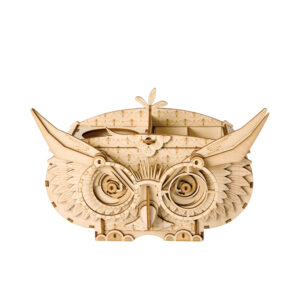
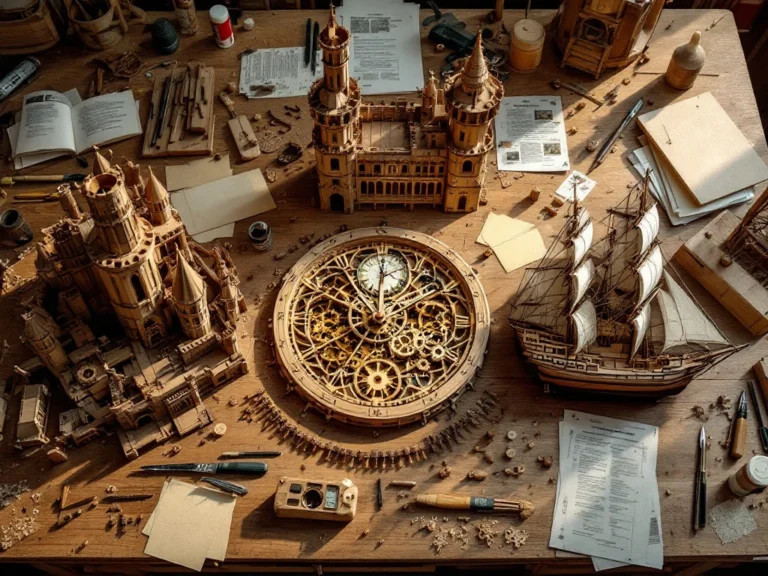
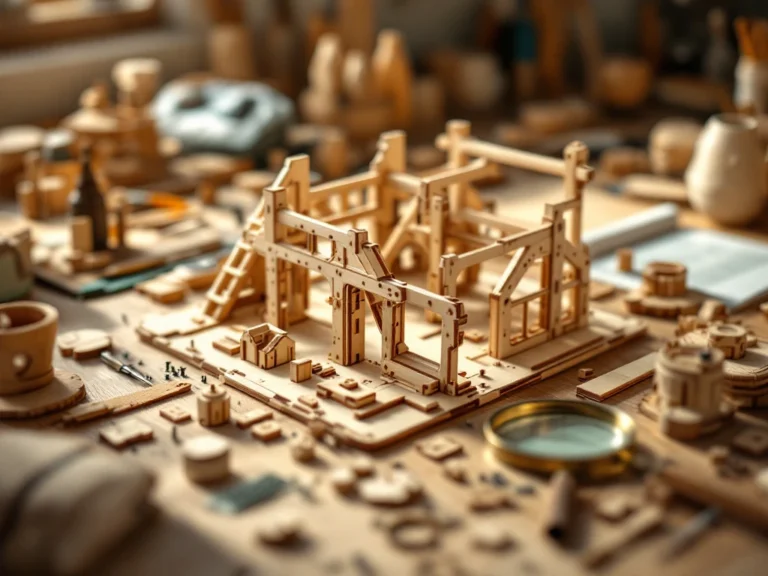
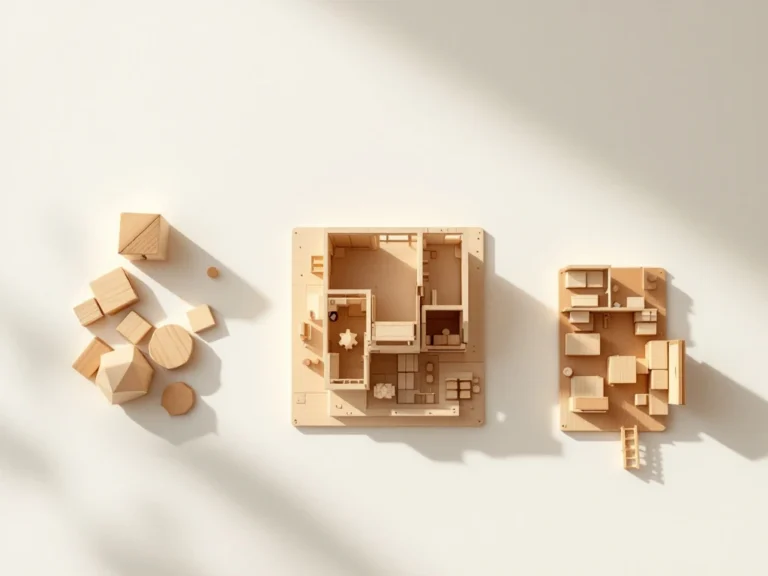
This sustainable toy option provides hours of educational fun while children work with their hands. From simple puzzles for toddlers to complex mechanical models for teens, there is a suitable wooden construction kit for every age and interest.
Why are wooden construction kits such a great gift for children?
Wooden model kits combine play and learning in a natural way. They develop essential skills such as hand-eye coordination, spatial awareness and patience. Children learn to follow instructions step by step while improving their ability to concentrate.
Working with wood gives children a hands-on experience that digital activities can’t offer. They can feel the texture of the material, smell its natural scent and enjoy the satisfaction of making something with their own hands. This sensory experience is valuable for their overall development.
Durability also plays an important role. Wooden kits last for years and can be passed on to younger brothers, sisters or friends. This teaches children the value of quality and taking good care of their belongings. They are also more environmentally friendly than plastic alternatives.
Completing a wooden construction kit gives children a tremendous sense of pride and self-confidence. They can immediately see the results of their efforts, which encourages them to take on new challenges.
Which wooden building kits are suitable for each age group?
For toddlers aged 2-4, simple stacking puzzles and large building blocks are ideal. They have no small parts and focus on basic shapes and colors. Think simple animal figures or vehicles with just a few large parts that fit together easily.
Children aged 4–7 can try their hand at slightly more complex models. Construction kits with 10–20 pieces are perfect for this age group. They can build simple planes, cars or houses while learning to work with screws and basic joints.
For children aged 7-10, the possibilities expand considerably. They can make detailed models of ships, trains or buildings. Children in this age group have developed the fine motor skills needed to work with smaller parts and follow more complex instructions.
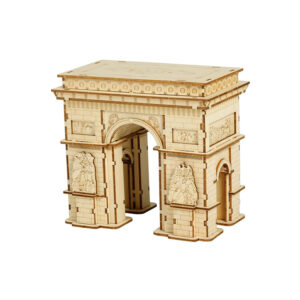
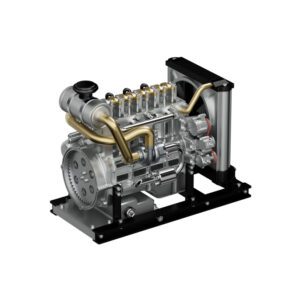
Teens aged 10 and up can tackle challenging mechanical models. Think working clocks, moving vehicles or architectural replicas. These complex kits can take days or weeks to complete and offer a serious challenge.
Adults and older teens often enjoy historical replicas, such as medieval castles or classic cars. These models require precision and patience, but produce impressive results.




What are the most popular types of wooden kits for children?
Vehicles are among the most popular categories. Cars, planes, trains and ships appeal to many children. These models range from simple pull-along toys to complex replicas with moving parts such as wheels, propellers or rudders.
Buildings and architecture give children the chance to create their own world. Houses, castles, farms and bridges stimulate the imagination and can be used for role-play after they have been built. Some kits include several buildings that together form a complete city.
Animals are especially popular with younger children. From farm animals to wild animals, these construction kits help children learn more about nature. Many animal models have moving parts, such as rotating heads or movable legs.
Mechanical models fascinate children who want to understand how things work. Gears, levers and moving mechanisms make these construction kits both educational and entertaining. Examples include working clocks, carousels and simple machines.
Puzzle building kits combine the fun of puzzling with building. These 3D puzzles recreate well-known landmarks, animals or vehicles and are perfect for children who enjoy both activities.
How do you choose the right wooden construction kit as a gift?
Start by choosing the right difficulty level for the child’s age and experience. A kit that’s too easy will be boring, while one that’s too difficult can be frustrating. Look at the number of parts and the complexity of the instructions as indicators.
Pay close attention to the child’s interests. A child who loves cars will enjoy a vehicle model more than a building. See what they like to play with or watch to help you make the best choice.
Safety is crucial, especially for younger children. Check that all parts are large enough not to be swallowed. Look for certification marks indicating that the toy meets safety standards.
Budget is also a consideration. Simple construction kits are affordable, while complex mechanical models cost more. Keep in mind that a high-quality wooden construction kit is an investment that will last for years.
For a wide range of quality options, you can visit specialist model building webshops. For natural materials in particular, wooden model kits offer the perfect combination of durability and educational value.
Also consider whether the child will need help or can work independently. Some kits are designed for parents and children to work on together, while others can be completed entirely independently. This affects the choice and how much the child enjoys it.
Frequently Asked Questions
How long does it usually take to complete a wooden model kit?
This depends greatly on the complexity and the child’s age. Simple models for toddlers can be completed in 30–60 minutes, while more complex kits for teenagers can take anywhere from a few days to several weeks. Set aside plenty of time and let children work at their own pace to avoid frustration.
What should I do if parts are missing or damaged?
First, carefully check the packaging and all the bags—small parts can sometimes get stuck inside. Contact the manufacturer or seller with photos of the problem and your proof of purchase. Most reputable brands will send replacement parts free of charge within a few business days.
Can wooden kits be taken apart and rebuilt?
Yes, most wooden model kits are designed to be taken apart and rebuilt multiple times. Always use the right tools and be careful when unscrewing parts to avoid damage. Store all the parts in a box so nothing gets lost.
What tools do I need to build wooden construction kits?
Most kits include all the necessary parts, but you may need a small screwdriver. For more complex models, small pliers or sandpaper may come in handy. Always check the product description to see whether any additional tools are needed.
How can I help my child without taking away the fun?
Let your child take the lead and only offer help when they ask for it. Help them read the instructions or hold the parts, but let them do the building themselves. Celebrate small successes and encourage them through challenges—the learning process is more important than the end result.
Are wooden construction kits suitable for children with a short attention span?
Yes, but choose models with fewer parts that can be completed in shorter sessions. Break more complex kits into smaller goals and celebrate each completed step. Alternate with other activities and never force it—the fun should remain the priority.
How do I care for wooden model kits to ensure they last?
Store completed models in a dry place out of direct sunlight to prevent discoloration and cracks. Dust them regularly with a dry cloth and, if necessary, use a slightly damp cloth for a more thorough cleaning. Check periodically for loose screws and tighten them if needed.