Fortunately, learning to solve a Rubik’s Cube is much more accessible than most people think, as long as you use the right method and work systematically.
With the right guidance and a little patience, anyone can learn how to solve this iconic puzzle step by step. In this guide, we answer all the essential questions beginners have about solving a Rubik’s Cube.
What is the easiest method for solving a Rubik’s Cube?
The layer-by-layer method is by far the easiest way for beginners to solve a Rubik’s cube. This method solves the cube one layer at a time: first the bottom layer, then the middle layer and finally the top layer.
The layer-by-layer method is so popular because each step is clearly defined and you can track your progress visually. Unlike more advanced methods such as CFOP or Roux, the layer-by-layer method requires only a handful of algorithms that you can learn step by step. This systematic approach makes it possible to solve your first cube within a few days.
The biggest advantage of the layer-by-layer method is that you don’t need to recognize complex patterns. Every step has a clear goal: first you make a white cross, then solve the white corners, followed by the middle layer and finally the yellow top layer. This structure gives beginners the confidence to keep going, even if a step seems difficult at first.
How long does it take to learn to solve a Rubik’s cube?
Most beginners can learn how to solve a Rubik’s Cube within 1 to 2 weeks if they practice for 30 to 60 minutes every day. Your first solve will probably take 10 to 20 minutes, but with practice you’ll soon get faster.
The learning curve varies from person to person, depending on your spatial awareness and experience with puzzles. Some people solve their first cube after just a few days, while others need a month to master all the steps. The most important thing is to be patient and practise a little every day.
After your first successful solve, the process becomes significantly faster. Within a month of regular practice, most people can reduce their solve time to 2 to 5 minutes. Those who want to progress to speedcubing can achieve times under a minute after a few months of intensive training with specialized speedcubes.
What preparation do you need before you begin?
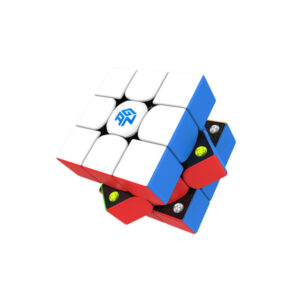
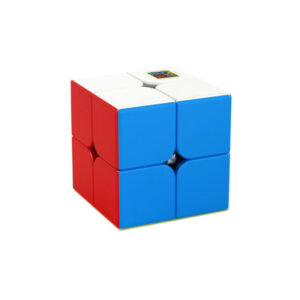
All you need to get started is a well-functioning Rubik’s Cube and a quiet place. Make sure your cube turns smoothly and that all the stickers or colors are clearly visible.
A good cube makes a world of difference to your learning experience. Old or cheap cubes often turn stiffly and can be frustrating. Check that all the faces turn smoothly without getting stuck. If your cube is too tight, you can often adjust it by loosening the screws slightly.
It’s also helpful to learn the standard notation before you begin. Each face has a letter: F (front), B (back), R (right), L (left), U (up) and D (down). A letter on its own means a clockwise turn, while an apostrophe indicates a counterclockwise turn. This notation is used in all tutorials and algorithms.
Make sure you have a good workspace with plenty of light so you can distinguish the colors clearly. Be patient with yourself and set aside enough time for each practice session. Rushing often leads to mistakes that slow your progress.
How do you solve the first layer of a Rubik’s Cube?
Start by making a white cross on the bottom layer, with the edge pieces matching the sides as well. Then place the four white corner pieces around the cross to complete the layer.
The white cross is the foundation of your solution. Find the four white edge pieces and position them in the right place one by one. Make sure that not only is the white side facing down, but that the other color on each edge piece also matches the center of that side. This often requires a few extra turns, but it’s crucial for the next steps.
After the cross come the corner pieces. Find a white corner piece and work out where it belongs. A corner piece can be in several different positions, and there is a specific sequence of moves for each position to get it into the right place. It may take a while before you can perform these moves automatically, but with practice, this often becomes the fastest step in your solution.
What are the most important algorithms every beginner should know?
The five essential algorithms for beginners are: the right-hand algorithm (R U R’ U’), the left-hand algorithm (L’ U’ L U), the top-layer cross algorithm, and the two algorithms for orienting and permuting the last layer.
The right-hand algorithm is probably the most frequently used algorithm in speedcubing. You can perform these four moves quickly and smoothly, especially with your right hand. It's used to position corner pieces and in many other situations. Practice this algorithm until you can perform it without thinking.
For the last layer, you need two specific algorithms. The first algorithm orients all the yellow pieces so they face up, while the second puts the pieces in their final positions. These algorithms are longer than the basic ones, but you only need to perform them a few times per solve.
The secret is to learn each algorithm slowly and deliberately. Start by understanding what each algorithm does before trying to memorize it. Visualize the moves and, if necessary, practice them without a cube first so your fingers can get used to the movements.
How can you avoid the most common beginner mistakes?
The most common beginner mistakes are forgetting the correct orientation of edge pieces, trying to go too fast, and not working systematically. Always check each step before moving on to the next.
Many beginners make the cross without paying attention to the sides of the edge pieces. This may seem like a time-saver, but it can cause problems later that are difficult to fix. Take the time to place each edge piece correctly, even if it takes longer at first.
Another common mistake is performing algorithms with the cube in the wrong orientation. Make sure you always hold the cube in the correct position before starting an algorithm. If a tutorial says the yellow side should be on top, double-check this before you begin.
Rushing is the enemy of progress when learning to solve a Rubik’s cube. Beginners who try to turn faster than their knowledge allows make more mistakes and become frustrated. Focus first on doing each step correctly; speed will come naturally with experience.
Frequently Asked Questions
What should I do if I get stuck while solving?
Stop and calmly analyze what went wrong. Often, the problem is that you skipped a step or performed an algorithm incorrectly. Go back to the beginning of the step where you're having trouble and check that all the previous steps were completed correctly. It's normal to get stuck at first – it's part of the learning process.
Can I solve a Rubik’s Cube without memorizing algorithms?
No, you need at least a few basic algorithms to solve a Rubik’s Cube. Fortunately, there are only 5–7 algorithms you really need to know for the layer-by-layer method. You can start with cheat sheets, but eventually you’ll need to memorize the algorithms to solve the cube smoothly. First, focus on understanding what each algorithm does before memorizing it.
Why does my cube keep getting worse instead of better as I practice?
This is a common phenomenon known as “scrambling.” You’re learning new moves and algorithms, but haven’t fully automated the previous steps yet. This can make your performance seem to temporarily get worse. This is normal and temporary—keep practicing and focus on one step at a time until you’ve mastered it before moving on.
How do I know if my cube is defective or if I’m making a mistake?
A correctly assembled Rubik’s Cube always has a solution. If your cube seems unsolvable, a sticker may have come loose or been placed incorrectly, or there may be a mechanical problem. Test this by scrambling your cube completely and trying again. If the problem persists, check that all the stickers are in the right places or consider getting a new cube.
Should I invest in an expensive speedcube as a beginner?
A good cube is important, but you don’t need to buy an expensive speedcube straight away. A cube that turns smoothly and costs 15–25 euros is perfect for beginners. Only invest in a professional speedcube (30+ euros) once you can consistently solve the cube in under 2 minutes and are genuinely interested in getting faster. A poor-quality cube can frustrate you and slow you down, though.
How do I remember all the algorithms without mixing them up?
Learn algorithms one at a time and practice each one at least 20 times before learning the next. Use memory aids such as saying the moves out loud or visualizing patterns. Many people find it helpful to practice algorithms while listening to music or watching TV—this helps make the moves automatic.
Is it normal for my fingers to hurt after practicing?
Mild muscle soreness in your fingers and wrists is normal when you’re just starting out, because you’re making new movements. Take regular breaks and stretch your hands. If the pain persists or gets worse, you’re probably practicing too intensely or for too long at a time. Gradually increase your practice time and make sure you maintain good posture while cubing.