Skip to content
9,4
Search
9,4
English
Nederlands
English
Deutsch
Français
NL
▼
EN
EN
DE
0
Cart
Cart
Your cart is empty.
Search
Speedcubes
Brands
Cyclone Boys
Dayan
DianSheng
GAN
GAN Monster Go
GoCube
Specials
Gear
Megaminx
Megamorphix
Metallic
Mirror
Pyraminx
Standard cubes
2×2
3×3
4×4
5×5
6×6
7×7
Accessories
Displays
Mats
Robots
Keychains
Lubricants
Stands
Yo-yos
Brands
Duncan
Henrys YoYo
iYoYo
Kendama Usa
Krom
MagicYoyo
Type
Responsive
Unresponsive
Material
Aluminium
Bimetal
Hybrid
Plastic
Accessories
Thread
Tools
Gloves
Yoyo lubricants
Bags/cases
Brainteasers
Brands
Cast Puzzle
Constantin
Dan Feldman
Escapewelt
Eureka Brainteasers
Felix Ure
Material
Glass
Wooden brainteasers
Plastic brainteasers
Metal
Difficulty
1 star
2 stars
3 stars
4 stars
5 stars or more
Target audience
Children
Adults
Model kits
Brands
Cupuz
Eco Wood Art
Franzis
Italeri
Metal Earth
Metal Time
Collection
Advent calendar
Landmarks
Books
Animals
Movies
Buildings
Vehicles
Model Cars
Boats
Motorcycles
Airplanes
Airships
Target audience
Children
Adults
Material
Wood
Plastic
Metal
Accessories
Displays
Glue
Brushes
Paint
Fidgets
Collection
Cube
Gadgets
Spinner
Stress Ball
Pop It
Putty
Brands
Crazy Aaron’s
Intelligent
Slimy
ZURU
Type
DIY Kit
Fluffy
Magic sand
Putty
Slime
Puzzles
Brands
Cobble Hill
Crafthub
Eco Wood Art
Gibsons
Grafika
Collection
Abstract
Comics
Animals
Disney
Fantasy
Funky Zoo
Puzzle Type
3D puzzles
Wooden Puzzles
Large puzzles
Jigsaw Puzzles
Special Puzzles
Number of pieces
0–499 Pieces
500 – 999 Pieces
1,000 pieces
1,500 pieces
2,000 pieces
3,000 pieces
Accessories
Puzzle glue
Puzzle mats
Assembly system
Sorters
Special offers
Blog
English
Nederlands
English
Deutsch
Français
NL
▼
EN
EN
DE
My account
Customer service
Search
0
Cart
Cart
Your cart is empty.
Blogs
All
Speedcubes
Yo-yos
Brainteasers
Model kits
Putty
Puzzles
All
Speedcubes
Yo-yos
Brainteasers
Model kits
Putty
Puzzles
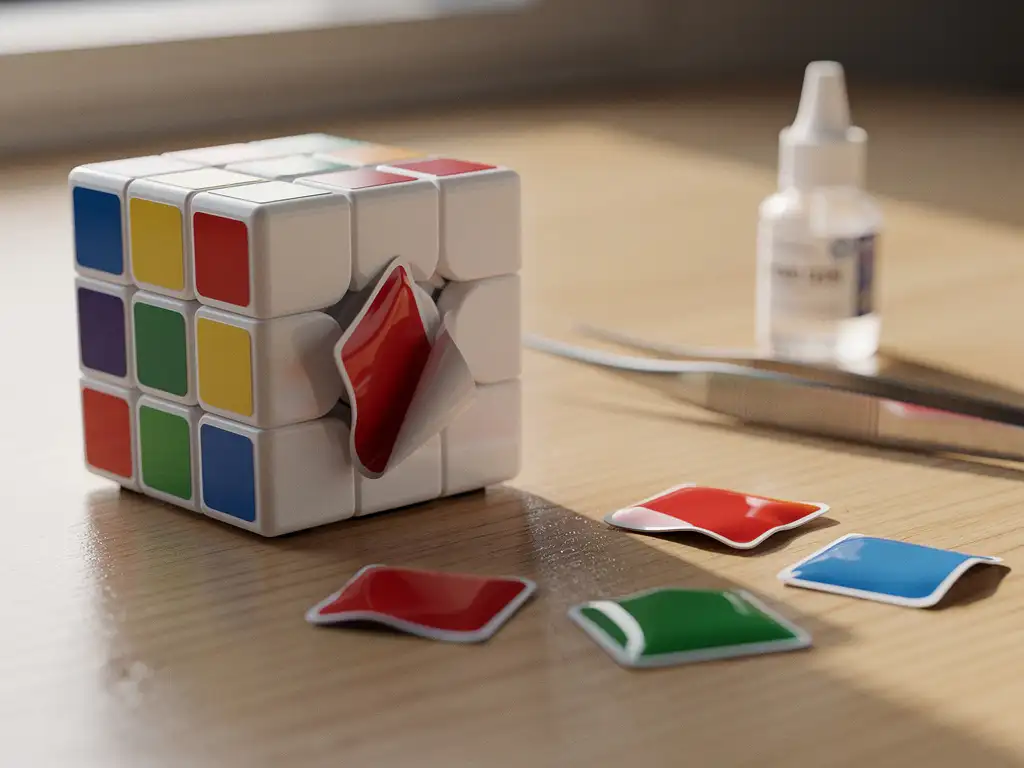
What should you do if the stickers on your Rubik’s cube start coming loose?
Loose Rubik’s Cube stickers? Find out why this happens and learn practical solutions to make your cube perfect again.
Speedcubes
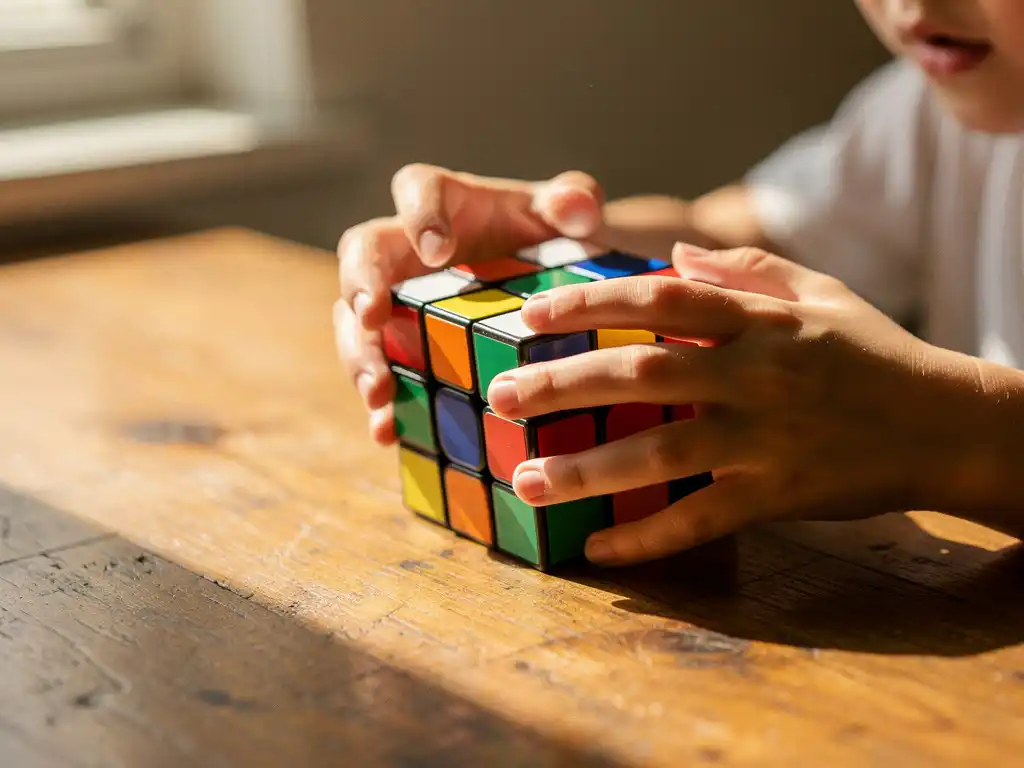
Are Rubik’s Cubes suitable for children?
Suitable from age 6? Discover safety, the best cubes for beginners, and the developmental benefits for children.
Speedcubes
What is the most difficult Rubik’s cube in existence?
Discover the 17×17 Rubik’s cube: 1,539 pieces and a solving time of 4–8 hours. From the Megaminx to Square-1 challenges.
Speedcubes
What is a Skewb?
Discover the fascinating diamond-shaped Skewb puzzle and its unique turning mechanism. Learn how to solve it, compare models, and find the perfect Skewb.
Speedcubes
How many steps are there in the beginner method for a Rubik’s Cube?
Learn the 7 main steps of the Rubik’s cube beginner method and discover which algorithms you need to succeed.
Speedcubes
What is the easiest way to solve a Rubik’s cube?
Every Rubik’s cube can be solved in a maximum of 20 moves. Learn the beginner method in 1–4 weeks.
Speedcubes
Can you solve a Rubik’s Cube without a guide?
Discover how to solve a Rubik’s cube on your own without instructions through systematic experimentation and pattern recognition.
Speedcubes
At what age is a Rubik’s cube suitable?
Children can start solving the Rubik’s cube from age 6–8. Discover which cube is perfect for your child.
Speedcubes
Who invented the Rubik’s Cube?
Discover the fascinating story behind the world-famous Rubik’s cube and architect Ernő Rubik’s brilliant invention.
Speedcubes
How do you reassemble a Rubik’s cube?
Learn to solve the Rubik’s cube using the layer-by-layer method in 1–4 weeks. Discover essential algorithms and beginner tips.
Speedcubes
What are the different types of Rubik’s cubes?
Discover all types of Rubik’s cubes: from 2×2 to 7×7, magnetic Speedcubes, and unique variants such as Pyraminx.
Speedcubes
5 Reasons Why a Rubik’s Cube Is Good for Children
Discover why a Rubik’s cube offers children more than just puzzle fun.
Speedcubes
What is a 4×4 Rubik’s Cube?
The 4×4 Rubik’s cube has 56 moving pieces and no fixed centers—a fascinating challenge after the 3×3.
Speedcubes
57 articles found