
-
 Dave Vinke
- Leestijd: 5 min
- Laatst geüpdatet: 14/11/2025

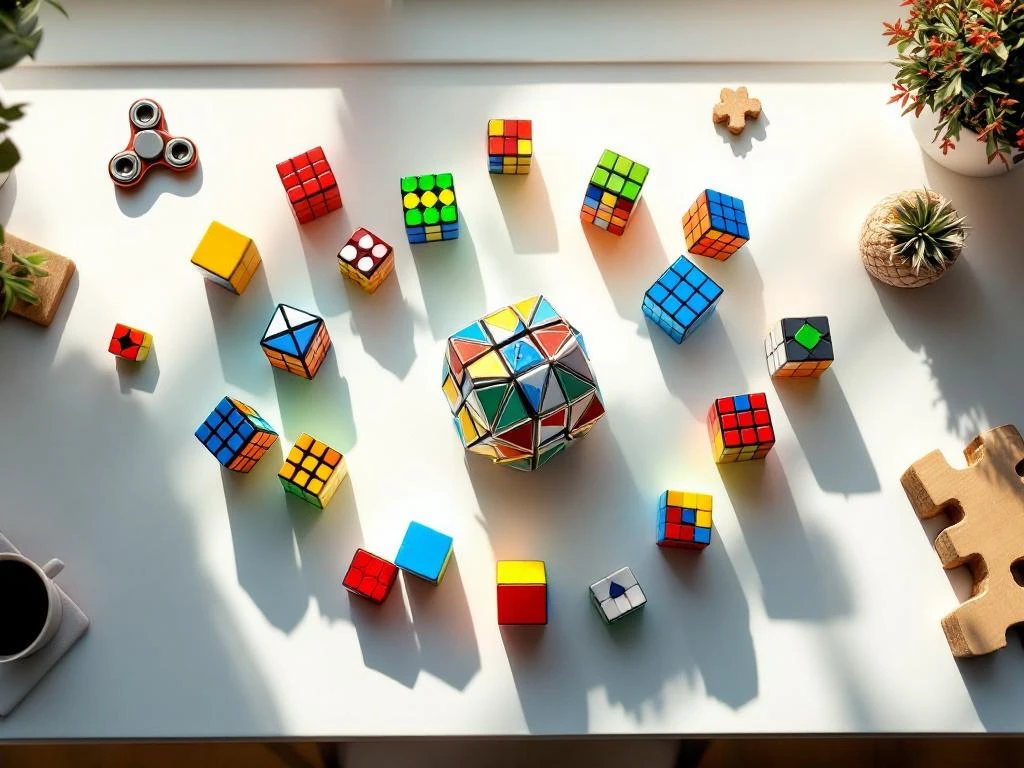
Christmas gifts that develop logical thinking through play combine fun with cognitive growth. Puzzles, speedcubes, brain teasers, and model building stimulate problem-solving abilities, spatial awareness, and pattern recognition in a natural way. These educational Christmas gifts offer lasting developmental benefits for all ages, from young children to adults. Below, we answer the most important questions about educational Christmas gifts that make learning a gift through logic games.
Why are puzzles and brain teasers ideal Christmas gifts for logical thinking?
Puzzles and brain teasers develop cognitive skills through active engagement in solving concrete problems. These educational Christmas gifts stimulate spatial awareness, pattern recognition, and strategic planning while fostering intrinsic motivation. Unlike digital games, physical puzzles provide tactile feedback that strengthens the learning process and promotes concentration without screen time.
The advantage of puzzle gifts for children lies in the combination of play and learning. When children attempt to solve a brain teaser, they develop perseverance and frustration tolerance. They learn systematic thinking by trying different strategies and evaluating results. These skills are essential for academic success and remain valuable throughout their entire development.
For different age groups, puzzles work in unique ways. Young children build fundamental logical connections by recognizing simple patterns. Teenagers and adults refine their analytical skills with more complex challenges that require multiple thinking steps. The lasting value of these gifts emerges because they continuously challenge without the solution becoming predictable.
Which types of speedcubes suit different ages and skill levels?
A 2×2 speedcube is ideal for beginners from age 6 because it’s less overwhelming than larger variants. The 3×3 speedcube forms the standard for those who want to develop logical thinking through play, suitable from age 8. Magnetic cubes offer extra stability making rotations more precise, which accelerates the learning process and reduces frustration for both children and adults.
For advanced puzzlers, 4×4 to 7×7 cubes offer increasing complexity that requires higher-level strategic thinking. These larger cubes develop patience and planning because solutions require more steps and forward thinking. Teenagers and adults appreciate this challenge because they continuously discover new patterns and can improve their solving times.
Magnetic speedcubes are particularly valuable as Christmas gifts for logical thinking because they eliminate technical frustration. The magnets ensure that layers automatically align, allowing users to focus on logical aspects rather than motor precision. This makes them suitable for a broader range of ages and skill levels, from beginning children to competitive speedcubers.
Age-specific recommendations
- Ages 6-8: 2×2 cube for basic pattern recognition and spatial awareness
- Ages 8-12: 3×3 magnetic cube for complete logical thinking and algorithm learning
- Ages 12-16: 4×4 or 5×5 cube for complex strategy development
- Ages 16+: 6×6, 7×7 or special variants for advanced challenges
How do brain teasers and puzzles help develop problem-solving abilities?
Brain teasers train problem-solving abilities through trial-and-error learning in a safe environment. Metal puzzles require spatial insight and visualizing movements before executing them. Wooden brain teasers develop patience and systematic thinking because solutions often require multiple sequential steps that must occur in the correct order.
Sequential discovery puzzles offer a unique learning experience because they force users to form and test hypotheses. Each attempt provides information that determines the next strategy. This develops scientific thinking and teaches children and adults that failure is a valuable part of the learning process, not something to avoid.
The satisfaction of solving a complex brain teaser reinforces intrinsic motivation. This emotional reward encourages tackling more difficult challenges and builds confidence. Puzzles for logical thinking thus create a positive feedback loop where each solution increases willingness to tackle new, more complex problems.
Different puzzle types and their cognitive benefits
- Metal disentanglement puzzles: spatial insight and movement planning
- Wooden box puzzles: sequential thinking and memory
- Mechanical brain teasers: cause-and-effect understanding and systems thinking
- Maze puzzles: planning, foresight, and error correction
What are the benefits of model building as a gift for logical thinking?
Model building develops spatial reasoning by translating two-dimensional instructions into three-dimensional constructions. This skill is fundamental for technical understanding and mathematical concepts. Following building steps in the correct sequence trains sequential thinking and teaches children and adults that complex projects become manageable by breaking them into smaller tasks.
The attention to detail that model building requires develops accuracy and quality awareness. When a step isn’t executed precisely, this becomes visible in later phases, teaching careful work from the beginning. This skill translates to schoolwork, hobbies, and later to professional situations where precision is important.
Patience and perseverance grow naturally during longer model building projects. Unlike instant gratification from digital entertainment, model building requires sustained effort over multiple sessions. This develops the capacity for deep work and teaches that valuable results require time and dedication, an essential lesson in our fast-paced society.
Which gift combinations can you create for different age groups?
For young children (ages 6-9), combine a 2×2 speedcube with simple wooden brain teasers and a display stand. This combination offers variety in challenge while the stand encourages pride in achievements. The alternation between different puzzle types maintains interest and develops broad cognitive skills without overwhelming.
Teenagers (ages 10-15) benefit from a package with a 3×3 magnetic speedcube, timer, and a set of metal brain teasers. The timer adds a competitive element that increases motivation, while brain teasers offer a calmer alternative. This combination suits their developmental phase where both speed and depth are valuable for thinking games as gifts.
For older teenagers and adults (16+), create challenging packages with 4×4 or 5×5 cubes, complex sequential discovery puzzles, and possibly a model building set. Add fidgets for focus support during longer puzzle sessions. This combination respects their cognitive capacities and offers sufficient challenge to maintain engagement.
Practical gift packages by age
- Starter package (ages 6-9): 2×2 cube, two wooden puzzles, display stand
- Development package (ages 10-12): 3×3 magnetic cube, timer, three brain teasers
- Advanced package (ages 13-15): 4×4 cube, complex metal puzzles, model building set
- Expert package (ages 16+): 5×5 or 6×6 cube, sequential discovery puzzles, fidgets, lubricant
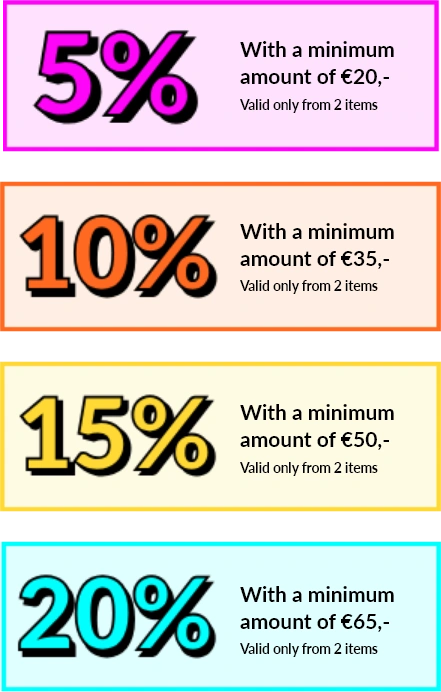
When assembling these gift combinations, you can benefit from our always-valid discounts that also apply to the newest products. Want to get optimal value from your purchase? Also check our current offers for extra advantageous puzzle gifts for children and adults. This way you create complete educational Christmas gifts that fit any budget and offer lasting developmental benefits.
Frequently Asked Questions
How long does it typically take for a child to solve a 3×3 speedcube?
Most children can learn the basics of a 3×3 cube within 2-4 weeks with daily practice of 15-20 minutes. Start with simple online tutorials or instructional videos that explain the basic method step by step. It's normal for the first solution to take 10-15 minutes, but with practice this quickly shortens to a few minutes. Patience and regular short practice sessions work better than long, frustrated attempts.
Can puzzles and brain teasers also help children with concentration problems?
Yes, physical puzzles are particularly effective for children with concentration problems like ADHD because they provide direct, tactile feedback and have clear goals. The absence of screen stimuli reduces distraction, while the hands-on nature helps maintain focus. Start with shorter puzzles (5-10 minute solving time) and gradually build up to more complex challenges. Combine puzzles with fidget tools for optimal focus support during longer sessions.
What do you do when a child gets frustrated and wants to give up on the puzzle?
Encourage setting the puzzle aside temporarily and returning later with a fresh perspective - this also develops emotional regulation. Help by giving hints instead of showing the solution, such as 'Look at the corners' or 'Try the red piece first.' Celebrate small progress and intermediate steps, not just the final solution. If frustration persists, the puzzle may be too difficult; temporarily choose an easier level to build confidence.
Are there maintenance or care tips for speedcubes to make them last longer?
Lubricate your speedcube every 2-3 months with special cube lubricant to maintain smooth movements and reduce wear. Clean the cube periodically by taking it apart and removing dust particles with a dry cloth or brush. Store cubes in a dry place away from direct sunlight to prevent discoloration and material deformation. Avoid dropping or throwing, especially with magnetic cubes where internal components can shift.
Can adults who have never done puzzles also benefit from these gifts?
Absolutely! Adult beginners develop the same cognitive benefits as children, plus additional benefits like stress reduction and mental flexibility that helps against cognitive decline. Start with a 2×2 or 3×3 magnetic cube and simple metal brain teasers to avoid overwhelming yourself. Many adults find puzzling a meditative break from screens and work. The learning curve can be faster due to better developed problem-solving strategies.
How do you know which difficulty level is suitable for someone you want to give a puzzle as a gift?
Pay attention to their current hobbies and interests: those who enjoy chess or strategy games can usually start a level higher. For complete beginners, 2×2 cubes and simple wooden puzzles are safe choices that offer challenge without frustration. When in doubt, choose a set with progressive difficulty so the recipient can grow. If possible, subtly ask about previous puzzle experiences or read product reviews about difficulty level.
What mistake do people make most often when learning to solve a speedcube?
The biggest mistake is trying to understand the entire cube at once instead of learning layer by layer. Always start by systematically learning one color (usually white) as the first layer before proceeding. Many beginners also want to memorize algorithms too quickly without understanding why they work, which later makes learning advanced techniques more difficult. Take time for fundamental understanding and practice each step until it feels automatic before moving on.
Table of contents
Much viewed

More blogs

Where can you find great deals for puzzle fans during Black Friday?

What do you give someone for Saint Nicholas’ Day who already has everything?
What are smart gifts for teenagers who love puzzles?